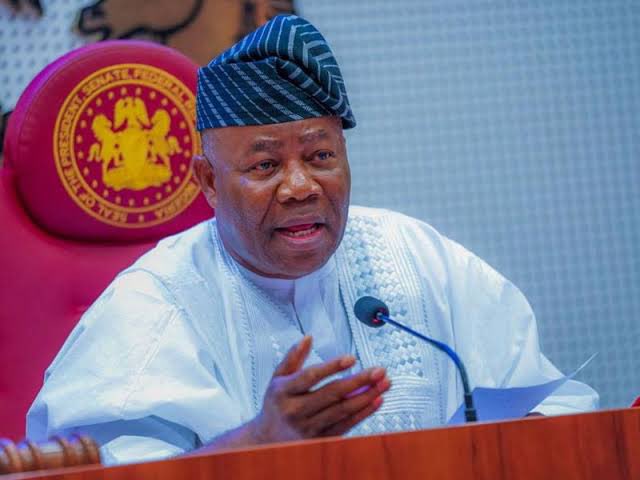
In September 2015, Godswill Akpabio, then Governor of oil-rich Akwa Ibom state and now President of the Nigerian Senate, flew to London for treatment after only four months of commissioning a $95 million hospital in his state. This singular act exemplifies the irony of African leaders’ preference for international medical treatment, despite investing in local healthcare infrastructure. Africa’s political elite have historically and by a seemingly sheer code of conduct shunned local medical facilities and instead relied pathologically on treatment abroad. In fact, most African leaders often make promises about improving local healthcare a central cardinal aspect of their campaign and budget while in office, yet at the slightest throw of the coin, hop on the next available flight for medical treatment abroad for even the most common of ailments. But ironically, after all said and done, make a more profound preference of being buried in Africa after any botched treatment abroad.
There is no iota of doubts that the culture of seeking treatment abroad is fast becoming a favourite valued currency among African leaders and have long been criticized for their preference for seeking medical treatment abroad, often at great expense to their countries. This practice has sparked controversy and debate about the continent’s healthcare systems. Many African leaders have died or received treatment abroad, raising questions about the quality of care available locally , the most recent of which is Muhammadu Buhari, the former president of Nigeria, known for his Spartan lifestyle . Indeed, in the last decade, the record shows that six of the twelve African leaders who had died while in office, died while seeking treatment abroad. Nigeria’s late president Umaru Yaradua although died at home in 2010, but only returned home to the country after several months away in a Saudi Arabian hospital. There is no scintilla of doubts that African leaders don’t trust local hospitals with their health despite expecting tens of millions of their citizens to do so.
Several African leaders have died abroad while seeking medical treatment. For instance, president Levy Mwanawasa of Zambia died in 2008 at Percy Military Hospital in Paris, France, after suffering a stroke during an African Union summit in Egypt. Similarly, President Michael Sata of Zambia passed away in 2014 at King Edward VII Hospital in London, UK.
Other notable cases include President Umaru Musa Yar’Adua of Nigeria, who could be rightly said to have died at King Faisal Specialist Hospital in Riyadh, Saudi Arabia in 2010, after a prolonged illness. Ahmed Sékou Touré, the President of Guinea, died on March 26, 1984, at Cleveland Clinic in Ohio, USA. Kamuzu Banda, the President of Malawi, died on November 25, 1997, at Garden City Clinic in Johannesburg, South Africa.
Gnassingbé Eyadéma, the President of Togo, died on February 5, 2005, while being transported to a hospital in France. Omar Bongo, the President of Gabon, died on June 8, 2009, at a clinic in Barcelona, Spain. More recently, President Pierre Nkurunziza of Burundi died in 2020, with speculation that he had been flown abroad shortly before his death.
President John Magufuli of Tanzania officially died in a local hospital, but opposition figures claimed he was flown abroad after contracting COVID-19 in 2021. President Muhammadu Buhari of Nigeria died on July 13, 2025, at a London hospital in the United Kingdom, due to leukaemia. Pascal Lissouba, the President of the Republic of Congo, died on August 24, 2020, in Perpignan, France.
Apart from these, several African leaders have received medical treatment abroad, often sparking controversy and debate about the state of healthcare on the continent. President Ali Bongo Ondimba of Gabon suffered a stroke in 2018 and received treatment in Saudi Arabia and Morocco, highlighting the reliance of some African leaders on foreign medical facilities.
Muhammadu Buhari, the former President of Nigeria, frequently received medical treatment in the United Kingdom during his presidency. Notably, he spent 104 days in the UK alone in 2017, while he was noted to have embarked on a total of 84 trips to 40 countries during his time in office, raising serious questions about the capacity of Nigeria’s healthcare system to handle complex medical cases. This trend underscores the challenges faced by African leaders in accessing quality medical care at home.
Patrice Talon, the President of Benin, received treatment in France for 24 days, including a prostate operation. He recently, admitted to having two surgeries during a visit to Paris.His case illustrates the willingness of African leaders to seek medical care abroad, even for procedures that could potentially be handled locally. Zimbabwe’s Robert Mugabe also frequented Singapore for medical treatment. These instances highlight the reliance of some African leaders on foreign medical facilities, often sparking controversy and debate about the state of healthcare on the continent. Many public hospitals in Africa are experiencing crumbling infrastructure, lack of drugs, and poor compensation for medical personnel. In many instances, doctors have to go on strike to protest low allowances and bonuses.Africa’s leaders keep going abroad for medical treatment rather than fixing healthcare at home.
The implications of this trend are far-reaching. By seeking treatment abroad, African leaders are not only depriving local healthcare systems of valuable resources and expertise but also perpetuating a culture of mistrust in domestic healthcare. This can have a negative impact on the development of local healthcare systems, as the best medical professionals may seek opportunities abroad, further exacerbating the brain drain. Moreover, the significant costs associated with seeking treatment abroad could be better spent on improving local healthcare infrastructure, training medical professionals, and increasing access to quality healthcare for citizens.
The practice of seeking medical treatment abroad has sparked criticism, with some arguing that it reflects a lack of trust in local healthcare systems and highlights the need for investment in domestic healthcare infrastructure. This trend raises important questions about the priorities of African leaders and the quality of care available locally. As the continent continues to grapple with healthcare challenges, it is essential to address these issues and ensure that African leaders are treated in their home countries, just like their citizens. By doing so, African leaders can help build trust in local healthcare systems and promote the development of quality medical care on the continent.
In other words,the practice of African leaders seeking medical treatment abroad will continue to spark slot of heated controversy. Recently , South African Health Minister Aaron Motsoaledi criticized the practice as “health tourism”. He emphasized that African leaders should trust and utilize their local healthcare systems, rather than seeking treatment abroad. His stance, undoubtedly raises important questions about the quality of care available locally and the priorities of African leaders.
In conclusion, the preference of African leaders for seeking medical treatment abroad is a complex issue that highlights the challenges facing the continent’s healthcare systems. While some leaders may have valid reasons for seeking treatment abroad, the practice has sparked controversy and debate about the priorities of African leaders and the quality of care available
The World Health Organization (WHO) has raised concerns about the healthcare system in Africa, highlighting significant challenges in countries like Nigeria, Angola, Ghana, Uganda, and Ivory Coast. One of the major issues is the severe shortage of health workers, with a ratio of 1.55 health workers per 1,000 people, which is below the WHO threshold density of 4.45 health workers per 1,000 people needed to deliver essential health services. This shortage is projected to reach 6.1 million by 2030, a 45% increase from 2013.
In Nigeria, for instance, the healthcare system faces significant challenges, with a population of over 200 million grappling with low economic growth, high inflation, and limited access to healthcare. Nearly 63% of the population lives in multidimensional poverty, further exacerbating the healthcare challenges. Similarly, Angola is likely facing similar challenges given its location in the African region, which struggles with healthcare workforce shortages and inadequate healthcare infrastructure.
The WHO African Region Health Expenditure Atlas 2023 reveals that many countries in the region face significant funding challenges. Only eight countries in the WHO African region met the recommended threshold of spending a minimum of $249 per capita on health from 2012 to 2020. Moreover, out-of-pocket payments account for an average of 35.8% of current health expenditure, posing a high risk of financial hardship, particularly for vulnerable populations. Half of the countries in the region rely heavily on external funding, which raises concerns about the sustainability of health achievements.
To address these challenges, the WHO recommends that countries significantly increase investments in building the health workforce to meet their current and future needs. Strong measures are needed to boost training and recruitment of health workers, as well as improve their deployment and retention. Additionally, addressing the persistent shortages and poor distribution of the health workforce is critical to reinforcing Africa’s health system. By investing in the health workforce and strengthening healthcare systems, African countries can improve access to quality healthcare and reduce the need for leaders to seek medical treatment abroad.
In other words, by addressing these challenges and investing in local healthcare infrastructure, African leaders can help build trust in local healthcare systems and promote the development of quality medical care on the continent.