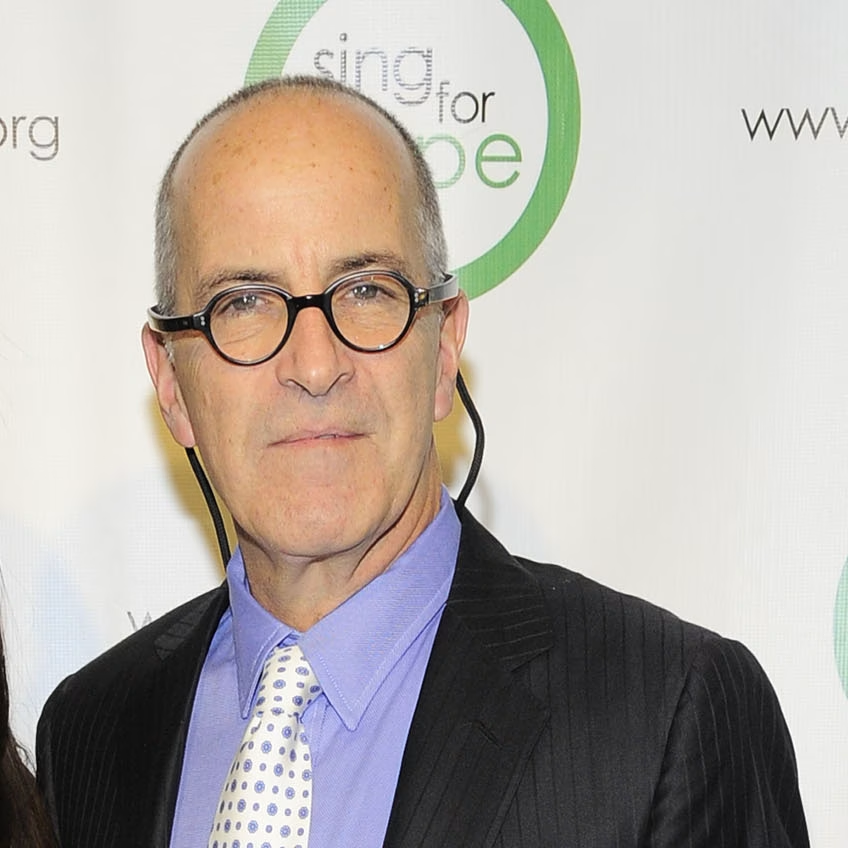
Mark Epstein, the brother of the late financier Jeffrey Epstein, has sparked renewed controversy after abruptly ending a media interview in which he declined to offer sympathy to victims connected to his brother’s crimes.
During the exchange, Mark Epstein made it clear that his primary concern remains the circumstances surrounding his brother’s 2019 death while in federal custody. “Unfortunately, I really don’t care, to be honest with you,” he said when asked about the victims. “I’m just concerned my brother, whoever and whatever he was, was murdered. That’s my concern.”
Shortly after making the remarks, he ended the interview.
The comments have drawn sharp reactions online, with many expressing outrage at what they viewed as a lack of empathy toward survivors. Advocacy groups have long emphasized that the focus in discussions surrounding the Epstein case should remain on the victims and the broader system that enabled the abuse.

Jeffrey Epstein, who was arrested in July 2019 on federal sex trafficking charges involving underage girls, died in his jail cell at the Metropolitan Correctional Center in New York the following month. His death was officially ruled a suicide by hanging by the New York City medical examiner. However, the circumstances surrounding the case, including reported security lapses and malfunctioning cameras have fueled ongoing public skepticism and numerous conspiracy theories.
Mark Epstein has consistently disputed the official ruling, maintaining that he believes his brother’s death was not a suicide. He has previously called for further investigation into the events surrounding that night and has questioned the findings of authorities.
Legal experts note that multiple investigations were conducted into the handling of Epstein’s detention, including probes by the Department of Justice. While procedural failures were acknowledged, no evidence was publicly released indicating homicide.
The renewed media attention comes as Epstein-related documents continue to circulate and as public interest in the broader network of individuals associated with him remains high. Despite the years that have passed since his death, the case continues to generate strong emotions and intense debate.
Victim advocates argue that interviews centered on Epstein’s death should not overshadow the documented crimes and the testimonies of survivors. Many have stressed that empathy and accountability remain central to the healing process.
Mark Epstein, for his part, has remained focused on challenging the official narrative surrounding his brother’s death. His recent comments underscore how deeply divided public discourse remains not only about Epstein’s crimes, but also about the unresolved questions many still feel linger around his death.
As conversations continue, the case serves as a reminder of the complex intersection between criminal accountability, victim advocacy, and public trust in institutional investigations.