A storm has hit the British Broadcasting Corporation (BBC) as its two top executives resigned following outrage over a doctored video of Donald Trump’s speech that aired on the network.
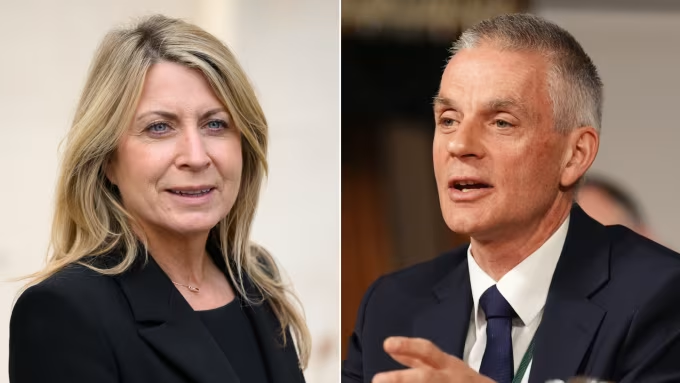
BBC Director General Tim Davie and CEO of News Deborah Turness stepped down on Sunday after public and political backlash accusing the broadcaster of bias and misinformation.
Davie confirmed his resignation in a message to BBC staff, describing the decision as “entirely my own.”
“Overall, the BBC is delivering well, but there have been some mistakes made. As Director-General, I must take ultimate responsibility,” he said.
He added that he would work with the BBC Board to ensure a smooth transition to his successor.
Turness, who resigned at the same time, admitted that “mistakes have been made,” and apologized for the controversy that has damaged the network’s credibility.
The resignations follow a whistleblower leak published by The Telegraph, which revealed that a BBC documentary had used spliced and edited footage of Trump’s January 6, 2021 speech in Washington, D.C.
The leaked memo alleged that the BBC version made Trump appear to encourage rioters to “fight like hell” and storm Capitol Hill — words he never said in that context.
In reality, Trump told supporters:
“We’re going to walk down to the Capitol, and we’re going to cheer on our brave senators and congressmen and women.”
According to internal BBC emails, editors approved a cut-and-mix edit that falsely linked Trump’s rally comments to scenes of the Capitol riot, which critics say undermined journalistic ethics.
After the revelations, Donald Trump Jr. lashed out on social media, posting on X (formerly Twitter):
“The FAKE NEWS ‘reporters’ in the UK are just as dishonest and full of s— as the ones here in America!!!!”
The Trump campaign has since accused the BBC of spreading propaganda, with White House press secretary Karoline Leavitt describing the British broadcaster as “100% fake news.”
“British taxpayers are being forced to fund a leftist propaganda machine,” she told The Telegraph, calling for a review of the BBC’s public funding model.
The scandal has sparked intense debate across the UK about the future of the BBC, which already faces criticism from both left- and right-wing audiences over its editorial impartiality.
Media analysts say the incident has shaken trust in one of the world’s most respected public broadcasters and could trigger a major overhaul of its editorial standards.
This is a developing story, and further updates are expected as the BBC Board meets to discuss leadership transition and disciplinary action against the production team involved.