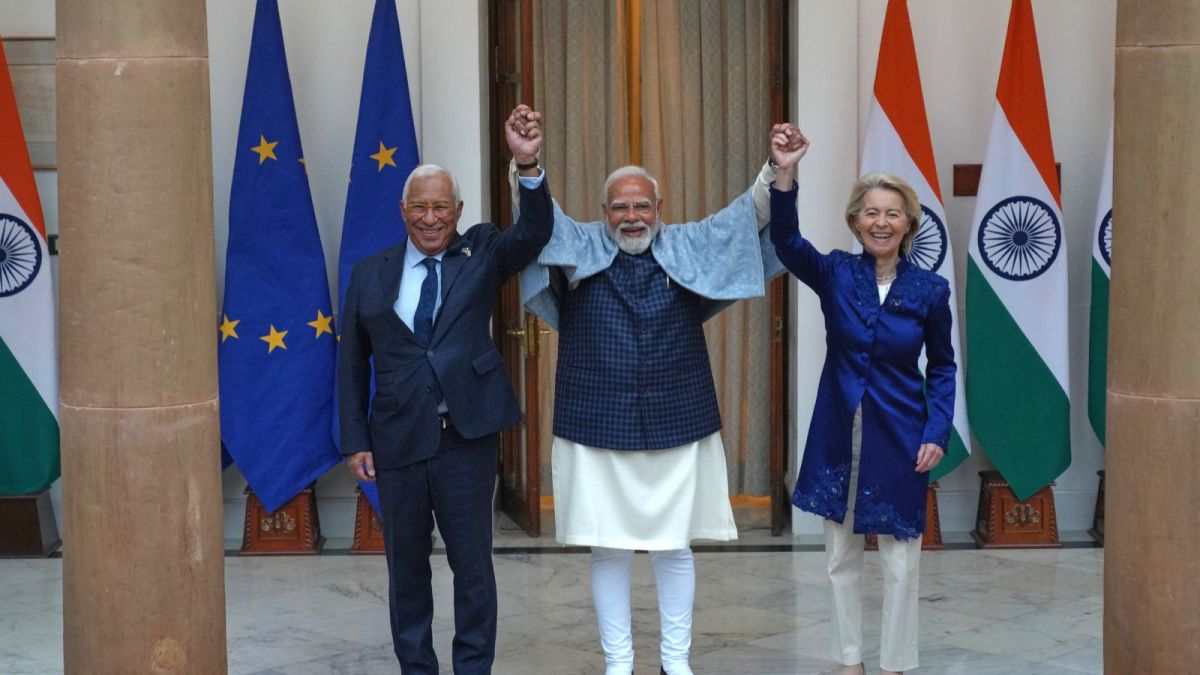
India and the European Union on Tuesday announced a sweeping free trade agreement that will create one of the world’s largest trading blocs, covering a combined market of nearly two billion people.
Indian Prime Minister Narendra Modi described the accord as the “mother of all deals,” marking the conclusion of almost 20 years of negotiations between New Delhi and the 27-member European Union.
Leaders on both sides said the agreement is designed to significantly deepen economic ties while reducing reliance on the world’s two largest economies, the United States and China.
Under the deal, tariffs on about 97 per cent of European exports to India will be reduced or fully eliminated. The EU estimates the move will save European businesses up to €4 billion (about $4.75 billion) annually in customs duties.
Modi announced the agreement in New Delhi following talks with European Commission President Ursula von der Leyen and European Council President Antonio Costa. He said the pact would unlock major opportunities for India’s 1.4 billion citizens and millions across Europe, noting that the combined economies involved account for roughly 25 per cent of global GDP and nearly one-third of world trade.

“This agreement brings together economies that represent a significant share of global commerce and growth,” Modi said, adding that it would strengthen long-term cooperation between India and Europe.
European leaders also hailed the deal as historic. Von der Leyen said the EU and India were “making history” by creating a vast free trade zone that would deliver tangible benefits to businesses and consumers on both sides. She and Costa had attended India’s Republic Day celebrations as guests of honour a day earlier.
EU officials described the agreement as the most ambitious trade deal India has ever signed, stressing that European firms would gain a strong first-mover advantage in the Indian market. Sectors expected to benefit include agriculture, automotive manufacturing and a wide range of services.
For India, the EU is viewed as a key strategic partner, particularly in attracting advanced technology and long-term investment needed to expand infrastructure and create millions of jobs.
Further details on implementation timelines and sector-specific provisions are expected to be released in the coming weeks as both sides move toward ratification of the agreement.