(DDM) – The United States has launched what it described as large-scale airstrikes against Islamic State targets across multiple regions of Syria, following a deadly December 13 attack that killed three American military personnel and wounded several others.
Diaspora Digital Media (DDM) gathered that U.S. officials said the coordinated strikes were aimed at degrading the remaining operational capabilities of the Islamic State group and preventing further attacks against American forces and their allies in the region.
According to Washington, the airstrikes targeted known ISIS hideouts, weapons depots, and logistical hubs in areas where the extremist group is believed to be attempting a resurgence amid ongoing instability in Syria.
U.S. military sources described the operation as one of the most extensive counter-ISIS actions in recent months, stressing that intelligence-led precision strikes were used to minimize civilian casualties.
The Pentagon said the decision to escalate air operations followed credible intelligence linking ISIS cells to the December 13 attack, which underscored the group’s continued ability to strike despite years of territorial losses.

Officials emphasized that the strikes were defensive in nature and part of the broader international coalition’s mandate to ensure ISIS does not reconstitute itself as a territorial or insurgent force.
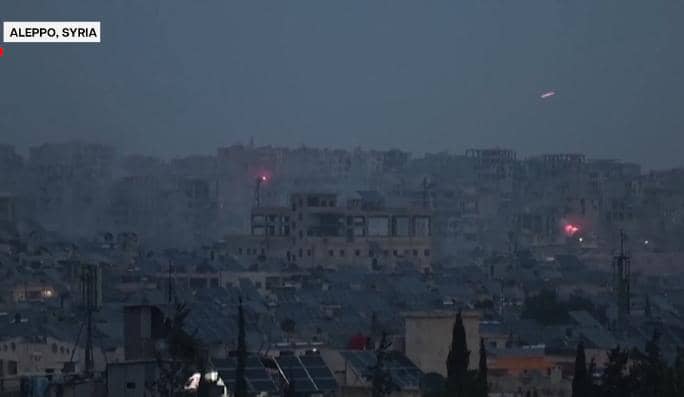
However, the renewed U.S. military action coincided with a sharp deterioration of security in northern Syria, particularly in the city of Aleppo, where fresh clashes plunged several districts into chaos.
Reports from the ground indicate that Syrian government forces moved into the Kurdish-majority Sheikh Maqsud neighborhood after days of intense fighting involving Kurdish-led armed groups.
Residents described heavy gunfire, shelling, and widespread fear as armed forces advanced into civilian areas, prompting thousands of residents to flee their homes.
Human rights monitors said the clashes resulted in multiple casualties, though exact figures remain unclear due to restricted access and conflicting accounts.
Following the escalation, a fragile ceasefire was reportedly brokered, leading to the withdrawal of Kurdish-led fighters from parts of Sheikh Maqsud.
Civilians were seen fleeing the area in large numbers, carrying belongings as they sought safety in neighboring districts and displacement camps.
There were also reports of arrests and detentions during the operation, raising concerns among rights groups about potential abuses and reprisals.
Analysts say the situation in Aleppo highlights the complex and volatile nature of the Syrian conflict, where multiple actors, including state forces, militias, foreign powers, and extremist groups, operate simultaneously.
Security experts warn that the renewed fighting creates opportunities for ISIS remnants to exploit power vacuums and instability, even as the group faces intensified military pressure.
The U.S. strikes come amid broader regional tensions, with Washington maintaining a limited but strategic military presence in Syria focused on counterterrorism operations.
American officials have repeatedly stated that their forces will remain vigilant against ISIS threats while avoiding deeper entanglement in Syria’s civil war.
Meanwhile, humanitarian agencies have expressed concern over the impact of renewed violence on civilians, particularly in densely populated urban areas like Aleppo.
They warned that displacement, food shortages, and limited medical access could worsen if fighting resumes or ceasefires collapse.
Observers say the parallel developments of U.S. airstrikes and internal Syrian clashes underscore the fragile security environment and the enduring consequences of a conflict now in its second decade.
As international attention shifts between counterterrorism and geopolitical rivalries, ordinary Syrians continue to bear the brunt of violence, displacement, and uncertainty.
For now, both the U.S.-led coalition and regional actors face mounting pressure to balance military objectives with the urgent need to protect civilians and prevent further destabilization.
The unfolding events signal that despite years of war, Syria remains far from peace, with each new escalation threatening to unravel fragile calm across the country.