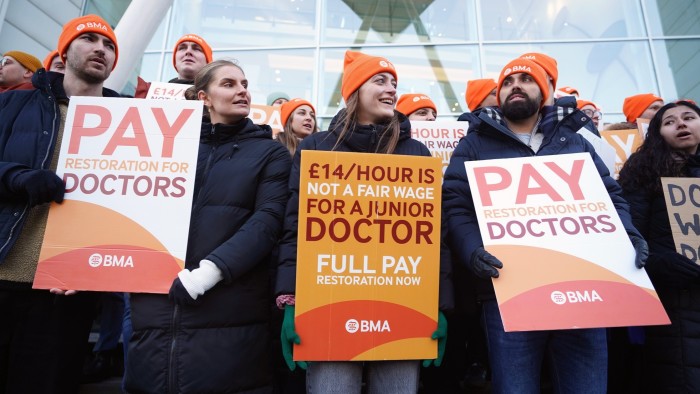
Prime Minister Keir Starmer has described the latest strike by resident doctors in England as “dangerous and utterly irresponsible” as a five-day walkout began on Wednesday morning.
The strike, which started at 07:00, is the 14th industrial action by resident doctors formerly known as junior doctors in an ongoing dispute over pay, jobs, and training opportunities.
At Prime Minister’s Questions, Starmer urged doctors not to abandon patients, calling on them to work with the government to improve conditions and rebuild the NHS.
He warned that the strike comes at a critical time, with hospitals already under pressure from rising flu cases and winter illnesses.
The British Medical Association (BMA) says doctors are demanding a long-term plan to address years of below-inflation pay rises and a shortage of specialist training posts, which has left many doctors stuck in temporary or locum roles without career progression.

NHS leaders have warned that the strike will disrupt services, with some non-urgent operations postponed and senior doctors drafted in to provide emergency cover.
Health Secretary Wes Streeting said the situation in hospitals was already “dicey” and estimated the strike would cost the NHS £250 million.
Despite last-minute talks on Tuesday, no agreement was reached. While the government said discussions were constructive, Streeting admitted the two sides remain “too far apart” on pay.
The BMA insists patient safety will be protected, saying it is working closely with NHS England to manage risks. However, officials warn more patients may feel the impact of this strike than previous ones, particularly in the run-up to Christmas.
Resident doctors make up nearly half of the NHS medical workforce. They argue that, despite recent pay rises, real-terms pay remains around 20% lower than in 2008 when inflation is taken into account.