
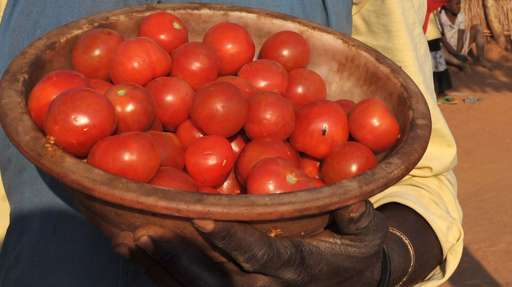
A state of emergency has been declared in the tomato sector in Kaduna state, north of the capital, Abuja, local media are reporting.
Kaduna’s Governor Mallam Nasir El-Rufai declared the emergency, saying that 80% of tomato farms have been ravaged by a pest called Tuta Absoluta, Nigeria’s Guardian newspaper reports.
A moth called the Tomato Leaf Miner, or Tuta Absoluta, has ravaged 80% of tomato farms, Commissioner of Agriculture Daniel Manzo Maigar said.

He calculated a loss of at least 1bn naira ($5.1m; £3.5m).
Total losses in the past month alone among a group of 200 farmers are estimated at 1bn naira ($5.1m), he added.
The price of a basket of tomatoes, a staple in Nigerian cooking, has increased from $1.20 less than three months ago to more than $40 today.
The richest man in Africa has stopped making tomato paste
Most tomato production takes place in northern Nigeria, according to the UN.
A tomato paste manufacturing business in northern Kano state owned by Africa’s richest man, Aliko Dangote, suspended production earlier in the month due to the lack of tomatoes, reports Forbes.
Tomatoes are a basic part of most Nigerians’ diets and the word tomato has trended on Twitter as people discuss the rising price.
One of the memes being shared is a tongue-in-cheek look at Nigerian pain over discovering the annual festival in Spain where people throw tomatoes at each other.
Mr Maigar was reported as saying officials from the ministry of agriculture have gone to Kenya to meet experts on the Tomato Leaf Miner.
BBC’s Naziru Mikailu reports from , Kano, Nigeria that the tomato pest that has ravaged most farms in north-western and central Nigeria is severely affecting people’s lives in every part of the country
In his words, “It is an essential ingredient in many meals, but the tomato scarcity has led to the price increasing by nearly 400% in the last three months, taking them out of the reach of many people.
“This comes at a difficult time, with the price of several imported food items having already gone up significantly because of Nigeria’s weak currency.
“It is also a severe blow to President Muhammadu Buhari’s efforts of encouraging more people to return to commercial farming as part of the government’s plans to diversify Africa’s largest economy away from oil.