As Nigeria gradually inches toward the 2027 general elections, political activity across the country is gathering unprecedented momentum, but nowhere is the unfolding drama more intense and consequential than in Lagos State. Widely regarded as Nigeria’s commercial nerve centre and one of Africa’s most economically significant subnational entities, Lagos is once again at the centre of a high-stakes political chess game as contenders position themselves to succeed the incumbent governor, Babajide Sanwo-Olu, who will complete his constitutionally permitted two terms.
With a population estimated at over 21 million people and an economy often described as one of the largest on the continent, the leadership of Lagos carries weight far beyond state boundaries. The individual who eventually emerges as governor will not only shape the trajectory of the state but also influence national politics, economic direction, and governance models across Nigeria. It is against this backdrop that the emerging succession battle is being closely watched, both within and outside political circles.
Since Nigeria’s return to democratic rule in 1999, Lagos has maintained a unique political continuity largely anchored within a single ideological bloc. Beginning with Bola Ahmed Tinubu, followed by Babatunde Fashola, Akinwunmi Ambode, and now Sanwo-Olu, governance in the state has remained within a closely knit political family that evolved from the Alliance for Democracy (AD) through the Action Congress (AC), Action Congress of Nigeria (ACN), and currently the ruling All Progressives Congress. This continuity has been credited with ensuring policy stability, especially in areas such as infrastructure development, revenue generation, and urban planning. However, it has also raised persistent questions about internal democracy and the influence of political kingmakers.
At the heart of the unfolding political intrigue is the re-emergence of Akinwunmi Ambode, whose return to the inner circle of the ruling party has sparked fresh speculation. Ambode, who served as governor from 2015 to 2019, remains a unique figure in Lagos politics as the only governor in the current democratic dispensation to have been denied a second term. His political downfall was widely attributed to a fallout with party leadership, stemming from disagreements over governance style and alleged deviation from established development frameworks.
After years of relative political silence, Ambode has gradually found his way back into the fold. His reinstatement into the influential Governor’s Advisory Council (GAC) has fueled rumours that he could be considered for a political comeback, possibly even securing the governorship ticket to complete what his supporters describe as an “unfinished mandate.” His recent public appearances have only intensified such speculation, although no official confirmation has been made.
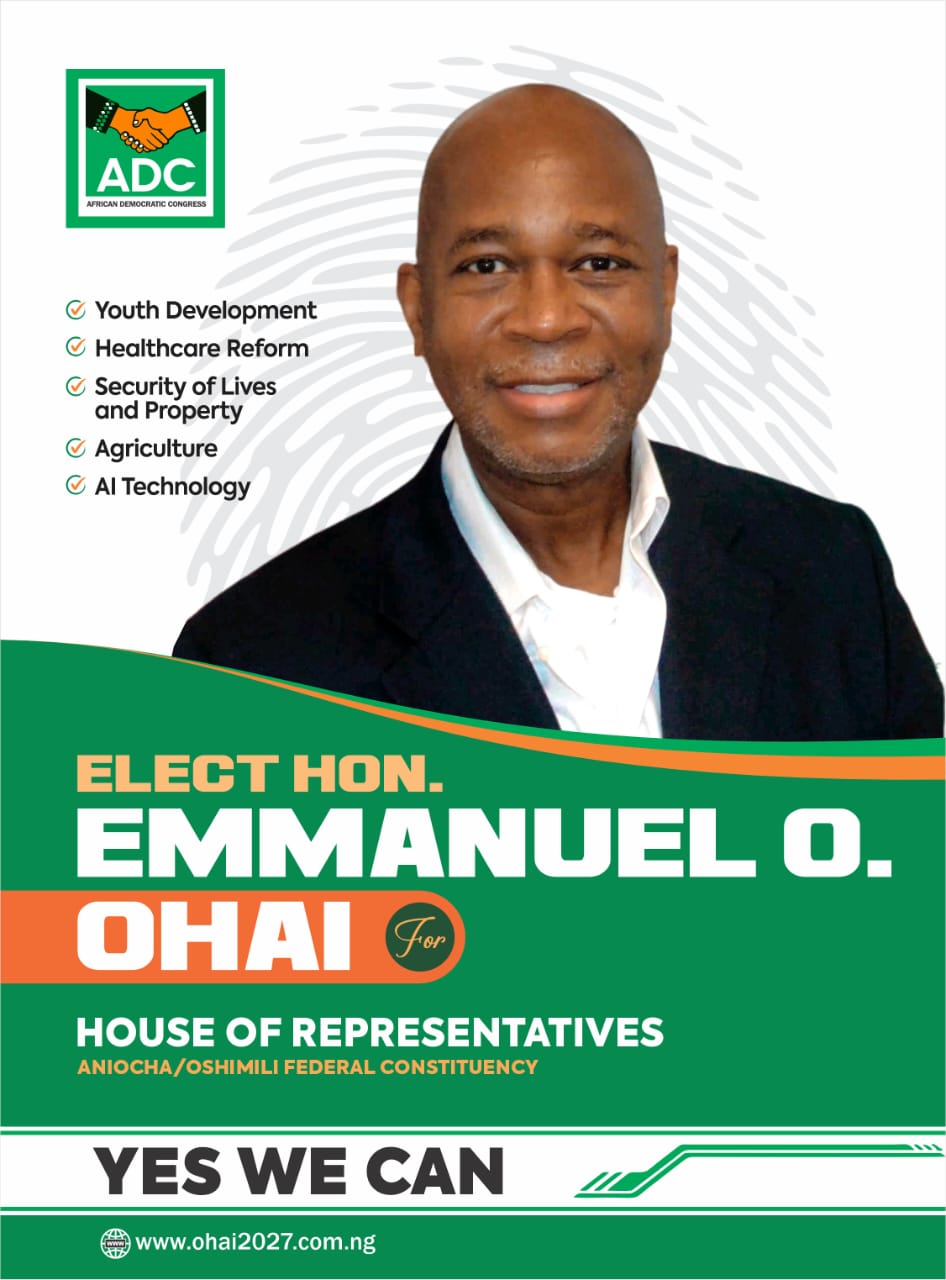
However, the political terrain remains fluid, and emerging reports suggest that attention may be shifting toward the current Deputy Governor, Obafemi Hamzat. If eventual consensus within the party favours Hamzat, it would mark a historic moment, as he would become the first deputy governor in Lagos State to seamlessly succeed a sitting governor. Sources within party structures hint at ongoing consultations involving key stakeholders, including influential figures within the GAC led by Chief Tajudeen Olusi, although insiders maintain that no final decision has been reached.
DDM News gathered that the contest is far from a two-horse race, as a wide array of influential aspirants continues to position themselves strategically. Among them is Femi Gbajabiamila, a seasoned politician whose career trajectory has seen him rise from Lagos politics to become Speaker of the House of Representatives and now Chief of Staff to the President. Gbajabiamila’s deep-rooted connections within the political establishment and his longstanding association with Tinubu make him a formidable contender.
Another powerful figure in the mix is Mudashiru Obasa, whose influence within the state legislature and party structure cannot be underestimated. As the longest-serving Speaker in the history of the Lagos State House of Assembly, Obasa has demonstrated significant political resilience, notably reclaiming his position after a dramatic impeachment episode. Analysts view his ability to navigate such challenges as evidence of strong political machinery and grassroots support.
Also gaining attention is Hakeem Muri-Okunola, widely known as HMO, whose rise within government circles reflects a technocratic approach to governance. Unlike many of his counterparts who built their careers through electoral politics, Muri-Okunola’s reputation is anchored in administrative excellence, having served as Head of Service in Lagos State. His proximity to power and perceived competence have made him a subject of growing interest among political observers.
In addition, figures such as Tokunbo Abiru, Tunji Alausa, and Olajide Adediran are also being mentioned as potential contenders, each bringing unique strengths and constituencies to the race. While many of these aspirants are believed to enjoy varying degrees of support within the political establishment, the ultimate decision is expected to hinge on a complex interplay of loyalty, competence, and strategic considerations.
The influence of President Bola Ahmed Tinubu looms large over the entire process. As the central figure in Lagos’ political evolution, Tinubu’s endorsement is widely seen as a निर्णing factor in determining who eventually clinches the party ticket. This reality has led to intense lobbying and alignment efforts among aspirants, all seeking to secure the backing of the political leader often referred to as the architect of modern Lagos politics.
Meanwhile, the issue of zoning continues to generate debate. Lagos has historically operated an informal rotational arrangement among its three senatorial districts—Lagos West, Lagos Central, and Lagos East. With Sanwo-Olu hailing from Lagos Central and his predecessor Ambode from Lagos East, many analysts argue that the pendulum may swing back to Lagos West, the most populous and politically influential district. However, zoning has never been strictly enforced in the state, and political pragmatism often overrides such considerations.
DDM News understands that beyond the internal dynamics of the ruling party, opposition forces are also watching developments closely, hoping to capitalize on any cracks within the dominant political structure. The 2023 elections demonstrated that Lagos is no longer an impregnable fortress, as opposition parties made notable inroads, particularly among younger and urban voters. However, internal divisions and lack of cohesion have continued to undermine their ability to mount a sustained challenge.
For many observers, the unfolding contest is a reflection of both continuity and change within Lagos politics. While the dominance of the ruling political family appears intact, the increasing number of aspirants and the diversity of their backgrounds suggest a subtle shift toward broader participation within the system. Yet, the fundamental question remains whether this process will produce a candidate who not only enjoys elite backing but also resonates with the aspirations of ordinary Lagosians.
Political analysts emphasize that the strength of Lagos’ governance model has been its continuity, which has enabled long-term planning and execution of major projects. However, they also caution that maintaining this legacy will require careful balancing of competing interests, transparent decision-making, and a renewed focus on inclusivity.
As the 2027 election approaches, the race for Lagos Government House is shaping up to be a defining moment in Nigeria’s political landscape. With powerful actors, strategic calculations, and high public interest all converging, the eventual outcome will likely set the tone for governance in the state for years to come. What remains certain is that the battle for Lagos is not just about who governs next—it is about the future direction of one of Africa’s most dynamic cities and the enduring influence of its political architecture.