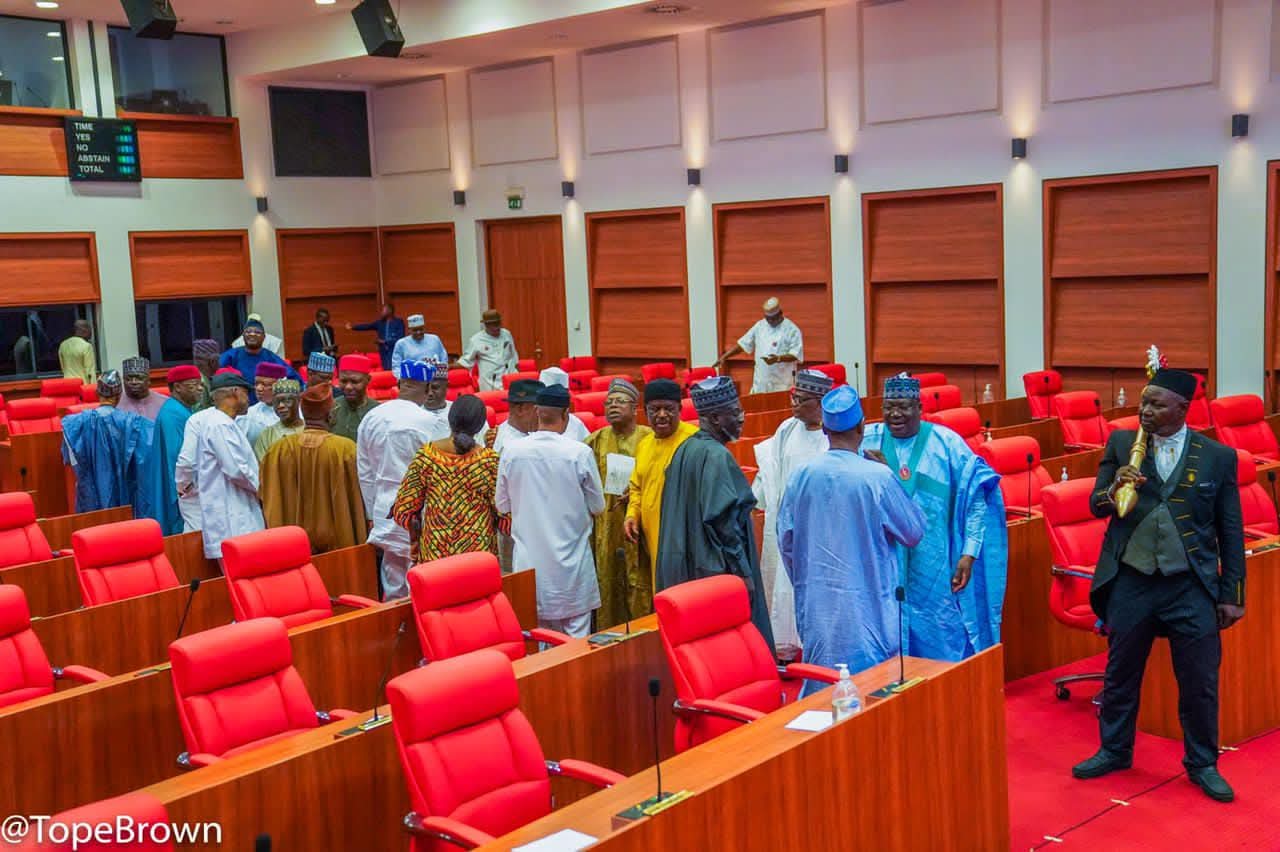
(DDM) – There was heightened tension on the floor of the Nigerian Senate on Wednesday as lawmakers protested the selective implementation of President Bola Ahmed Tinubu’s directive to withdraw police orderlies from VIPs across the country.
DDM gathered that Senator Abdul Ningi (PDP, Bauchi Central) led the objections, highlighting that while his personal police orderly was withdrawn early Wednesday, other VIPs, including ministers, governors, and business elites, continue to enjoy full security privileges.
Ningi urged that any withdrawal of security personnel should be implemented fairly, “across the board,” to avoid exposing some public officials to disproportionate risks while others remain protected.
According to the senator, he observed convoys of ministers and business figures accompanied by multiple security personnel, raising concerns over inequality and the perception of selective enforcement of the presidential order.
He said, “I cannot ever imagine that a senator of the Federal Republic of Nigeria, who has served for years, will have his only orderly withdrawn while others enjoy protection. This matter should be addressed with the seriousness it deserves.”

The directive by President Tinubu, issued to the Inspector General of Police, Kayode Egbetokun, mandated redeployment of personnel attached to VIPs to concentrate on their core duties, requiring the Special Protection Unit (SPU) to recall all officers nationwide.
However, Senators argued that removing security at a time of escalating insecurity across Nigeria is dangerous. Senator Aliyu Wamakko (APC, Sokoto North) described the move as ill-timed, warning that VIPs and public office holders remain high-value targets for kidnappers, terrorists, and criminal gangs.
Senator Tahir Monguno (APC, Borno North) added that the withdrawal would unnecessarily expose lawmakers and other officials to violent attacks, noting the current security climate is worsening daily.
The Deputy President of the Senate, Senator Jibrin Barau, who presided over the session, informed senators that the leadership had discussed the matter extensively and was working to convince the presidency to exempt National Assembly members from the order.
Barau assured the chamber that efforts are being made to restore police protection to lawmakers, saying the intervention aligns with international best practices for the safety of elected officials.
The debate also recalled similar concerns raised on November 26, when several senators warned that sudden withdrawal of protection amid rising criminal activities could jeopardize their lives and compromise national security.
Observers note that the move highlights a growing tension between the presidency’s security policy and lawmakers’ demands for personal safety, reflecting broader anxieties about escalating insecurity in Nigeria.
Lawmakers insist that equitable application of the directive is essential to prevent perceptions of bias and to ensure all public officials, regardless of rank or influence, are adequately protected.
The Senate has now tasked the Committee on Police Affairs to investigate the selective enforcement and report recommendations for safeguarding legislators, even as discussions continue with the presidency to review the directive.
The situation underscores the delicate balance between reallocating police resources to combat national insecurity and maintaining the protection of high-profile public office holders.
As Nigeria continues to grapple with kidnappings, terrorist attacks, and armed criminal activities, senators maintain that any withdrawal of personal security must be carefully timed and universally applied to avoid putting lives at unnecessary risk.