


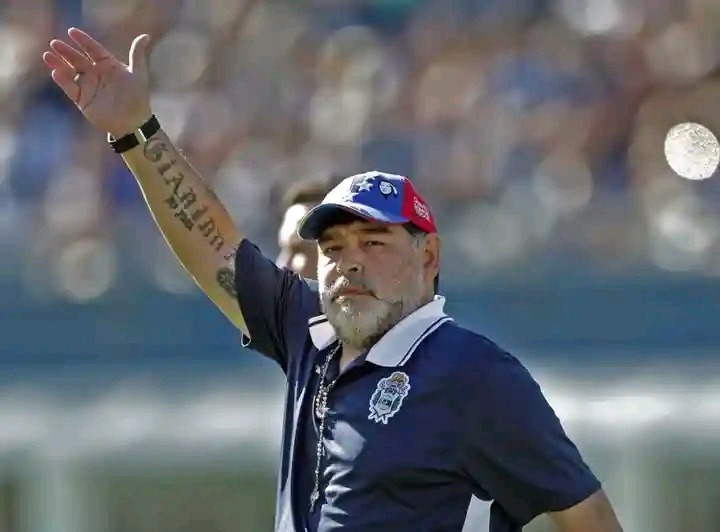
The family of Argentine football legend Diego Maradona has expressed differing views over the prison sentences that should be imposed on members of his medical team accused of negligence in connection with his death in 2020.
The disagreement emerged as lawyers representing different members of the former footballer’s family presented their closing arguments in the ongoing trial in Argentina, with some demanding lengthy prison terms for the healthcare professionals who oversaw his recovery following brain surgery.
While members of the family broadly agree that those responsible for Maradona’s care should face accountability, their legal representatives have proposed different punishments for the accused, reflecting disagreements over the extent of individual responsibility.

Maradona, widely regarded as one of football’s greatest players, died on November 25, 2020, at the age of 60 while recovering at a rented residence in Tigre, near Buenos Aires. He had undergone surgery earlier that month to remove a subdural haematoma, a collection of blood between the brain and its outer covering.
His death shocked the football world and triggered investigations into the medical arrangements made for his recovery at home.
Seven healthcare professionals are standing trial over allegations that Maradona received inadequate medical attention during the final days of his life. The defendants have denied the allegations, and the court has yet to deliver its verdict.
The case has focused on whether the medical team failed to recognise and respond appropriately to warning signs in Maradona’s deteriorating condition and whether his recovery should have been supervised in a hospital rather than at a private residence.
Lawyers representing two of Maradona’s daughters, Dalma and Gianinna, called for severe punishment for six of the seven accused.
Their lawyer, Fernando Burlando, accused the medical professionals of showing indifference to the footballer’s condition and requested prison sentences of up to 15 years.
“They killed a mythological hero,” Burlando said during his closing arguments, describing what he considered a serious failure in the care provided to the former Argentina captain.
The legal representative argued that the circumstances surrounding Maradona’s final days warranted strong penalties for those he believed were responsible.
However, the demands made by other members of the family differed in the length of imprisonment sought.
Lawyers representing three of Maradona’s sisters called for prison terms of up to 10 years for five of the defendants. Their representative, Pablo Jurado, argued that medical coordinator Nancy Forlini should receive the harshest punishment among those targeted by their legal submission.
Meanwhile, a lawyer representing Maradona’s youngest son, Diego Fernando, had called for 16-year prison sentences for personal physician Leopoldo Luque and Forlini.
These differences have highlighted the complexity of the case, which involves several professionals who had different responsibilities in the arrangements for Maradona’s home recovery.
Argentine prosecutors have also demanded prison sentences for six of the seven defendants. Their requests range from four to 12 years, with Luque facing the longest term sought by the prosecution.
Prosecutors allege that the medical team failed to provide appropriate care despite warning signs that Maradona’s health was deteriorating.
The allegations include concerns about inadequate monitoring, the organisation of his home treatment and the response to symptoms reported in the period leading up to his death.
Maradona reportedly suffered from swelling and an elevated heart rate before he died. Prosecutors argue that such warning signs required a more effective medical response.
The decision to allow the footballer to recover at home rather than remain in a hospital has also become a central issue in the proceedings.
The defence teams, however, maintain that the accused should not be held criminally responsible for his death. They have disputed the allegations of negligence and argued that the circumstances surrounding his medical condition and treatment were more complicated than the prosecution suggests.
Maradona had a long history of health problems, including struggles with addiction, and his medical condition required careful management following surgery.
The trial has examined the responsibilities of his personal doctor, psychiatrist, psychologist, nursing staff and professionals involved in coordinating his home care.
Each defendant’s role is being considered separately as the court evaluates the evidence presented during the proceedings.
The case has also attracted widespread public attention because of Maradona’s extraordinary status in Argentina, where he remains an enduring national sporting icon.
He captained Argentina to victory at the 1986 FIFA World Cup in Mexico, producing one of the most celebrated individual performances in football history. His goals against England in the quarter-final, including the famous solo effort later known as the Goal of the Century, remain defining moments in the sport.
His career combined exceptional technical ability, creativity and competitive intensity, making him one of the most recognisable figures in international football.
Following his death, questions about his medical care became a major legal and public issue, with members of his family seeking answers about the circumstances that led to the loss of the former Napoli and Barcelona star.
The current proceedings follow the collapse of an earlier trial over his death, which was annulled after a judicial controversy involving one of the judges. The renewed trial began in April 2026.
Closing arguments are expected to continue until the end of October, after which the court is expected to reserve its judgment for a later date.
Until a verdict is delivered, the medical professionals remain accused rather than convicted, and the final determination of criminal responsibility rests with the court.
The outcome could have significant consequences for those involved and may also renew debate in Argentina about medical accountability, patient supervision and the responsibilities of healthcare professionals caring for vulnerable patients outside hospital settings.
For Maradona’s family, the proceedings represent an attempt to establish accountability for the circumstances surrounding his death. However, the differing sentencing demands show that even among those seeking justice, questions remain about how responsibility should be distributed among the people involved in his final days.




