


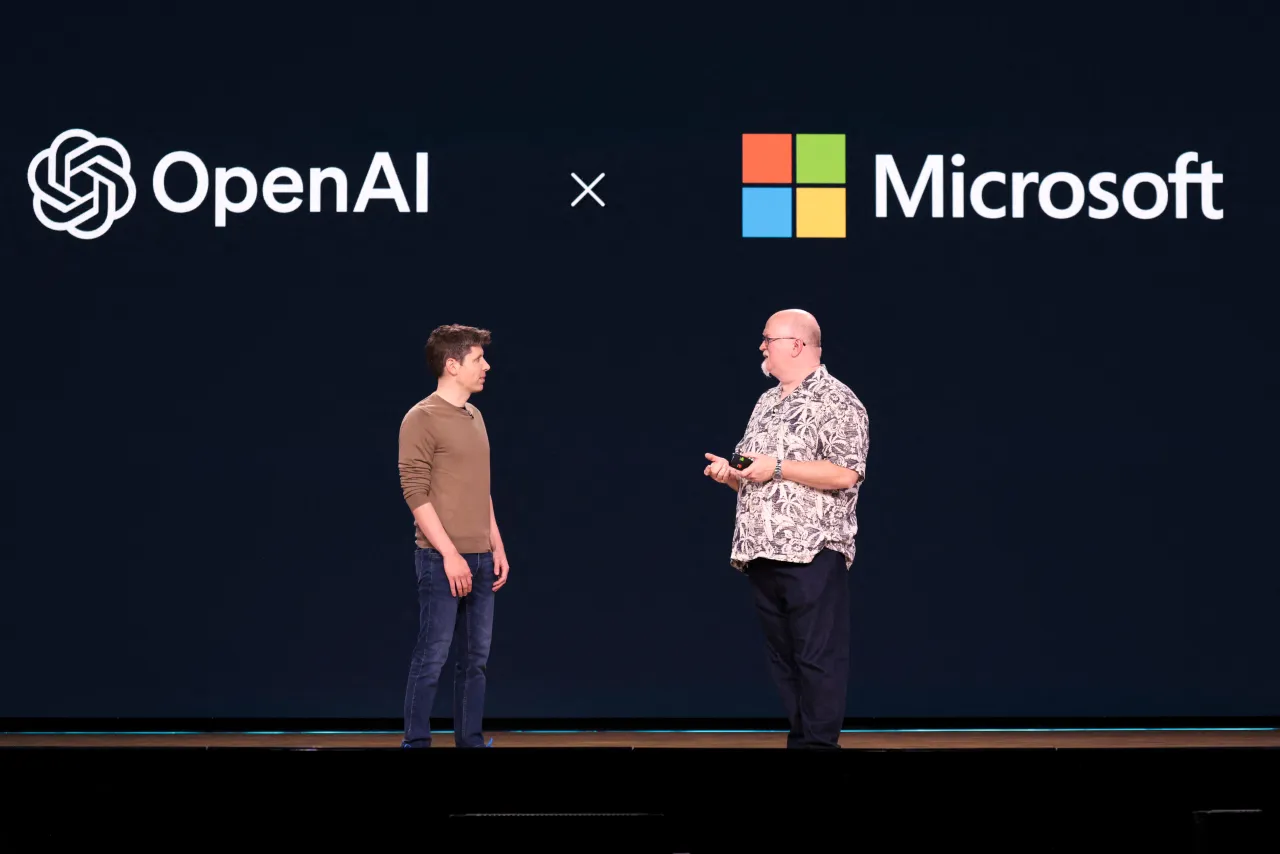
Microsoft recorded $10 billion in OpenAI-related revenue in one quarter, including revenue-sharing payments and commercial arrangements tied to Azure.
Microsoft recorded $10 billion in revenue from commercial arrangements with OpenAI during the quarter ended September 30, according to a new regulatory filing. The figure includes revenue-sharing payments and other business between the companies, including OpenAI’s use of Microsoft’s cloud infrastructure. It represented nearly 11% of Microsoft’s $92.3 billion in quarterly revenue.
Microsoft’s OpenAI revenue reaches $10 billion
Microsoft disclosed the figure in its  quarterly filing with the U.S. Securities and Exchange Commission. The filing says the $10 billion includes revenue-sharing payments and was generated through commercial arrangements with OpenAI.
The disclosure covers Microsoft’s first fiscal quarter of 2027, which ended September 30. Microsoft’s fiscal year begins in July. The company’s overall revenue increased 19% year over year to $92.3 billion during the same period.  Microsoft’s earnings release reports the wider financial results.
The filing does not break the $10 billion into individual components. Microsoft did not specify how much came from OpenAI’s use of Azure, how much came from revenue-sharing payments or how much came from other commercial arrangements. The figure should therefore not be treated as a pure measure of Azure consumption or OpenAI’s own sales.
Revenue is not the same as cash received
Microsoft reported $7.2 billion in accounts receivable from OpenAI at the end of September, up from $6 billion at the end of June. Accounts receivable represents amounts owed to Microsoft for recorded transactions; it is not additional revenue and does not necessarily mean Microsoft collected the full amount in cash during the quarter.
The distinction matters because the two companies have extensive financial ties. Microsoft invested heavily in OpenAI and supplies computing capacity through Azure. OpenAI also pays Microsoft under commercial agreements that include revenue-sharing provisions. The arrangements can create revenue for Microsoft while money remains outstanding on the balance sheet.
For the full fiscal year ended June, Microsoft recorded $24.1 billion in revenue from its business with OpenAI, according to  TechCrunch and GeekWire. The latest quarterly figure is significantly higher than that annual average, although quarterly comparisons can be affected by contract timing and accounting recognition.
OpenAI is a major Microsoft relationship
Microsoft’s filing identifies OpenAI as a related party because Microsoft holds an equity-method investment representing about a 24% interest on an as-converted basis. The company said it had made total funding commitments of $13 billion, of which $12 billion had been funded by September 30.
Microsoft said it will continue to receive revenue-sharing payments from OpenAI. The filing also states that Microsoft holds rights to OpenAI’s intellectual property, including models and infrastructure, for integration into Microsoft products.
The relationship has evolved from an earlier exclusive cloud partnership. OpenAI has gained more freedom to work with competing cloud providers, while the companies have continued to maintain commercial commitments. TechCrunch reported that an earlier agreement included an additional $250 billion commitment by OpenAI to purchase Azure services.
Partnership also creates concentration risk
The $10 billion figure demonstrates the financial importance of OpenAI to Microsoft, but it also highlights concentration risk. A large share of revenue tied to one AI partner can make results more sensitive to that partner’s spending, business model or relationship with Microsoft.
Microsoft’s filing warns that some outside AI providers are also significant Azure customers. It says the benefits of those relationships may not be realised or sustained if partners change how much they buy, or if Microsoft changes how it allocates scarce data-centre capacity or sets prices.
Microsoft CEO Satya Nadella has argued that Azure’s AI business should not depend on only a few large customers. “That’s not a business as far as I’m concerned,” he said when discussing a model based on four customers buying large amounts of capacity, according to GeekWire. The comment reflects Microsoft’s effort to present broader enterprise adoption as the long-term foundation of its AI strategy.
For more coverage of artificial intelligence, cloud infrastructure and enterprise technology, readers can visit Diaspora Digital Media’s  Tech section.
In conclusion, Microsoft’s $10 billion in quarterly OpenAI-related revenue shows how deeply the partnership remains embedded in its business. The number includes several commercial arrangements and should not be confused with cash received or Azure revenue alone. Microsoft’s challenge is to benefit from OpenAI’s growth while building a broader AI customer base that reduces reliance on any single partner.




