


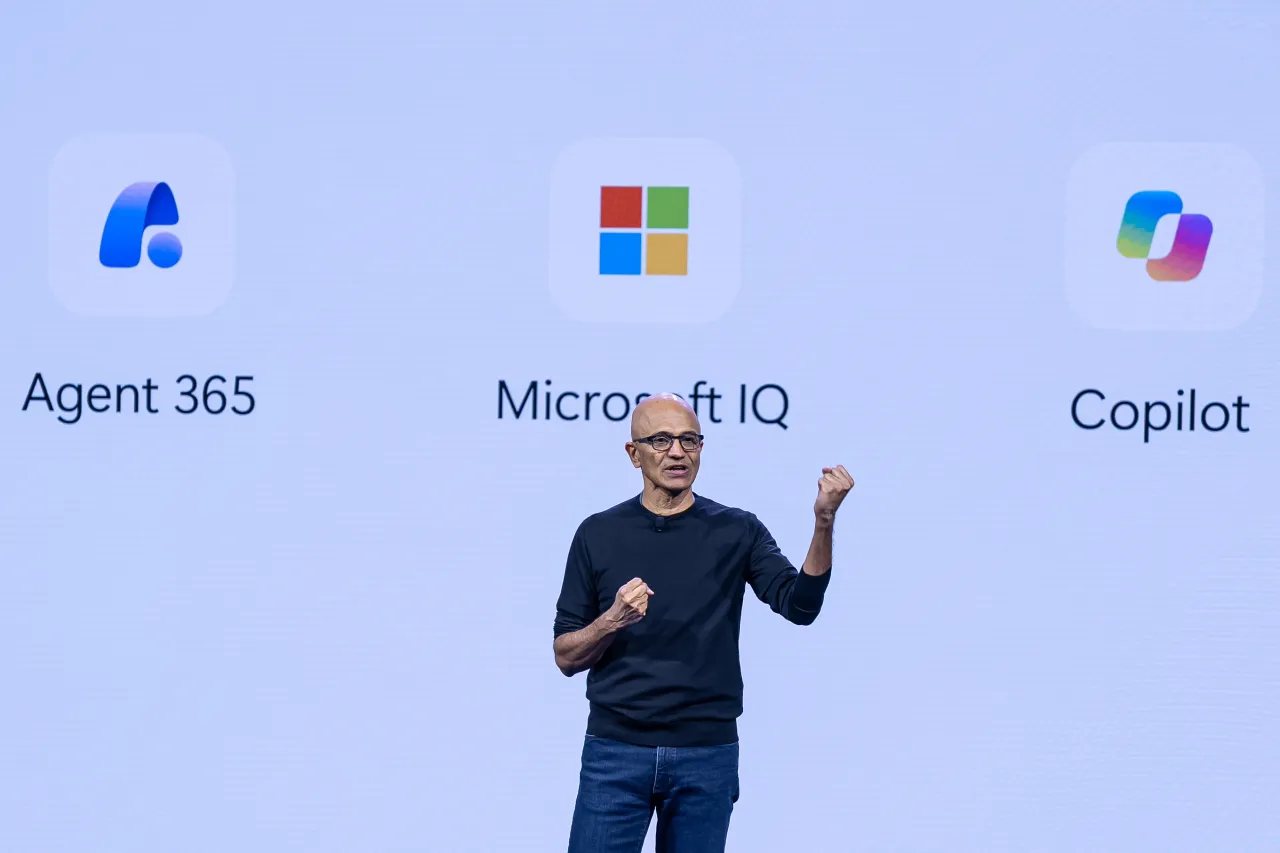
Microsoft reported $92.3 billion in quarterly revenue as Azure grew 48%, Microsoft Cloud reached $63.9 billion and AI spending increased.
Microsoft reported $92.3 billion in revenue for the quarter ended September 30, up 19% from a year earlier. The result extended a run of record quarterly revenue that TechCrunch counts at 10 consecutive quarters. Cloud and artificial intelligence demand powered the gains, although Microsoft also spent heavily to expand the infrastructure behind them.
Microsoft revenue reaches new quarterly record
Microsoft’s fiscal first-quarter revenue topped $92 billion for the first time, according to the company’s  official earnings release. Net income reached $36.6 billion, up 32% on a GAAP basis, while diluted earnings per share rose to $4.92.
The figures exceeded Wall Street expectations.  CNBC reported that analysts had expected revenue of $90.69 billion and adjusted earnings per share of $4.73. Microsoft reported adjusted earnings per share of $4.89, helping send its shares higher in after-hours trading.
TechCrunch described the result as Microsoft’s 10th consecutive quarterly revenue record. The company’s release confirms the latest record but does not itself label the result as part of a 10-quarter streak. That longer sequence is therefore best understood as an analysis of Microsoft’s reported financial history.
Azure and Microsoft Cloud drive growth
Microsoft Cloud revenue reached $63.9 billion, an increase of 30% from the year-ago quarter. Azure revenue rose 48%, making cloud infrastructure the strongest visible growth engine in the results. Microsoft also said Microsoft 365 commercial cloud revenue increased 17% on a reported basis.
The company reorganised its reporting into two segments: Agents and Infra, and Devices and Consumer. Agents and Infra generated $76.8 billion in revenue, up 25%, while Devices and Consumer produced $15.5 billion, down 3%.  Microsoft’s results announcement provides the segment breakdown.
Not all cloud revenue comes directly from artificial intelligence. Microsoft 365 includes a broad range of productivity services, while Azure hosts traditional business applications as well as AI workloads. Still, the results show that demand for cloud capacity remains strong as companies build and deploy AI systems.
AI commitments increase spending pressure
Microsoft said commercial remaining performance obligations rose 73% to $677 billion. The figure represents contracted revenue that the company expects to recognise in future periods. It points to strong demand, but it also creates pressure to build enough data-centre capacity to fulfil those commitments.
Capital spending and finance leases reached $45.2 billion during the quarter, according to CNBC. That was another quarterly record and represented an increase of about 30% from a year earlier. Microsoft is investing in servers, chips, networking equipment and other infrastructure needed for cloud and AI services.
The spending carries financial trade-offs. CNBC reported that Microsoft’s free cash flow fell 27% to $18.63 billion in the quarter. Strong revenue and profit therefore arrived alongside a more expensive effort to expand the company’s computing capacity.
Microsoft balances cloud gains with weaker devices
The results were not positive across every business. Revenue in Devices and Consumer fell 3%, while Windows OEM and Devices revenue dropped 22%. Microsoft said search and advertising revenue excluding traffic acquisition costs increased 12%, partly offsetting weakness in hardware and Windows licensing.
The company also returned $10.2 billion to shareholders through dividends and share repurchases. At the same time, it continued hiring and investing in strategic areas while reviewing costs across the business. The combination reflects the broader challenge facing major technology companies: funding AI expansion without allowing infrastructure spending to overwhelm cash generation.
“We are delivering greater capability, choice, control, and cost efficiency for customers across our entire stack,” Microsoft CEO Satya Nadella said. The statement presents AI and cloud growth as part of a broader platform strategy, rather than as a single product cycle.
For more coverage of artificial intelligence, enterprise software and cloud technology, readers can visit Diaspora Digital Media’s  Tech section.
In conclusion, Microsoft delivered another record revenue quarter as Azure and wider cloud services accelerated. The company’s profits remain strong, but its capital spending and falling free cash flow show the cost of meeting AI demand. The next test will be whether Microsoft can convert its large order backlog into durable growth while maintaining financial discipline.




