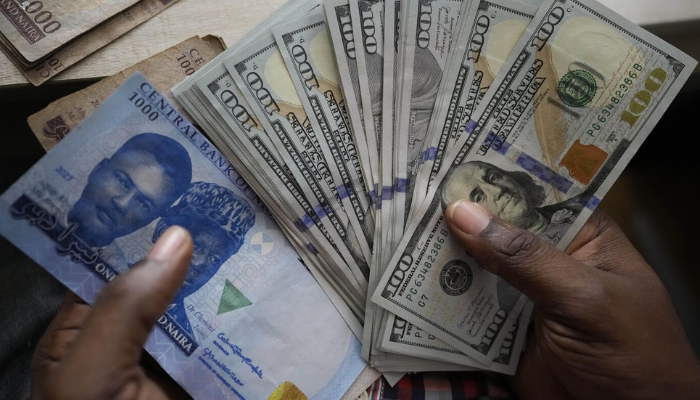
(DDM) – The Nigerian currency began Wednesday’s trading session under close scrutiny after opening at ₦1,379.05 per dollar at the Nigerian Foreign Exchange Market (NFEM), reflecting continued volatility in Africa’s largest economy.
The naira traded within a tight band in the official window during early hours, touching an intraday low of ₦1,376.02 before regaining slight ground as market activity progressed.
The narrow fluctuation, while not dramatic, underscores persistent fragility in Nigeria’s foreign exchange market amid sustained pressure on dollar supply.
Market watchers say the opening rate signals a cautious equilibrium between demand and supply, with traders carefully monitoring liquidity injections and inflows from exporters and foreign investors.
The NFEM, introduced as part of ongoing reforms by the Central Bank of Nigeria, was designed to unify exchange rates and improve transparency in forex transactions.

Since the unification of Nigeria’s multiple exchange windows in 2023, the naira has experienced periods of sharp depreciation, followed by short-lived recoveries driven by policy interventions.
The official rate now serves as the benchmark for most formal transactions, including government payments, corporate imports and foreign investor settlements.
Analysts note that early-morning trading patterns often reflect overnight offshore orders and pending corporate demand for foreign currency.
The naira’s slight rebound after hitting ₦1,376.02 suggests mild dollar inflows or temporary easing of demand pressure.
However, currency experts warn that stability within a narrow range does not necessarily indicate long-term strength.
Nigeria’s forex challenges are rooted in structural imbalances, including heavy dependence on oil exports and limited non-oil dollar earnings.
While global crude oil prices remain a critical determinant of foreign exchange inflows, domestic production constraints and pipeline disruptions have weakened expected gains.
The Central Bank has in recent months implemented measures aimed at boosting liquidity, clearing backlogs of unmet dollar demand, and restoring investor confidence.
These include tightening monetary policy, raising interest rates, and encouraging diaspora remittances through formal channels.
Inflationary pressures within the domestic economy have further complicated the currency outlook.
Higher import costs, fuel subsidy reforms, and supply chain disruptions have increased demand for foreign exchange among manufacturers and traders.
The official window’s performance is closely watched because it influences investor perception and shapes expectations in the parallel market.
Although the gap between official and parallel rates has narrowed compared to previous years, disparities still exist and often trigger speculative activity.
Financial analysts say sustained stability will depend on consistent dollar inflows from oil sales, foreign direct investment, and multilateral funding support.
There are also calls for broader economic diversification to reduce overreliance on petroleum exports.
In recent months, the federal government has intensified efforts to attract foreign portfolio investors by promoting policy clarity and macroeconomic reforms.
However, investor confidence remains sensitive to inflation trends, fiscal discipline, and political stability.
For now, the naira’s Wednesday opening reflects a market in wait-and-see mode.
Traders are expected to respond to mid-week liquidity updates, interbank transactions, and any signals from monetary authorities.
The coming days will reveal whether the currency can maintain its footing or face renewed downward pressure.
In a country where exchange rate movements directly affect food prices, fuel costs, and household purchasing power, even marginal shifts carry significant economic implications.
As Nigeria navigates complex reform measures and global financial headwinds, the naira’s path remains a central barometer of economic resilience and policy credibility.