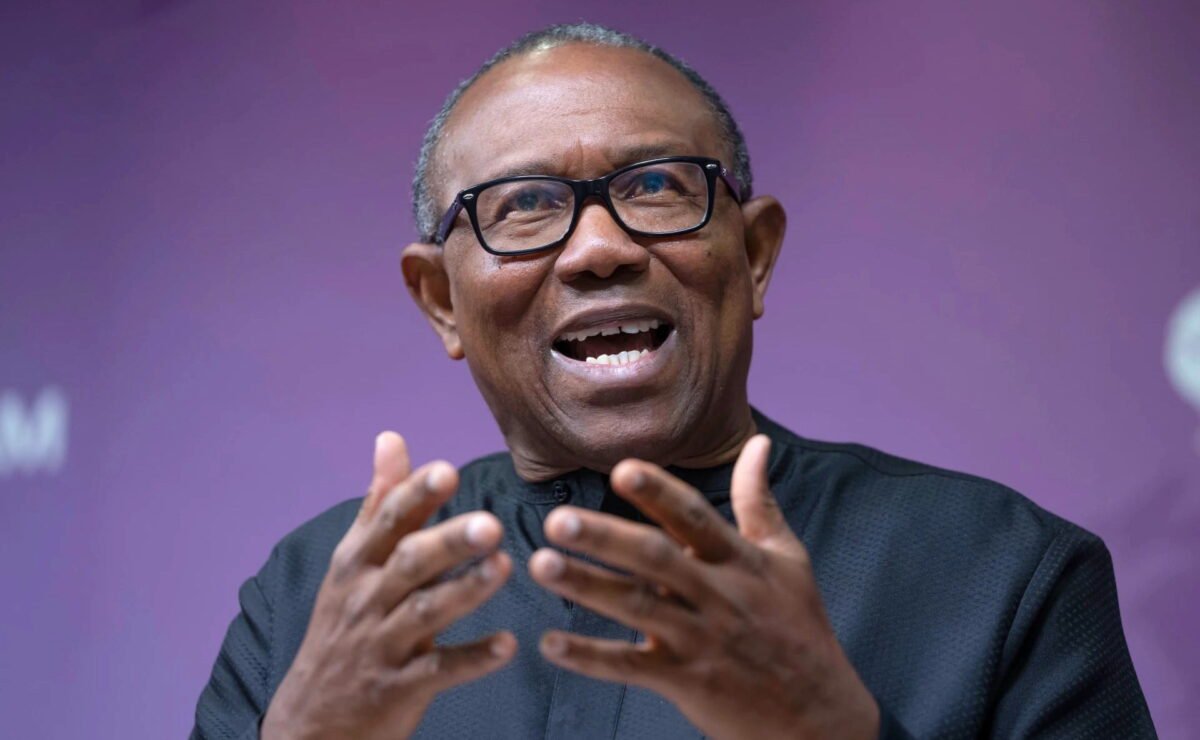
(DDM) – Former presidential candidate Peter Obi has condemned the use of tear gas on citizens protesting at the National Assembly, describing the incident as a national embarrassment and a sign of democratic backsliding.
Obi reacted after security operatives dispersed demonstrators who had gathered near the parliament complex to demand credible and transparent elections.
Witness videos circulating online showed protesters fleeing as tear gas spread across parts of the area.
The demonstrators had assembled to call for reforms that would guarantee free, fair and credible polls, especially around the electronic transmission of results.
Obi, who was the 2023 presidential candidate of the Labour Party, voiced his criticism on his verified account on X.
He argued that peaceful civic participation should not attract force in a democratic setting.
According to him, citizens who act within constitutional limits while expressing political opinions deserve protection, not suppression.
He characterized the development as damaging to the country’s global image and democratic credentials.
Obi stated that scenes of citizens being dispersed while demanding credible elections send the wrong signal to the international community.
He added that such actions could weaken public confidence in democratic institutions.
The former Anambra governor urged Nigerians to remain united in defending democracy.
He encouraged citizens to lawfully resist actions that could undermine electoral integrity.
Obi emphasized that democracy thrives when people freely express their will without fear.
He stressed that credible elections form the foundation of good governance and national stability.
A key part of his message focused on real-time electronic transmission of polling unit results.
He insisted that mandatory electronic transmission enhances transparency and reduces disputes.
He explained that when results move directly from polling units to central databases, opportunities for manipulation reduce.
He further argued that public trust grows when voters can independently verify results.
Security agencies have not publicly issued a detailed explanation of the incident as of the time of filing this report.
Public reactions remain mixed, with some defending the police response as crowd control and others criticizing it as excessive.
Civil society groups in Nigeria have repeatedly called for restraint in handling peaceful protests.
Election credibility has become a dominant theme in Nigeria’s political discourse ahead of future polls.
Analysts say disputes over result transmission reflect deeper concerns about trust in the electoral system.
They note that technology has increasingly shaped how Nigerians view election transparency.
For many voters, the debate is no longer only legal but also about confidence in outcomes.
Obi concluded his remarks by expressing hope for a country built on justice, credible elections and accountable leadership.
He framed electoral reform as a collective national task rather than a partisan demand.
The episode adds to ongoing national conversations about how to balance security, civil liberties and democratic rights.