The United States’ closest allies have drawn a sharp line, refusing to participate in the blockade of the Strait of Hormuz and, in doing so, exposing fresh fractures within an already strained NATO alliance.
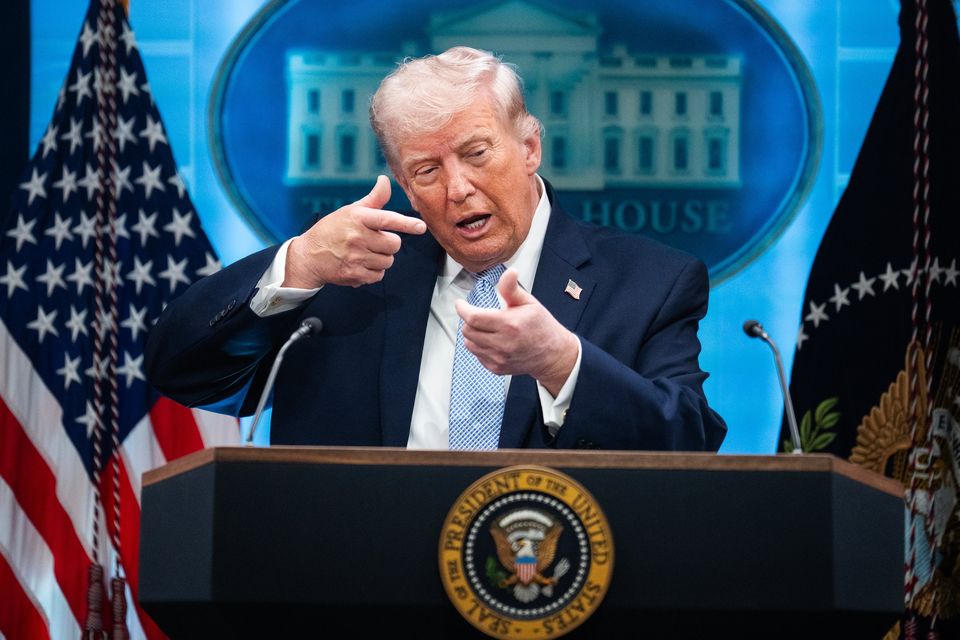
Trump announced over the weekend that the US military would block all maritime traffic through the strategically vital waterway, after weekend talks with Iran collapsed without agreement.
The blockade, he declared on Truth Social, would not be a unilateral effort.
“Other Countries will be involved,” he wrote.

The US military later clarified that the measure, set to begin at 14:00 GMT Monday, would target only vessels travelling to or from Iranian ports.
But key NATO partners Britain and France chief among them want no part of it.
“We’re not supporting the blockade,” British Prime Minister Keir Starmer told the BBC bluntly.
“My decision has been very clearly that whatever the pressure and there has been some considerable pressure we’re not getting dragged into the war.”
France struck a similar tone, though Paris offered an alternative.
President Emmanuel Macron announced on X that France and Britain would organise a conference to establish a multinational mission aimed at restoring freedom of navigation through the strait.
“This strictly defensive mission, distinct from the belligerents, will be deployed as soon as the situation allows,” he said.
The rift is the latest in a series of tensions between Washington and its European allies over the six-week conflict with Iran, which began on February 28.
Several European countries had already drawn Trump’s ire by denying US military aircraft access to their airspace.
Trump has since threatened to withdraw from NATO entirely and is reportedly weighing a reduction of US troop deployments in Europe.
NATO Secretary General Mark Rutte, who told European governments last week that Trump is seeking concrete commitments on securing the strait, has suggested the alliance could play a role but only if all 32 members can agree on a common mission framework. That consensus remains elusive.
Turkey, for its part, urged a diplomatic solution.
Foreign Minister Hakan Fidan said on Monday that while reopening the Strait of Hormuz is essential, establishing an international military force to oversee it would be deeply complicated.
He called on NATO to reset its relationship with the Trump administration at a summit scheduled for Ankara in July.
At stake is a waterway through which roughly one-fifth of the world’s oil supply normally flows a corridor Iran has effectively shut since hostilities began, sending shockwaves through global energy markets and supply chains.