



Amid the intensifying geopolitical confrontation between Israel and Iran, fresh revelations have emerged pointing to growing frustration within Israel’s top leadership over an apparent failure to ignite internal unrest inside the Islamic Republic. At the center of this development is Israeli Prime Minister Benjamin Netanyahu, who, according to recent reports, had placed significant strategic hope in a covert plan designed to spark a popular uprising in Iran—an outcome that now appears increasingly unlikely.
The report, originally published by The New York Times, sheds light on behind-the-scenes deliberations involving Israeli and American officials during the early stages of the ongoing conflict. Drawing on insights from both current and former intelligence figures in the United States and Israel, the report suggests that Netanyahu had actively supported an initiative led by Israel’s intelligence agency, Mossad, aimed at destabilizing the Iranian government from within.
According to the account, the plan was not merely an auxiliary strategy but a central pillar in Netanyahu’s broader effort to justify military action against Iran. During discussions with then U.S. President Donald Trump, Netanyahu reportedly emphasized the likelihood that internal dissent within Iran could be amplified into a full-scale uprising, potentially leading to regime change. This projection, if realized, would have significantly altered the balance of power in the region without requiring a prolonged military campaign.
However, as the conflict has unfolded, those expectations have not materialized. Instead of widespread protests or a groundswell of opposition capable of challenging the Iranian leadership, the situation within Iran has remained relatively contained. Intelligence assessments now indicate that the conditions necessary for a large-scale uprising are absent, leading to a reassessment of earlier assumptions that may have been overly optimistic.
One of the key factors contributing to this outcome is the lingering fear among the Iranian population following previous crackdowns on dissent. Observers point to the violent suppression of protests earlier in the year, which served as a stark warning to potential demonstrators about the risks involved in challenging state authority. These memories, combined with the uncertainties and dangers posed by ongoing military strikes, appear to have significantly dampened public willingness to take to the streets.

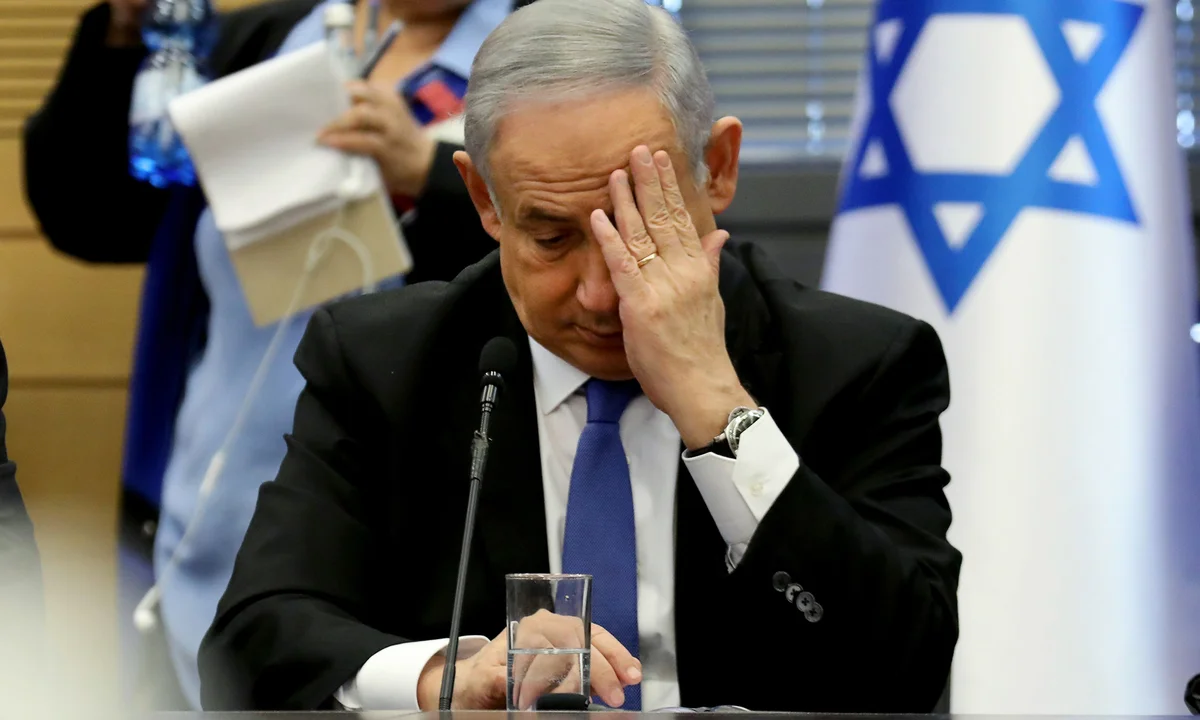
DDM News gathered that within Israeli leadership circles, there is a growing recognition that external military pressure alone may not be sufficient to trigger internal political transformation in Iran. While some officials continue to hold onto the possibility that unrest could still emerge under the right conditions, the prevailing sentiment is increasingly one of skepticism. The gap between initial expectations and current realities has become a source of tension, particularly for Netanyahu, who had reportedly championed the strategy at the highest levels.
Behind closed doors, the Prime Minister is said to have expressed dissatisfaction with the pace and effectiveness of the Mossad’s efforts. In at least one high-level security meeting held during the early phase of the war, Netanyahu reportedly voiced concerns that the plan was failing to deliver the anticipated results. His frustration was compounded by the uncertainty surrounding the broader military campaign, including concerns that the United States might reconsider its level of involvement.
The possibility that Donald Trump could choose to scale back or even halt military operations at short notice has added another layer of urgency to Israel’s strategic calculations. For Netanyahu, the success of the uprising plan was not only about weakening Iran internally but also about ensuring sustained international support for the campaign. Without visible signs of internal resistance within Iran, the justification for continued military engagement becomes more complex and potentially more contentious on the global stage.
DDM News understands that despite these setbacks, Israeli officials have not entirely abandoned the objective of regime change in Iran. Instead, there appears to be an ongoing effort to reassess tactics and explore alternative avenues for influencing developments داخل the country. This could involve a combination of diplomatic pressure, economic measures, and continued intelligence operations, although the effectiveness of such approaches remains uncertain.
The situation highlights the inherent unpredictability of attempting to engineer political change within another nation, particularly one with deeply entrenched governance structures and a history of resisting external pressure. While intelligence agencies can gather data, influence narratives, and support opposition elements, the emergence of a массов uprising ultimately depends on a complex interplay of social, economic, and political factors that are not easily controlled from the outside.
As the conflict continues, the apparent failure of the uprising strategy serves as a reminder of the limits of covert operations in shaping large-scale political outcomes. For Netanyahu and his allies, it represents not just a tactical setback but also a strategic challenge that may require a fundamental rethinking of how to approach the broader objective of countering Iran’s influence in the region.
In the coming weeks, much will depend on how both Israel and its allies adapt to these evolving realities. Whether through recalibrated military strategies, renewed diplomatic efforts, or alternative forms of pressure, the path forward remains uncertain. What is clear, however, is that the anticipated internal collapse of Iran’s leadership has not occurred, leaving policymakers to grapple with a far more complex and protracted confrontation than initially envisioned.



 and then