



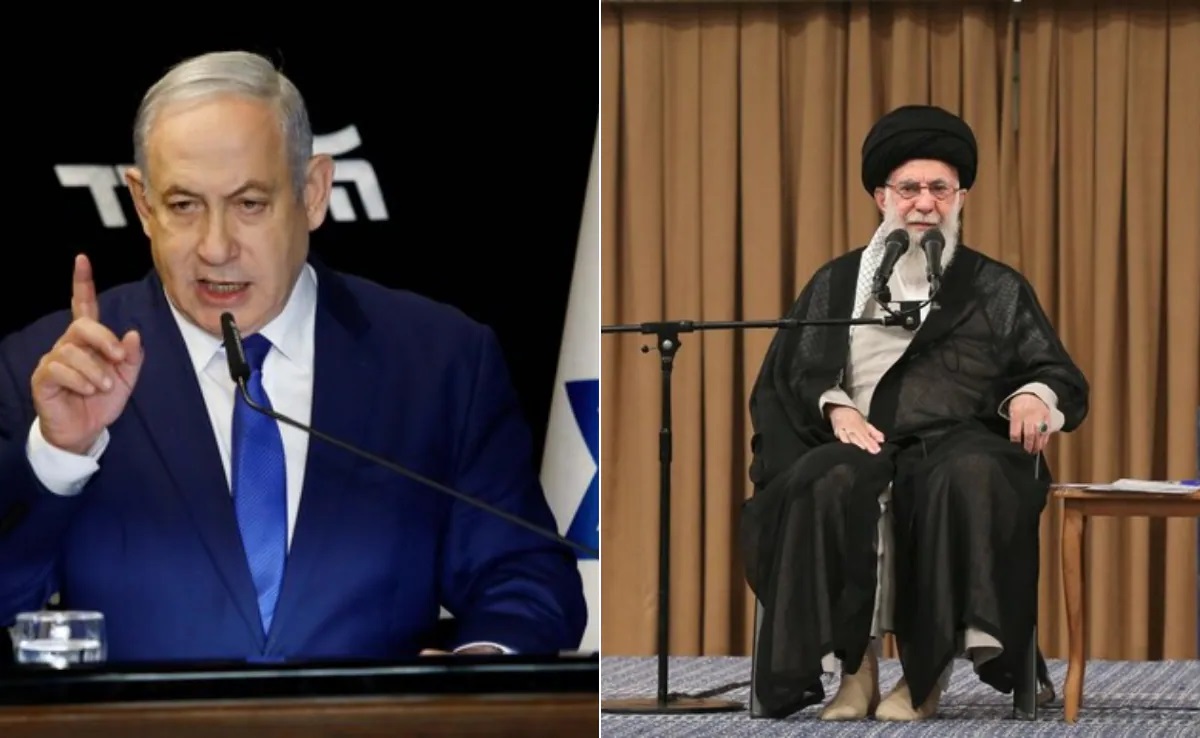
Israeli Prime Minister Benjamin Netanyahu has said there are “growing signs” that Iran’s Supreme Leader Ali Khamenei may have been killed following coordinated military strikes carried out by Israel and the United States across Iran, marking a dramatic escalation in the rapidly expanding Middle East conflict.
Speaking amid continuing military operations, Netanyahu said intelligence assessments suggest the Iranian leader could be “gone,” though no official confirmation has been issued by Iranian authorities.
Damage Reported at Khamenei Compound
Satellite imagery released earlier showed significant damage to a compound in Tehran associated with Khamenei, fueling speculation over the fate of Iran’s highest political and religious authority.
Israeli officials said the joint campaign targeted strategic military infrastructure and senior figures within Iran’s leadership structure.

According to Israeli statements, “several senior regime figures” were eliminated during the strikes, though identities have not yet been publicly disclosed.
The United States has supported the operation, with President Donald Trump confirming that “major combat operations” are now underway.
Trump also urged Iranian citizens to rise against their government, describing the strikes as part of efforts to neutralize threats posed by Tehran.
Iran Launches Regional Retaliation
In response, Iran launched widespread retaliatory attacks across the Middle East, targeting locations believed to host US military assets or allied infrastructure.
Explosions were reported in Dubai, Doha, Bahrain, and Kuwait, triggering air defence responses and emergency security measures.
Several Gulf nations temporarily closed their airspace, disrupting international aviation routes and grounding hundreds of flights.
Missile alerts also sounded across parts of Israel as Iranian projectiles targeted northern and central regions.
Heavy Casualties Reported
Iran’s Red Crescent reported that more than 200 people have been killed across multiple locations following waves of airstrikes and explosions since the conflict intensified earlier Saturday.
Rescue operations remain ongoing as emergency teams search damaged areas.
New explosions were reported across Iran on Saturday evening, while Israel’s military said its air force “continues to operate” inside Iranian territory, suggesting further strikes may be imminent.
British Prime Minister Keir Starmer confirmed that UK military aircraft are currently deployed in the region as part of coordinated defensive operations aimed at protecting British personnel, allies, and strategic interests.
International analysts say Washington and Tel Aviv increasingly view Iran’s leadership as vulnerable, raising concerns that the current military campaign could evolve beyond limited strikes into a broader attempt to weaken or destabilize the Iranian government.
The unfolding confrontation represents one of the most dangerous moments in Middle Eastern geopolitics in decades, with multiple countries now directly or indirectly involved and fears growing of a wider regional war.
Diplomatic calls for restraint continue, but with ongoing strikes, retaliatory attacks, and uncertainty surrounding Iran’s leadership, the situation remains highly volatile.



 and then