



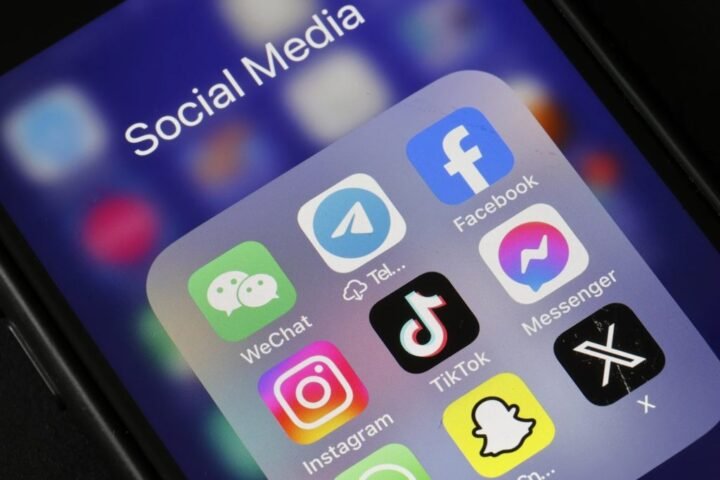
In a rapidly evolving battle where bullets, borders, and boots on the ground are no longer the only frontlines, Nigeria’s fight against terrorism has entered an intensified digital phase. The Federal Government has disclosed sweeping efforts to collaborate with major global social media companies to identify, monitor, and shut down online accounts operated by terrorist and criminal groups—accounts that have increasingly become tools for propaganda, intimidation, recruitment, and illicit fundraising.
This revelation, made public at an end-of-year security briefing in Abuja, underscores a growing recognition by Nigerian authorities that modern terrorism thrives not only in forests and ungoverned spaces but also in cyberspace. According to the Director-General of the National Counter Terrorism Centre (NCTC), Major-General Adamu Laka, social media platforms such as TikTok, Facebook, Instagram, Snapchat, and X have been actively exploited by terrorists, bandits, and kidnappers to showcase their crimes, communicate with sympathizers, and even raise funds.
Speaking to journalists at the briefing, Laka laid bare the scale of the challenge and the quiet but sustained engagements between Nigerian security agencies and global technology companies. His comments provide rare insight into a largely unseen digital counterterrorism campaign that has been unfolding behind the scenes.
Terrorism Goes Digital
For years, Nigeria’s security crisis has been framed primarily in physical terms—attacks on villages, mass abductions, raids on highways, and violent insurgency across the North-East, North-West, and parts of the Middle Belt. But as DDM NEWS investigations reveal, terrorist groups have increasingly embraced digital platforms to amplify fear, boost morale among fighters, and project power far beyond their immediate areas of operation.
“Social media has become a major tool for these groups,” Laka said. “They use it to publicise their operations, display looted items, threaten communities, and communicate with supporters.”

At various points, bandits and terror groups brazenly posted videos flaunting weapons, abducted victims, and stolen goods. Some went as far as hosting live sessions, interacting with followers in real time, and taunting both the public and security agencies. These acts were not merely performative; they were designed to instill fear, attract attention, and signal dominance.
According to Laka, the brazenness of these activities forced Nigerian authorities to rethink their counterterrorism approach. “There was a time when bandits would go on TikTok showing their loot,” he recalled. “They were even doing live streams and holding conversations.”
That phase, he said, has largely been curtailed—not by chance, but through deliberate cooperation with social media companies.
Quiet Engagements With Tech Giants
One of the most striking disclosures at the briefing was the extent of Nigeria’s engagement with major social media platforms. Contrary to the perception that global tech companies operate beyond the reach of national governments, Laka said Nigerian security agencies have held multiple meetings with these firms to address content and accounts that threaten national security.
“We have had several meetings with social media platforms like TikTok, Instagram, Snapchat, Facebook, and X,” he said. “They are businesses looking to grow their subscribers, but we engage them, explain the effects of certain posts on national security, and we take them down.”
According to sources familiar with the process who spoke to DDM NEWS, these engagements involve a mix of formal requests, intelligence-backed reports, and continuous communication between Nigerian authorities and the trust-and-safety teams of the platforms. In many cases, accounts linked to terrorist activity are flagged, investigated, and removed within hours or days.
“If you knew how many accounts we took down,” Laka added, hinting at a scale far larger than publicly acknowledged.
While exact figures were not disclosed for security reasons, officials confirmed that hundreds of accounts linked to terror propaganda, bandit intimidation, and fundraising have been shut down over the past year alone.
A Game of Cat and Mouse
Despite these successes, the Director-General was quick to caution that the digital battlefield is constantly shifting. Terrorist groups, he said, have adapted by creating aliases, using unverified accounts, and frequently changing online identities to evade detection.
“These groups are always evolving,” Laka explained. “They use fake names, multiple accounts, and unverified profiles. But we are also adapting.”
Security experts say this cat-and-mouse dynamic is a defining feature of modern counterterrorism. As platforms tighten controls, terror networks seek new ways to exploit loopholes—sometimes migrating to less regulated apps or using encrypted messaging services that are harder to monitor.
Nevertheless, Nigerian authorities insist they are not playing catch-up. According to Laka, intelligence units now integrate digital surveillance with traditional field operations, allowing online activity to inform arrests, raids, and asset seizures.
Following the Money: Ransom as Terror Fuel
Beyond propaganda and intimidation, social media has played an indirect but critical role in terror financing. Laka revealed that ransom payments—particularly in kidnapping cases—remain a major source of funding for terrorist and criminal groups.
One of the most alarming trends identified by Nigerian security agencies is the increasing use of point-of-sale (POS) operators to move ransom funds.
“In many cases, ransom payments are transferred to accounts belonging to POS operators,” Laka said. “The kidnappers give out the POS operator’s number, the money is transferred, and they go to collect it.”
This method, he explained, allows kidnappers to bypass traditional banking scrutiny and complicates efforts to trace funds. By the time investigators track the transaction, the cash may already have been withdrawn and dispersed.
According to intelligence sources, some POS operators are unwitting participants, while others are complicit—either coerced or motivated by profit. This has prompted a renewed focus on financial intelligence, with security agencies working closely with banks, mobile money operators, and financial regulators.
Arrests, Prosecutions, and Asset Seizures
While operational details remain classified, Laka confirmed that intensified tracking of ransom payments has led to several arrests and prosecutions linked to terror financing. Assets have also been seized as part of Nigeria’s broader compliance with international anti-money laundering and counter-terrorism financing standards.
“These things cannot be made public because of security reasons,” he said. “But arrests have been made, prosecutions are ongoing, and assets have been recovered.”
According to DDM NEWS findings, these efforts have contributed significantly to Nigeria’s recent progress with the Financial Action Task Force (FATF), the global watchdog on money laundering and terror financing. Laka disclosed that Nigeria’s improved standing was partly due to coordinated investigations by a joint committee involving security agencies, financial intelligence units, and the judiciary.
“This coordination is critical,” he noted. “It ensures that intelligence does not stop at arrest but leads to prosecution and conviction.”
The Sahel Factor
While addressing Nigeria’s internal efforts, Laka also highlighted the regional dimension of the terror threat. He acknowledged that security conditions had shown signs of improvement toward the end of 2023, only to deteriorate following military coups and instability in parts of the Sahel.
“The situation worsened because these terrorist groups have connections across the region,” he said. “As long as those countries continue to face these challenges, Nigeria will also face them.”
Porous borders, arms trafficking, and cross-border militant networks have made regional cooperation both essential and difficult. Laka stressed that Nigeria must play a leadership role in West Africa and the Sahel to address shared threats.
“This is not something Nigeria can solve alone,” he said. “We are doing our best, and we will not relent.”
Looking Ahead: “We Will Up Our Game”
In one of the most forward-looking statements of the briefing, Laka promised an escalation of both physical and digital counterterrorism efforts in the coming years.
“In 2026, we are going to up our game,” he said, signaling increased investment in technology, intelligence, and regional cooperation.
Security analysts interpret this as an indication that Nigeria plans to deepen its use of data analytics, artificial intelligence, and international partnerships to stay ahead of terror networks that are increasingly tech-savvy.
A Broader Debate on Digital Responsibility
The Federal Government’s collaboration with social media companies also feeds into a broader debate about digital responsibility, free expression, and platform accountability. Civil society groups have long called on tech firms to do more to prevent their platforms from being used to promote violence and criminality.
At the same time, rights advocates caution that takedowns must be transparent and carefully targeted to avoid abuse or suppression of legitimate speech. Nigerian officials insist that their approach is intelligence-driven and focused strictly on national security threats.
A Silent but Critical Frontline
As DDM NEWS continues to investigate Nigeria’s evolving counterterrorism strategy, one thing is clear: the war against terror is no longer confined to forests, highways, and borderlands. It is being fought on screens, servers, and social networks that connect millions of Nigerians daily.
The removal of terrorist accounts from social media may not grab headlines like a military offensive, but its impact is profound—disrupting communication, choking propaganda, and cutting off financial lifelines.
For Nigerian authorities, the message is clear: as terror groups adapt, the state must stay one step ahead—both on the ground and online.
And for the public, the developments offer a glimpse into a hidden struggle unfolding behind familiar apps and timelines, where every takedown represents not just the deletion of an account, but a small victory in a much larger fight for national security.

