


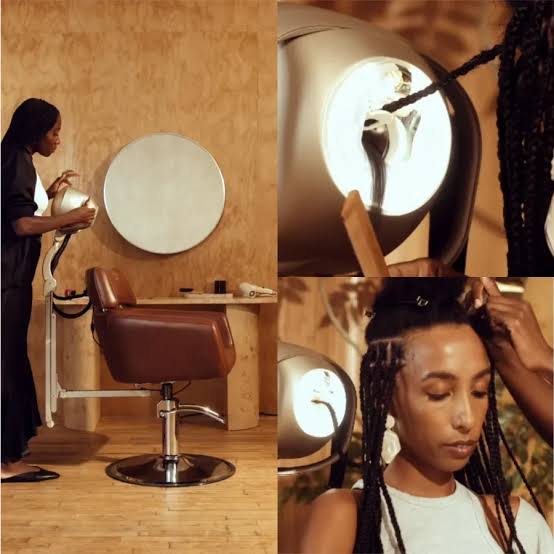
Nigerian-American engineer and entrepreneur Yinka Ogunbiyi has drawn fresh attention to the beauty technology industry after showcasing HaloBraid, a robotic hair-braiding device designed to help professional stylists complete braids up to five times faster.
The device, developed by Ogunbiyi’s hair-technology company Halo, is being described as the world’s first braid-assist robot. A demonstration shared on October 28, 2026, has renewed interest in the innovation, which aims to reduce the time and physical effort required to create popular protective hairstyles.
Unlike a fully automated machine that handles an entire hairstyle from beginning to end, HaloBraid is designed to work alongside human hairstylists. The stylist still parts the client’s hair, determines the braid size and pattern, adds the extensions and starts each braid manually. The device then takes over much of the repetitive weaving before the stylist completes the finishing touches.

According to the company’s official frequently asked questions, HaloBraid can finish individual braids up to five times faster than manual braiding. However, the actual time saved during an appointment depends on factors such as the braid size, hairstyle and the stylist’s workflow.
The idea reportedly emerged during the COVID-19 lockdown in 2020, when Ogunbiyi attempted to install her own waist-length knotless braids. The process took her four days, prompting her to consider whether engineering could make the repetitive task faster and less physically demanding.
A Harvard-trained engineer, Ogunbiyi subsequently worked with co-founder David Afolabi to develop the technology. The team spent years refining the device, reportedly producing more than 600 prototypes while seeking feedback from professional braiders.
The innovation is also intended to address the physical demands of hairstyling. Professional braiders can spend long hours repeating the same hand and wrist movements, which may contribute to strain and other work-related discomfort. By automating part of the braiding process, HaloBraid aims to help stylists reduce repetitive work, shorten appointments and potentially serve more clients without extending their working hours.
In July 2026, reports by Nigerian media outlets said HaloBraid had raised $7 million in seed funding, with investment led by Seven Seven Six, the venture capital firm founded by Reddit co-founder Alexis Ohanian. Other investors included AlleyCorp and Bling Capital. The company also reported strong interest from professional salons ahead of its rollout.
Despite the excitement surrounding the invention, HaloBraid has limitations. It does not currently create scalp-based styles such as cornrows, independently part hair or add extensions by itself. Instead, it focuses on finishing individual three-strand braids after the stylist has prepared them. The company says the technology is intended to assist professional braiders rather than replace their expertise.
The unveiling has put a spotlight on how robotics could reshape an industry deeply connected to Black beauty culture and traditional hairstyling. For clients, the technology could mean shorter salon appointments, while stylists may benefit from reduced repetitive work.
Whether HaloBraid can deliver those benefits consistently across different hair textures, braid sizes and salon workflows will become clearer as adoption expands. For now, Ogunbiyi’s innovation represents a notable attempt to combine engineering with a familiar beauty routine—without removing the human stylist from the process.




