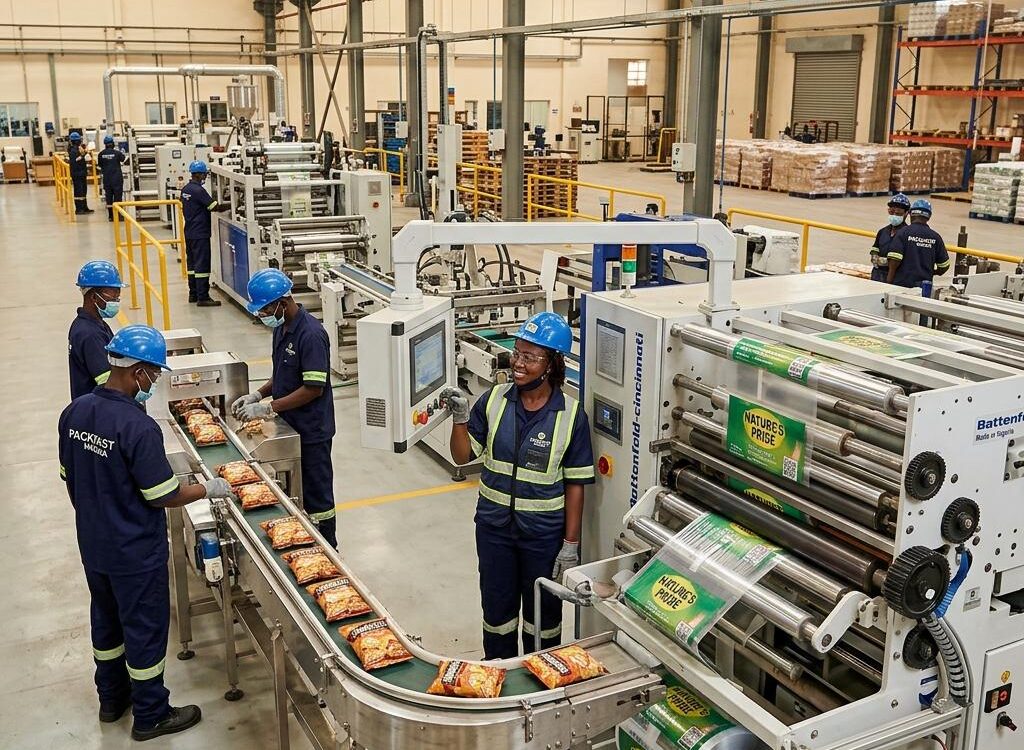
Nigerian Firms Increase Capital Spending by 42% to N3.41trn
Nigerian companies increased investment in property, equipment and business infrastructure as corporate capital spending rose by 42.48 per cent to N3.41 trillion in September 2026. The figure compares with N2.39 trillion recorded in the corresponding period of 2025.
The increase highlights stronger investment activity among businesses seeking to expand operations, improve productivity and meet rising demand. It also reflects growing confidence among some companies despite persistent economic pressures.
Data compiled by MoneyCentral showed that several major companies increased spending on productive assets during the first nine months of the year.
Cement and Telecoms Firms Lead Investment
The cement industry recorded significant investment growth during the period. Dangote Cement, BUA Cement and HBM Nigeria collectively spent N929.24 billion on property, plant and equipment.
This represents a 56.21 per cent increase from N594.83 billion recorded in 2025. The investment supports production expansion and infrastructure development across the industry.
Telecommunications companies also maintained strong investment activity.
MTN Nigeria increased its capital expenditure by 14.13 per cent to N864.80 billion. The company continued expanding network coverage, improving service quality and increasing broadband capacity.
Airtel Africa recorded a 36.04 per cent increase in capital spending to N365.55 billion. The investment reflects efforts to strengthen its telecommunications infrastructure and capture growing demand for mobile and data services.
Meanwhile, Aradel Holdings recorded one of the largest increases. Its capital expenditure jumped by 385.65 per cent to N570.64 billion during the review period.
Seplat Energy, however, recorded a 3.87 per cent decline in capital expenditure to N236.10 billion.
Lower Borrowing Costs Support Expansion
The improving investment environment has also received support from changes in monetary policy.
The Central Bank of Nigeria reduced its benchmark interest rate from 26.5 per cent to 23 per cent. Lower borrowing costs could encourage companies to access credit for expansion and infrastructure projects.
Nigeria’s economy also grew by 3.9 per cent year-on-year in the first quarter of 2026, compared with 3.1 per cent in the corresponding period of 2025.
The growth reflected improvements across oil and non-oil activities.
Government infrastructure spending could further encourage private-sector investment, particularly among manufacturers and industrial companies.
Consumer Goods Firms Face Investment Challenges
Despite the broader increase, investment growth remains uneven across industries.
Capital expenditure among major consumer goods companies reached N311.55 billion, representing a modest 3.27 per cent increase from N301.67 billion in 2025.
Weak consumer demand and rising operating costs continue to challenge businesses in the sector.
Inflation, unemployment and higher energy expenses have also reduced household purchasing power.
These conditions could limit expansion plans as companies balance investment needs against operating expenses.
Nevertheless, the overall increase in corporate capital spending signals continued investment interest among major Nigerian businesses.
Sustaining this momentum will depend on economic stability, access to affordable financing and stronger consumer demand.
As companies expand production capacity and improve infrastructure, their ability to convert investment into higher output and revenue will remain an important measure of economic progress.
Source: MoneyCentral