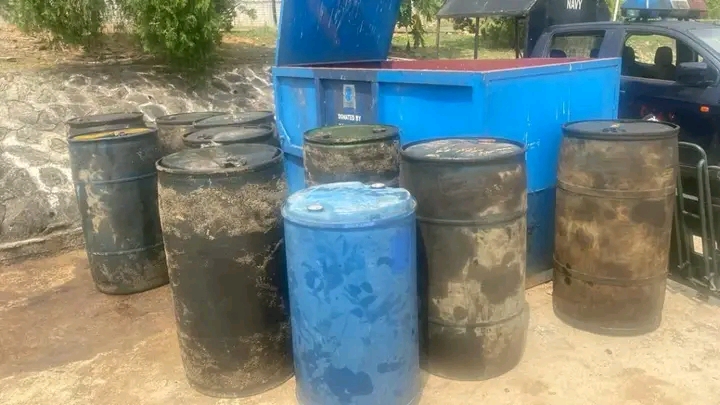
(DDM) – The Nigerian Navy has intensified its campaign against crude oil theft and illegal refining in the Niger Delta, destroying an illegal refinery in Rivers State and intercepting thousands of litres of suspected stolen fuel in Cross River State.
The latest operation forms part of ongoing security efforts aimed at protecting Nigeria’s oil infrastructure and reducing the environmental damage caused by illicit refining activities.
What the Navy discovered in Rivers
According to security officials, naval operatives uncovered and dismantled an illegal refining site during a patrol operation in Rivers State.
Illegal refineries in the Niger Delta typically consist of makeshift facilities where stolen crude oil is processed into diesel, kerosene, or other petroleum products using rudimentary equipment.

These sites are often hidden within creeks and forested areas to avoid detection by authorities.
After discovering the facility, personnel of the Nigerian Navy destroyed the equipment and materials used in the refining process to prevent further operations.
Fuel interception in Cross River
In a separate operation, naval operatives also intercepted approximately 3,950 litres of suspected stolen fuel in Calabar, the capital of Cross River State.
Authorities said the petroleum products were being transported illegally and were believed to have originated from illicit bunkering operations.
The confiscated fuel was seized as part of the Navy’s broader strategy to disrupt the illegal fuel supply chain in the region.
The wider problem of illegal refining
Illegal oil refining remains one of the most persistent security and environmental challenges in the Niger Delta region of Nigeria.
Criminal networks tap directly into oil pipelines to siphon crude oil, which is then processed in makeshift refineries.
Experts say these operations cause massive environmental pollution, including oil spills and the destruction of mangrove forests.
The smoke produced by crude-burning refining equipment also contributes to severe air pollution in surrounding communities.
Economic impact on Nigeria
Oil theft and illegal refining have long been blamed for major revenue losses in Nigeria, Africa’s largest oil producer.
Government authorities have repeatedly warned that billions of dollars in potential revenue are lost annually due to pipeline vandalism and crude oil theft.
Because petroleum exports account for a large portion of Nigeria’s national income, such activities can significantly affect government finances and economic stability.
Military crackdown and security operations
In response to the problem, the Nigerian Navy and other security agencies have intensified patrols across oil-producing states in the Niger Delta.
Operations often involve the destruction of illegal refining facilities, the seizure of stolen petroleum products, and the arrest of suspects involved in oil theft.
Security analysts say these operations are designed to discourage criminal networks and protect the country’s energy infrastructure.
Ongoing enforcement efforts
Authorities say the crackdown on illegal refining will continue across key oil-producing regions including Rivers State and Cross River State.
Officials have also urged communities to cooperate with security agencies by reporting suspicious activities related to oil theft or illegal refining.
As the Nigerian Navy continues its enforcement operations, the government hopes that stronger surveillance and community support will help reduce illegal oil activities and protect the environment in the Niger Delta.