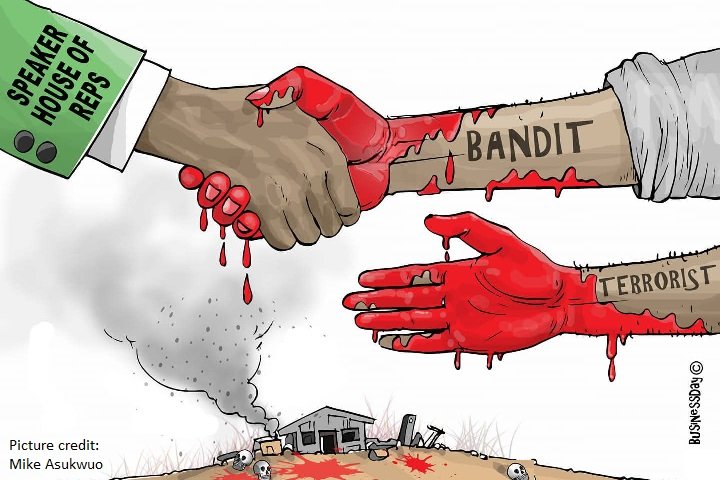
Nigeria’s insecurity crisis has claimed thousands of lives but framing it as a targeted genocide against Christians distorts the truth.
This analysis explores the real drivers of violence — from land disputes to illegal mining and separatist unrest — argues for unity, not division.
Introduction
Nigeria is facing one of the most complex security crises in its history.
Across the North, Central, and Southern regions, Nigerians are being killed, displaced, or kidnapped almost daily.
These victims come from all faiths — Christians, Muslims, and adherents of traditional religions.

Each life lost is a tragedy that diminishes our shared humanity.
Yet, amid this grief, a dangerous narrative has emerged — that the violence is a coordinated attempt to wipe out Christians from Nigeria.
While emotionally compelling, this claim is both misleading and counterproductive.
Nigeria’s insecurity runs deeper than religion.
The Roots of Nigeria’s Security Challenges
To understand the crisis, one must look at the web of factors driving violence across the country, most of which are socio-economic and political rather than purely religious.
1. Land and Communal Conflicts
Decades-old disputes over farmland and grazing routes have fueled repeated clashes in Plateau, Kaduna, and Benue States.
These conflicts are often framed as Christian–Muslim hostilities, but in reality, they stem from territorial competition, population growth, and the absence of effective local governance.
2. Illegal Mining and Resource Control
In Zamfara, Niger, Kwara, Kebbi, and Nasarawa, the rise of illegal artisanal mining has created criminal economies.
Armed groups fight for control of gold and other resources, funding violence through extortion, smuggling, and kidnapping.
Religion plays little to no role in these battles for profit.
3. Herders–Farmers Clashes and Cattle Rustling
Clashes between herders and farmers are often presented as religious conflicts — Muslim herders versus Christian farmers.
But the truth is more complex: these tensions are driven by environmental degradation, desert encroachment, and shrinking arable land.
Both sides, regardless of faith, are victims of policy failure and economic desperation.

4. Banditry and Kidnapping
Banditry has become one of Nigeria’s fastest-growing criminal enterprises.
From the North-West to the Middle Belt and even the South, kidnapping for ransom has become a nationwide plague.
The perpetrators are motivated by money, not ideology, and their victims come from every ethnic and religious background.
5. Separatist Violence in the South-East
The activities of IPOB and its militant arm, the Eastern Security Network (ESN), have compounded insecurity in the South-East.
While their rhetoric centers on Biafran independence, many of their attacks target civilians, police stations, and government institutions.
What began as political agitation has devolved into criminal insurgency — affecting the same Igbo Christians the movement claims to defend.
A Bright Spot: The South-West Security Model
Amid the gloom, the South-West offers a measure of hope.
Through regional collaboration — notably the creation of Amotekun, a community security network — the zone has managed to prevent large-scale violence.
This model shows that coordinated, locally driven security initiatives can make a difference when supported by political will and transparency.
Why the “Christian Genocide” Narrative Is Misleading
To claim that Nigeria is witnessing a state-sponsored or organized genocide against Christians is to ignore the diversity of the victims — and the multiplicity of the perpetrators.
Groups like Boko Haram and ISIS-West Africa do target Christians, but they also slaughter Muslims who reject their extremist interpretation of Islam.
In fact, the majority of Boko Haram’s victims in the North-East have been Muslims.
Similarly, bandits in Zamfara and Niger kill or kidnap for ransom, not for religion.
And in the South-East, IPOB-linked attacks have claimed the lives of Igbo Christians who oppose the group’s ideology.
This “Christian genocide” framing, often promoted by IPOB propagandists and echoed by some international actors, serves political ends rather than truth.
It exploits tragedy to advance separatist narratives and deepen mistrust between communities.
The Real Enemy: Injustice, Impunity, and Poverty
The federal government must accept its share of responsibility.
Years of weak governance, corruption, unemployment, and poor law enforcement have created fertile ground for violence.
But the solution lies not in assigning religious blame — it lies in reform, accountability, and justice.
What Nigeria faces is a national security failure, not a religious war.
Our enemies are not our neighbors of different faiths; they are the forces of greed, extremism, and impunity that thrive when citizens are divided.
To restore peace, Nigeria must:
- Strengthen community-based policing and intelligence sharing;
- Regulate illegal mining and arms trafficking;
- Address rural poverty and youth unemployment;
- Reform the justice system to end impunity;
- Foster interfaith dialogue and media responsibility to counter hate narratives.
Conclusion: One Nation, Shared Humanity
The blood being spilled in Nigeria — whether in Borno, Benue, Anambra, or Zamfara — carries no religious label.
It is Nigerian blood.
The solution to our crisis is not to divide ourselves further but to unite against those who profit from chaos.
Framing Nigeria’s insecurity as a Christian genocide may attract global sympathy, but it also obscures the truth.
And it weakens the collective response needed to end the violence.
If Nigeria is to overcome this era of fear, it must reject propaganda, confront corruption, and commit to justice for all victims — regardless of faith or ethnicity.
Only then can peace return to a nation that has bled for too long.
Rafiu Atolagbe (Concerned Citizen of Nigeria)