


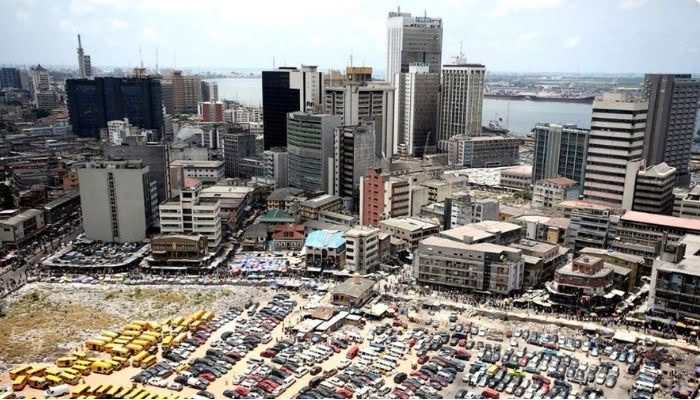
Nigeria is beginning to see the early rewards of a difficult economic reset as international investors gradually reconsider the country’s position in global capital markets.
After years of foreign-exchange shortages, policy uncertainty, weak investor confidence and restrictions that complicated the movement of capital, the country is now presenting a different economic story
one built around market reforms, stronger reserves, improved fiscal management and a renewed effort to restore credibility.
The shift did not happen overnight. Between 2023 and 2025, Nigeria undertook a series of reforms designed to correct long-standing distortions in the economy.

The removal of the petrol subsidy, the liberalisation of the foreign-exchange market, tighter monetary policy and efforts to clear outstanding foreign-exchange obligations represented a major departure from the policies that had previously defined the economy.
While the adjustment created significant pain for households and businesses, it also began addressing some of the issues that had made international investors increasingly cautious about Nigeria.
For global investors, credibility is often just as important as market size. Nigeria has never lacked the latter.
With one of Africa’s largest populations, extensive natural resources, a sizeable consumer market and opportunities across energy, manufacturing, technology, agriculture and financial services, the country has long possessed the ingredients capable of attracting substantial international capital.
The challenge has been creating an environment in which investors can confidently bring money into the country and, just as importantly, take returns out when necessary.
That is where the recent economic reset becomes significant.
The clearance of foreign-exchange backlogs, changes to the exchange-rate system and efforts to improve market infrastructure have started to reduce some of the distortions that previously discouraged foreign investors.
The reforms have also contributed to a more transparent pricing environment for the naira, even though exchange-rate volatility remains a concern for businesses and investors.
According to BusinessDay, the period from 2023 to 2025 involved a deliberate rebuilding of Nigeria’s credibility with international capital markets, with several technical and institutional changes laying the groundwork for renewed investor interest.
Recent developments suggest that investors are beginning to recognise the difference.
Moody’s on August 28, 2026, revised Nigeria’s sovereign outlook from stable to positive while maintaining its B3 rating.
The ratings agency pointed to stronger foreign-exchange reserves, better-than-expected economic growth and increased resilience to external shocks.
The World Bank expects Nigeria’s economy to expand by about 4.2 percent in 2026, while the IMF projects 4.1 percent growth.
These figures may not represent spectacular expansion, but they provide evidence that the economy is gradually moving towards greater macroeconomic stability.
The significance of the improving outlook extends beyond the rating itself.
Sovereign ratings influence how international investors evaluate risk, determine financing costs and compare emerging markets.
An improved outlook can therefore help Nigeria position itself more competitively when seeking foreign capital, particularly at a time when global investors are increasingly diversifying their portfolios beyond traditional developed markets.
There are already signs that this renewed appetite is extending into major Nigerian assets.
The proposed initial public offering of Dangote Refinery, expected to seek about $5 billion in October 2026, could become one of the most significant demonstrations of international investor appetite for Nigerian corporate assets.
The refinery is Africa’s largest and is preparing for further expansion, although investors remain focused on issues such as crude-oil supply, operating costs and profitability.
For DDM News, the emerging picture is therefore not simply that foreign investors have suddenly returned to Nigeria.
Rather, Nigeria appears to have secured a second opportunity to convince global capital that it can sustain the reforms necessary to become a more predictable investment destination.
That second chance is important because investor confidence can disappear quickly but takes considerably longer to rebuild. Nigeria’s previous experience demonstrated this clearly.
Foreign investors were discouraged by difficulties accessing foreign currency, uncertainty around economic policies and concerns over the ability to repatriate funds.
Portfolio investors, in particular, became more cautious, while direct investors increasingly demanded higher risk premiums before committing long-term capital.
The new environment is different, but it is not yet perfect.
Nigeria still faces significant structural challenges.
Inflation remains a major concern, interest rates are high, infrastructure gaps continue to increase operating costs, and the country must improve security and strengthen institutions if it wants investors to commit for the long term.
The IMF has also warned that higher food and transport costs remain headwinds to economic activity, while the World Bank has stressed that macroeconomic stabilisation has yet to translate fully into improved living standards for Nigerians.
This distinction is crucial.
An economy can become more attractive to investors while ordinary citizens continue to experience economic hardship.
Nigeria’s recent reforms have improved several macroeconomic indicators, but the benefits have not yet been evenly distributed.
Recent reporting shows that the reforms have strengthened public finances and investor confidence while simultaneously contributing to a severe cost-of-living crisis for households.
Consequently, Nigeria’s next challenge is to move from stabilisation to sustainable growth.
Investors will want evidence that reforms will survive political cycles.
They will look for consistent monetary and fiscal policies, reliable electricity, efficient ports and transport networks, predictable taxation, stronger regulation and an exchange-rate market that can function without recurring distortions.
They will also want to see deeper local capital markets capable of supporting businesses without excessive dependence on foreign funding.
The country’s ability to provide those conditions will determine whether the current investor interest becomes a temporary rebound or the beginning of a sustained capital cycle.
There is reason for cautious optimism.
The World Bank says Nigeria has made meaningful progress in restoring macroeconomic stability following bold reforms, while the IMF continues to project positive economic growth.
At the same time, Nigeria is benefiting from a broader shift in global investor behaviour, with emerging markets attracting greater attention as investors diversify away from traditional developed-market assets.
Nigeria therefore finds itself at an important economic crossroads.
The hard reset has created a foundation, but the foundation must now support real investment, productive businesses, employment and improved living standards.
The opportunity is enormous.
If policymakers can maintain discipline, strengthen institutions and ensure that reforms translate into a more efficient business environment, global investors could increasingly view Nigeria not merely as a high-risk emerging market, but as a long-term growth opportunity.
The country has been given another chance. The question now is whether Nigeria can use it wisely.
For DDM News, the real measure of this investor comeback will not be the number of international headlines celebrating Nigeria’s reforms.
It will be the amount of patient capital that enters the country, the businesses that expand because of it, the jobs created and whether the resulting economic growth eventually reaches households across the country.
Nigeria has completed the most difficult part of its reset by confronting several long-standing distortions.
Its next task is to prove that the new economic direction can endure.




