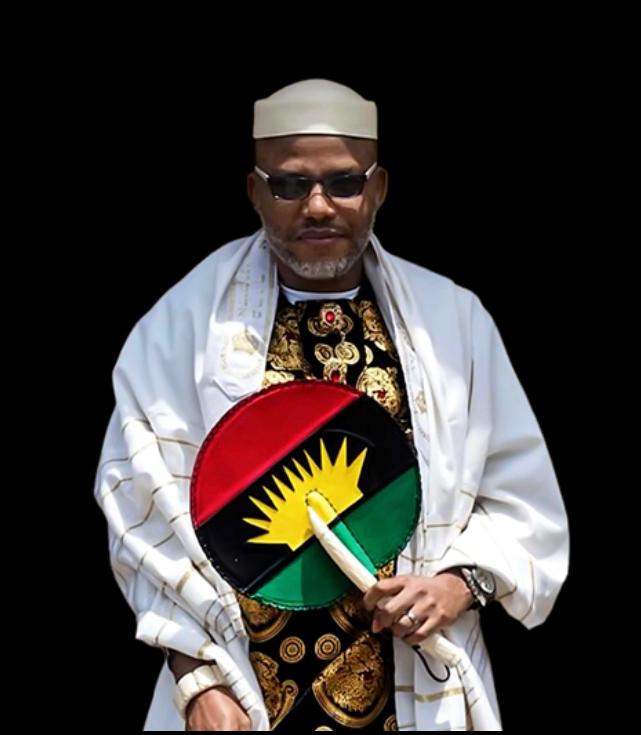
(DDM) – Leader of the Indigenous People of Biafra (IPOB), Mazi Nnamdi Kanu, has unveiled a list of 23 high-profile Nigerians, including serving governors, ministers, and former military chiefs, whom he intends to call as witnesses in his ongoing terrorism trial before the Federal High Court in Abuja.
Diaspora Digital Media (DDM) gathered that the revelation came shortly after Justice James Omotosho dismissed Kanu’s no-case submission, thereby paving the way for the IPOB leader to formally open his defence.
In a document personally signed and filed through his legal team, Kanu explained that the testimonies of these prominent figures were essential to proving his innocence and establishing the political and military context of his prosecution.
Among those listed as witnesses are Minister of the Federal Capital Territory (FCT), Nyesom Wike; Minister of Works, David Umahi; Governors Hope Uzodinma of Imo State and Babajide Sanwo-Olu of Lagos; former Abia State Governor, Okezie Ikpeazu; and former Attorney-General of the Federation, Abubakar Malami.
Also named are two former Chiefs of Army Staff, General Theophilus Danjuma and General Tukur Buratai; as well as security officials including the Director-General of the Department of State Services (DSS), Yusuf Bichi, and senior operative Oluwatosin Ajayi.

Other high-profile individuals listed include former National Intelligence Agency (NIA) Director-General, Ahmed Rufai Abubakar, international human rights lawyer Bruce Fein, Massachusetts Institute of Technology (MIT) digital expert Barry Sutton, and cardiothoracic surgeon Prof. Martin Aghaji, who is expected to testify on Kanu’s deteriorating health condition while in detention.
According to court filings seen by DDM, the IPOB leader categorised his witnesses into two groups: voluntary defence witnesses, who have agreed to testify in his favour, and vital witnesses, who will be subpoenaed under the provisions of the Evidence Act 2011.
Kanu, who has been in custody since June 2021 following his controversial re-arrest and extradition from Kenya, is facing charges bordering on terrorism, treasonable felony, and incitement of violence.
He has consistently denied all allegations, maintaining that his calls for self-determination and referendum do not constitute terrorism or secession.
In his fresh defence motion, Kanu urged the court to extend his defence window from six to 90 days, citing the number of witnesses and the logistical complexity of securing their testimonies.
He outlined specific roles for each witness, stating that:
Nyesom Wike would testify regarding the alleged Obigbo Massacre following the EndSARS protests of 2020, where several IPOB members were reportedly targeted.
Hope Uzodinma would clarify statements made after the murder of Ahmed Gulak, a political aide killed in Imo State in 2021.
Gen. Theophilus Danjuma would revisit his famous 2018 warning urging Nigerians to defend themselves against insecurity.
Gen. Tukur Buratai would testify on the 2017 military invasion of Kanu’s home in Afaraukwu, Abia State, which led to several casualties and his eventual flight abroad.
Babajide Sanwo-Olu would speak on the Lekki Toll Gate shooting during the EndSARS protests, a key incident in Kanu’s argument about state violence and rights violations.
David Umahi and Okezie Ikpeazu would address the process and legality surrounding the proscription of IPOB in 2017 and related security crackdowns in the Southeast.
The inclusion of these witnesses has generated intense public interest and political debate, as many of those named currently hold powerful positions in both federal and state governments.
Political analysts told DDM that Kanu’s legal strategy appears to be aimed at exposing the political motivations behind his prosecution while highlighting the human rights violations allegedly committed against IPOB members.
Observers also believe the move could force a wider national conversation about the conduct of security agencies and the legality of government actions taken against separatist movements in Nigeria.
Meanwhile, Kanu’s lead counsel, Chief Kanu Agabi (SAN), held a closed-door meeting with his client to finalise witness scheduling and strategy ahead of the formal defence opening.
The court is expected to reconvene in coming weeks to determine whether to grant Kanu’s request for a 90-day extension and to set timelines for the appearance of the listed witnesses.
If the court approves the motion, it would mark the first time in Nigeria’s legal history that multiple serving and former public officials, including military generals and sitting governors, are summoned to testify in a terrorism case involving an agitator.