
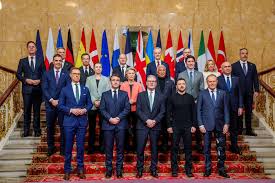
European leaders have pushed back against calls by Donald Trump to join military action against Iran, making it clear they have no plans to get directly involved in the escalating conflict.
Speaking in Berlin, German Chancellor Friedrich Merz said while Iran must not be allowed to threaten its neighbours, there is no clear strategy behind the ongoing U.S.-Israeli military campaign.
“There is still no convincing plan for how this operation will succeed,” he told lawmakers, adding that the US neither consulted its European allies nor requested their support before launching the action.
Merz stressed that Germany would not take part in any military effort to secure the Strait of Hormuz, a critical global oil route that has come under pressure due to the conflict.

His position was echoed across Europe. France’s President Emmanuel Macron said plainly that his country is “not part of the conflict,” while German Defence Minister Boris Pistorius was even more direct, declaring: “This is not our war.”
The rejection highlights growing strain in transatlantic relations, with European governments increasingly wary of being drawn into a conflict they say lacks clear objectives and public support at home.
In the United Kingdom, Prime Minister Keir Starmer has also stopped short of backing military action, amid rising domestic opposition.
Recent polls show a significant number of Britons are against the war.
Trump, however, has criticised European allies for refusing to join the campaign, calling their decision a “very foolish mistake.” He also took aim at Starmer, questioning his leadership.
Despite the pressure, European countries appear determined to chart their own course.
In Spain, Prime Minister Pedro Sánchez condemned the strikes as reckless, while senior officials insisted the country would not bow to external threats.
Behind the scenes, European leaders say they are concerned about the unpredictability of the conflict and the lack of clarity around U.S. objectives, particularly on issues like regime change in Iran.
Instead of direct military involvement, some European nations are exploring alternative measures.
Britain is working with allies on plans to ease tensions around the Strait of Hormuz, while France is consulting partners in Europe, Asia and the Gulf on a possible maritime security arrangement one that may not include the United States.
For now, the message from Europe is clear: while they remain concerned about regional stability, they are not willing to be drawn into a war they neither started nor fully understand.