


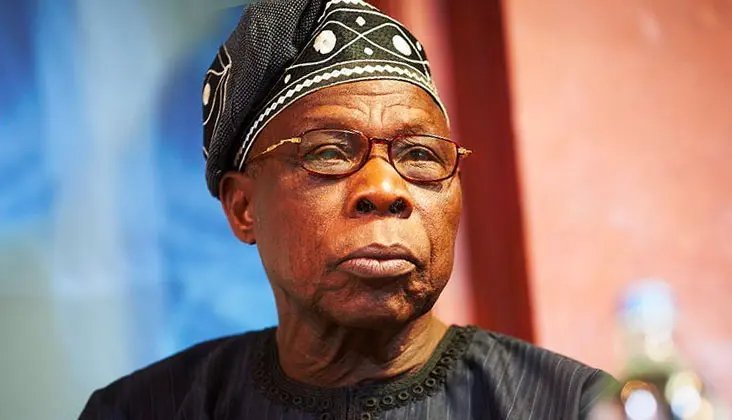
ABEOKUTA, Nigeria — Former President Olusegun Obasanjo has alleged that former Vice President Atiku Abubakar financed an attempt to impeach him during his first term in office, claiming the late Speaker of the House of Representatives, Ghali Umar Na’Abba, received ₦5 million to initiate impeachment proceedings.
The allegation, which revisits one of the most contentious episodes of Nigeria’s Fourth Republic, was made by Obasanjo in response to comments by former Ogun State Governor Olusegun Osoba regarding the political developments leading up to the 2003 general elections.
According to Obasanjo, the alleged impeachment effort originated within the Presidency during his absence from office on a Friday, when Atiku reportedly held a private meeting with Na’Abba.
Obasanjo claimed that the former vice president persuaded the then Speaker that he should serve only one term as president and encouraged him to begin impeachment proceedings against the administration.

He further alleged that Atiku provided Na’Abba with ₦5 million to commence the process, describing the payment as financial support for the impeachment initiative.
The former president said the alleged meeting, payment and related activities were monitored and documented by his Chief of Staff, whom he described as a professional intelligence officer.
According to Obasanjo, the information was subsequently reported to him, giving him insight into what he described as efforts to remove him from office through legislative means.
Despite the alleged plot, Obasanjo said he was not alarmed by the impeachment threat because he believed there were no constitutional grounds for removing him from office.
He maintained that he remained confident the process could not succeed because it lacked the legal and constitutional basis required under Nigeria’s democratic system.
The renewed allegation has revived longstanding political tensions between Obasanjo and Atiku, whose relationship deteriorated during their second term in office after years of serving together in government.
The dispute eventually led to a bitter political fallout that reshaped Nigeria’s political landscape and influenced subsequent elections.
Obasanjo’s latest claims come amid renewed political realignments ahead of the 2027 general elections, with historical disagreements among prominent political figures once again attracting public attention.
At the time of publication, Atiku Abubakar had not issued a fresh response specifically addressing Obasanjo’s latest allegation. However, the former vice president has previously denied similar accusations, describing them as politically motivated and lacking credible evidence.
The latest exchange adds another chapter to the long-running political rivalry between two of Nigeria’s most influential political figures, whose disagreements have continued to shape national political discourse more than two decades after they served together in office.




