


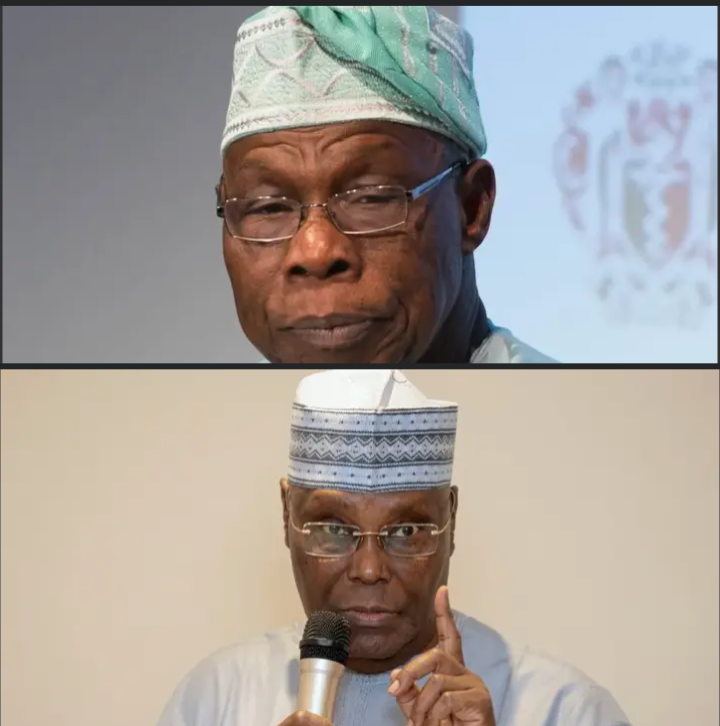
Former President Olusegun Obasanjo has once again stirred political conversations across Nigeria after describing his decision to choose Atiku Abubakar as his vice president in 1999 as the biggest mistake of his political career.
The former Nigerian leader made the remark while reflecting on key decisions he has taken during his decades in public service, saying that although leaders are bound to make mistakes, some choices leave lasting lessons. His latest comments have revived public interest in one of Nigeria’s most enduring political relationships, which transformed from a successful electoral partnership into one of the country’s most notable political rivalries.
Obasanjo and Atiku jointly won the 1999 presidential election on the platform of the Peoples Democratic Party, ushering in Nigeria’s Fourth Republic after years of military rule. At the time, Atiku was selected as Obasanjo’s running mate in what many political observers considered a strategic decision designed to strengthen national unity and balance regional interests.

The administration served two consecutive terms between 1999 and 2007, overseeing major economic reforms, debt relief negotiations, banking sector restructuring and the privatisation of several government owned enterprises. During much of that period, Atiku chaired the National Economic Council and the National Council on Privatisation, playing a visible role in the administration’s economic agenda.
Despite the early cooperation between both leaders, disagreements later emerged over policy direction, political succession and constitutional issues. Their relationship deteriorated sharply during Obasanjo’s second term in office, particularly amid the controversy surrounding the proposed constitutional amendment that would have allowed a third presidential term.
The disagreement eventually led to a complete breakdown in their political alliance, resulting in prolonged legal battles, public exchanges and years of political hostility that have continued long after both men left office.
Reflecting on that experience, Obasanjo said selecting his deputy was one of the genuine mistakes he made during his presidency. According to him, he acted in good faith when making the choice, believing it was the right decision at the time.
The former president maintained that leadership often involves making difficult decisions without knowing how future events will unfold. He noted that while some decisions prove successful, others become valuable lessons that shape future judgment.
Obasanjo also recalled another decision he considers a significant mistake. He said he once rejected an offer of political asylum after receiving information that the late military Head of State, General Sani Abacha, intended to arrest him. Looking back, he admitted that refusing the offer could have cost him his life but expressed gratitude that he survived the difficult period.
His latest comments have generated widespread reactions across Nigeria’s political landscape, with analysts interpreting the remarks as another chapter in the long running disagreement between the two former allies.
The renewed debate comes only days after Atiku criticised Obasanjo over comments relating to the late former Speaker of the House of Representatives, Ghali Na’Abba. Atiku accused the former president of making allegations that he considered unfair and politically motivated, underscoring the continued tension between both leaders.
Political observers say the relationship between Obasanjo and Atiku remains one of the defining stories of Nigeria’s democratic era. What began as a partnership that successfully returned civilian rule to the country later evolved into a rivalry that has influenced political alignments, party structures and presidential contests for more than two decades.
Since leaving office in 2007, both men have frequently found themselves on opposing sides of major national political debates. While Obasanjo has often positioned himself as an elder statesman commenting on national issues, Atiku has remained an active political figure, contesting several presidential elections and continuing to play a significant role in opposition politics.
Analysts believe the latest remarks are likely to reignite discussions about leadership, political loyalty and the importance of selecting trusted partners in government.
Many also argue that the episode offers a broader lesson for political parties and aspiring leaders. The relationship between a president and vice president is widely regarded as one of the most important partnerships in any administration because differences at the highest level of government can significantly affect governance, policy implementation and national stability.
The comments have also generated extensive debate on social media, where Nigerians have expressed differing opinions about Obasanjo’s assessment. While some believe leaders should openly acknowledge past mistakes, others argue that political differences should not diminish the achievements recorded during the administration.
Regardless of the differing perspectives, the renewed exchange has once again placed the spotlight on two of Nigeria’s most influential political figures whose partnership helped shape the country’s democratic journey after military rule.
As political activities gradually gather momentum ahead of future elections, statements from elder statesmen such as Obasanjo are expected to continue attracting national attention. His latest reflection not only revisits a defining moment in Nigeria’s political history but also highlights the enduring impact that leadership decisions can have on governance, political alliances and the country’s democratic evolution.




