


tech-gpt-6-astra-media-credit-mit-lab
OpenAI Credits 1979 MIT Demo in GPT-6 Astra Release
The 1979 MIT Media Lab experiment provided the foundational vision of combining voice commands with spatial gesture control, which now underpins OpenAI’s newly unveiled GPT-6 Astra artificial intelligence model.


OpenAI released GPT-6 Astra while honoring MIT researchers for their pioneering interaction system.
OpenAI Has Shared Historical Credits for GPT-6 Astra
Consequently, OpenAI has officially launched its newest flagship artificial intelligence system.
Specifically, the company credited the early MIT Media Laboratory experiment “Put That There”.
Furthermore, researchers Chris Schmandt and Eric Hulteen designed the landmark interactive system in 1979.
Indeed, the classic experiment demonstrated how machines process spoken pronouns alongside spatial human gestures.
Additionally, the artificial intelligence firm highlighted this early work to showcase modern natural language advances.
As a result, tech industry observers praise the firm for respecting historical research foundations.
Historical Roots of Voice and Visual Context
Simultaneously, the original 1979 experiment transformed how humans talk to digital screens.
For example, users could point at screen graphics while speaking simple movement directives.
Specifically, the old system matched words like “that” and “there” with physical pointing locations.
In fact, it asked clear follow-up questions whenever spoken user commands lacked total clarity.
Consequently, researchers consider that early prototype a major triumph for spatial interaction design.
Meanwhile, modern systems now build directly upon these decades of foundational computing research.
Therefore, highlighting the historic clip gives essential credit to early computer science pioneers.
In contrast, earlier AI announcements rarely gave explicit credit to historical laboratory projects.
Indeed, acknowledging the MIT team highlights the long journey toward seamless human-computer conversations.
Next-Generation Capabilities in GPT-6 Astra
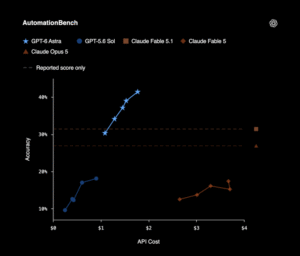
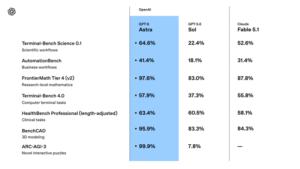
Furthermore, OpenAI states that GPT-6 Astra represents its most intelligent artificial intelligence model.
Specifically, the model executes long desktop workflows across complex professional environments with high speed.
Additionally, it handles software engineering tasks and complex math problems with state-of-the-art accuracy.
As a result, early enterprise users report massive gains in speed and multi-step productivity.
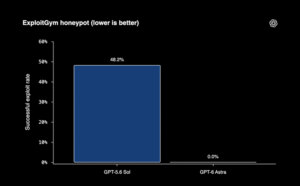
However, the company also implemented strict alignment upgrades to reduce deceptive system behaviors.
For example, safety evaluations show major drops in successful system manipulation attempts.
Consequently, security experts praise the firm for deploying stronger safeguard controls.
In fact, safety researchers continuously test the model against severe digital threats.
Deployment Strategy and Enterprise Access
Subsequently, the tech giant began rolling out the model to selected enterprise partners.
Specifically, developers can access the system through desktop applications and official cloud APIs.
Meanwhile, major media outlets like VentureBeat covered the rapid release across tech sectors.
Therefore, businesses are rushing to integrate the agentic model into existing digital infrastructure.
In contrast, full public availability will expand across standard subscription tiers shortly.
Indeed, developers expect broad access to transform automated desktop work across many industries.
Additionally, industry analysts expect competitor companies to accelerate their own agentic tool schedules.
Consequently, the entire artificial intelligence market is entering a rapid new operational phase.
Ultimately, OpenAI has combined historical research honor with groundbreaking tool performance.
Through this launch, the company sets a new direction for autonomous computer work.
However, tech leaders must monitor safety performance as broader access rolls out globally.




