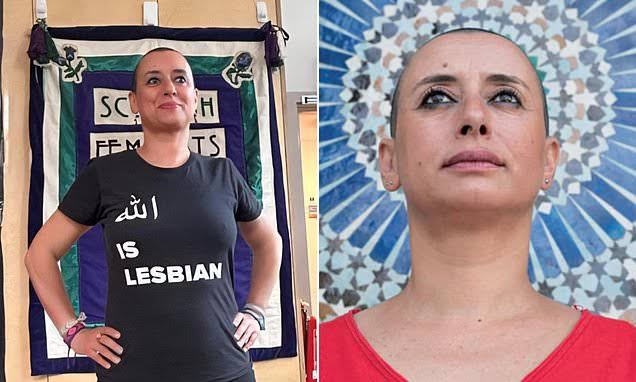
A young Moroccan feminist has been arrested after wearing a T-shirt with a bold women’s rights slogan.
The arrest has sparked outrage across Morocco and beyond. It also triggered death threats against her from hardline critics.
The activist, whose identity is being kept partly confidential for her safety, attended a women’s gathering last week in Rabat.
She wore a white T-shirt with the slogan “My body, my choice” written in Arabic.
Witnesses say she spoke about equality, reproductive rights, and ending gender-based violence.

Her public stance did not sit well with conservative groups.
Within hours, videos and photos of her began circulating on social media.
Some users demanded her arrest, calling the slogan “offensive to Islamic values.” Others went further, issuing explicit death threats online.
Police arrested her the next morning, accusing her of “provoking public disorder” and “violating public morality.”
She was held in detention for two days before being released on bail.
However, prosecutors have confirmed she still faces charges.
Women’s rights activists in Morocco have condemned the arrest as a dangerous attack on free speech.
Many argue that the government is giving in to extremist voices.
“A slogan on a T-shirt should not lead to prison,” said one activist during a protest in Casablanca. “This is about silencing women.”
International human rights groups, including Amnesty International, have also weighed in.
They warned that Morocco’s increasing restrictions on expression could harm its international image.
Social media has amplified the debate, with hashtags like #MyBodyMyChoice trending in the region.
Legal experts say the case exposes a growing clash between Morocco’s modernization efforts and traditionalist forces.
While the country has taken steps toward gender equality, laws on public morality remain strict and vague. These laws can be used against activists, journalists, and artists.
For now, the feminist remains under heavy security.
Friends report she has moved to a safe location after receiving repeated threats. Her trial date has not been set. Many fear she could face prison if convicted.
The incident has reignited calls for Morocco to reform its free speech laws. Supporters insist that wearing a T-shirt should never be treated as a criminal act.
Critics, however, argue that such slogans undermine cultural and religious values.
As the case unfolds, Morocco faces mounting pressure both at home and abroad.
The outcome could set a precedent for future women’s rights activism in the country.