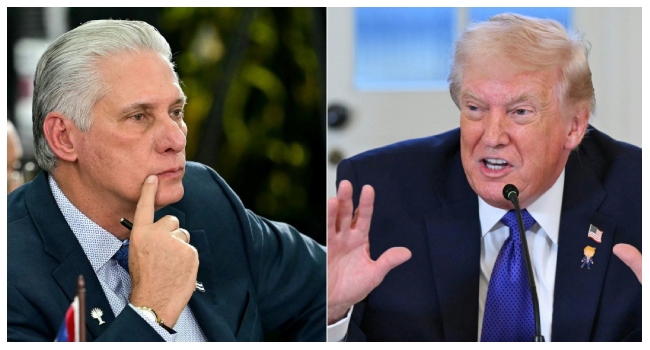
Tensions between Cuba and the United States intensified on Tuesday, as Cuban President Miguel Díaz-Canel warned that the island would mount “unbreakable resistance” against any form of foreign interference.
His comments come amid increasingly sharp rhetoric from Washington, where U.S. President Donald Trump has escalated pressure on Havana, even suggesting the possibility of taking control of the country.
U.S. Secretary of State Marco Rubio also weighed in, dismissing Cuba’s recent economic measures including limited openings to foreign investors as insufficient. He argued that the reforms fall short of the sweeping changes the Trump administration is pushing for.
Trump reinforced that position, describing Cuba as a weakened state and signaling that Washington could act soon.

In Havana, however, Díaz-Canel struck a defiant tone. While reiterating that Cuba remains open to dialogue, he made it clear that the country’s political system is not up for negotiation.
Cuban authorities have consistently maintained that any engagement with the United States must respect the island’s sovereignty and independence.
Officials say the government is willing to explore economic cooperation, but will not entertain changes to its constitutional or socialist framework.
The diplomatic standoff comes as Cuba grapples with a deepening domestic crisis. A massive nationwide blackout earlier this week exposed the fragility of the country’s ageing power infrastructure, leaving millions without electricity for hours.
Although power has been gradually restored in parts of the capital, Havana, outages remain widespread.
In some areas, residents report being without electricity for up to 20 hours a day, worsening already difficult living conditions marked by rising prices and shortages of basic goods.
The energy crisis has been compounded by a sharp drop in oil supplies, following the removal of Venezuela’s former leader Nicolás Maduro a key ally and major fuel supplier to Cuba.
The disruption has significantly reduced fuel imports, crippling electricity generation and affecting sectors such as transportation and tourism.
Adding to the strain, a 5.8-magnitude earthquake struck off Cuba’s coast on Tuesday. Authorities reported no major damage or casualties.
With economic hardship mounting and political tensions escalating, analysts warn that the situation could further destabilize the country unless relations between Havana and Washington improve in the coming weeks.