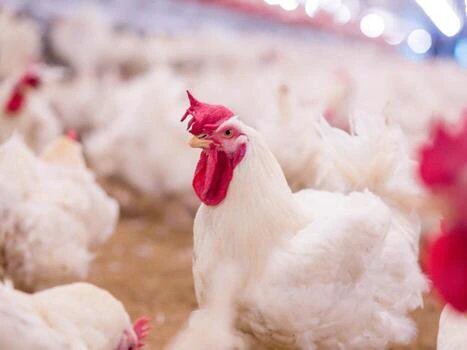
Eating chicken during Christmas in Nigeria is more than just a meal, it is a cultural tradition symbolizing celebration, prosperity, and social status. For many households, freshly killed and well-prepared chicken defines a “good and festive Christmas.”
Fresh chicken is often preferred over frozen because many believe it has better tenderness and nutritional value, containing higher levels of protein, vitamins, and minerals.
Prices surge ahead of Christmas
As demand rises, the cost of poultry has increased sharply compared to 2024. According to a market survey by Nairametrics:
Adult layers now sell for N10,500 – N20,000

Adult broilers cost N18,000 – N30,000
Last year, layers sold for N8,000 – N15,000, and broilers for N15,000 – N25,000
Frozen chicken has also become more expensive. One kilogram now sells for N5,500 – N6,500, up from N4,000 – N4,800 last year.
Retailers blame logistics
Retailers say the hike has been gradual.
A seller in Ikorodu said:
“Three months ago, we sold layers for N8,500. Now the price has gone up because farms are selling higher, and transportation costs have increased.”
Another Ketu retailer noted that her last selling price for layers is N12,500, and warned it may rise again as Christmas approaches.
Farmers cite feed costs, others accuse greed
Farmers insist feed prices are the main driver of rising chicken costs.
Ade Usman, CEO of Ade Farms, explained that:
A 50kg broiler starter costs N140,000
Broiler grower costs N121,500
Broiler finisher costs N112,500
He said farmers cannot sell at a loss given additional costs for transport, staff salaries, fuel, and medication.
Another farmer, Emmanuel Elom, added that although poultry farming looks lucrative, high mortality and medication costs sharply reduce profits.
He said imported materials like maize and wheat also make feed production expensive. Some farmers even export for better profit due to the exchange rate.
However, a poultry worker in Ibadan disagreed, alleging that some farmers are deliberately exploiting the festive season. He claimed corn prices have dropped, yet egg and chicken prices remain high.
Bigger challenges: insecurity and climate change
Nigeria’s poultry sector also faces deeper problems.
Insecurity, climate change, and disruptions in food production continue to push up the cost of essential feed ingredients like maize and soybeans.
Government intervention
Lagos State recently launched Ounje Eko Phase II, a subsidy program aimed at reducing food inflation during the holidays.
It provides feed subsidies to farmers, with hopes of lowering egg and chicken prices.
A costly Christmas ahead?
With Nigeria currently facing one of its highest food inflation rates in decades, many families may face an expensive Christmas. It remains uncertain whether government interventions will reduce final retail prices.