


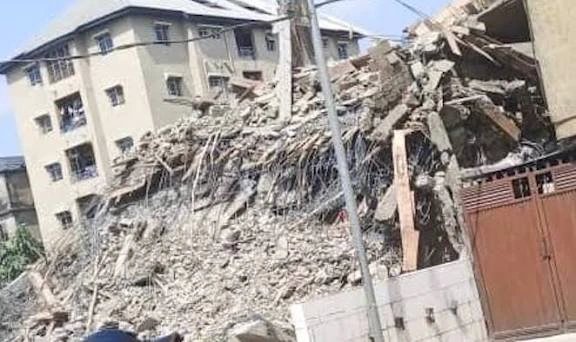
(DDM) – A senior academic at Modibbo Adama University in Adamawa has linked Nigeria’s growing building collapse crisis to unqualified personnel handling construction projects.
DDM gathered that Arch. Bala Baba, a lecturer in the Department of Architecture, also serves as Adamawa State Chairman of the Nigerian Institute of Architects (NIA).
In an exclusive interview, he said quack builders are primarily responsible for the structural failures claiming lives nationwide.
Baba emphasized that if the government strictly enforced laws against quackery, the frequency of deadly building collapses could drastically reduce.
He explained that clients often prioritize cost over safety, awarding contracts to unqualified individuals charging significantly less than certified professionals.

“People want to use little money to build big houses, so they prefer quacks who charge as low as ₦500,000, whereas a professional charges from ₦3 million and above,” he said.
Baba highlighted that quacks often cut corners by using substandard materials, including old iron rods recycled from other collapsed structures.
He also noted that these builders frequently reduce cement quantities and overuse sand when casting concrete bins, undermining building integrity.
According to the architect, the lack of awareness among clients worsens the problem, as many cannot distinguish between licensed professionals and quacks roaming the streets offering cheap services.
He urged fellow architects to educate the public on the dangers of employing unqualified builders, warning that lives are at stake with every compromised project.
Baba called for collective action among NIA members to combat quackery and elevate construction standards nationwide.
He said addressing quack practices is crucial for human safety, sustainable development, and professional growth within the building sector.
The NIA Adamawa State chapter was inaugurated in 2017 with only 11 registered members, Baba revealed, but the chapter has since grown to over 32 professionals.
He urged members to contribute actively to the development of the chapter and support the training of students entering the field.
Baba noted that NIA membership offers numerous benefits, including professional certification, technical training, and participation in industry advocacy.
Experts argue that the proliferation of quack builders in Nigeria results from weak regulatory enforcement and public ignorance of construction standards.
Past incidents, including multi-story building collapses in Lagos, Abuja, and Port Harcourt, underscore the deadly consequences of hiring unqualified personnel.
Authorities have repeatedly warned that lack of adherence to building codes and poor supervision remain central causes of structural failures.
Baba’s advocacy highlights the urgent need for government oversight, professional vigilance, and public awareness campaigns.
He concluded that tackling quackery requires joint efforts from regulators, architects, engineers, and citizens to prevent further tragedies.
In Nigeria, where urban expansion and housing demands rise daily, the stakes are high, and the cost of negligence remains measured in human lives.
Baba’s call to action emphasizes that professionalism and adherence to building standards are not optional—they are essential to safeguarding communities.
The interview signals a critical moment for architecture and construction stakeholders to prioritize safety over profit and curb the epidemic of collapsed buildings.
This warning comes at a time when families continue to mourn losses from preventable building failures across the country.
By raising awareness and promoting professional engagement, the NIA aims to reduce future tragedies and restore public confidence in the building industry.



 and then