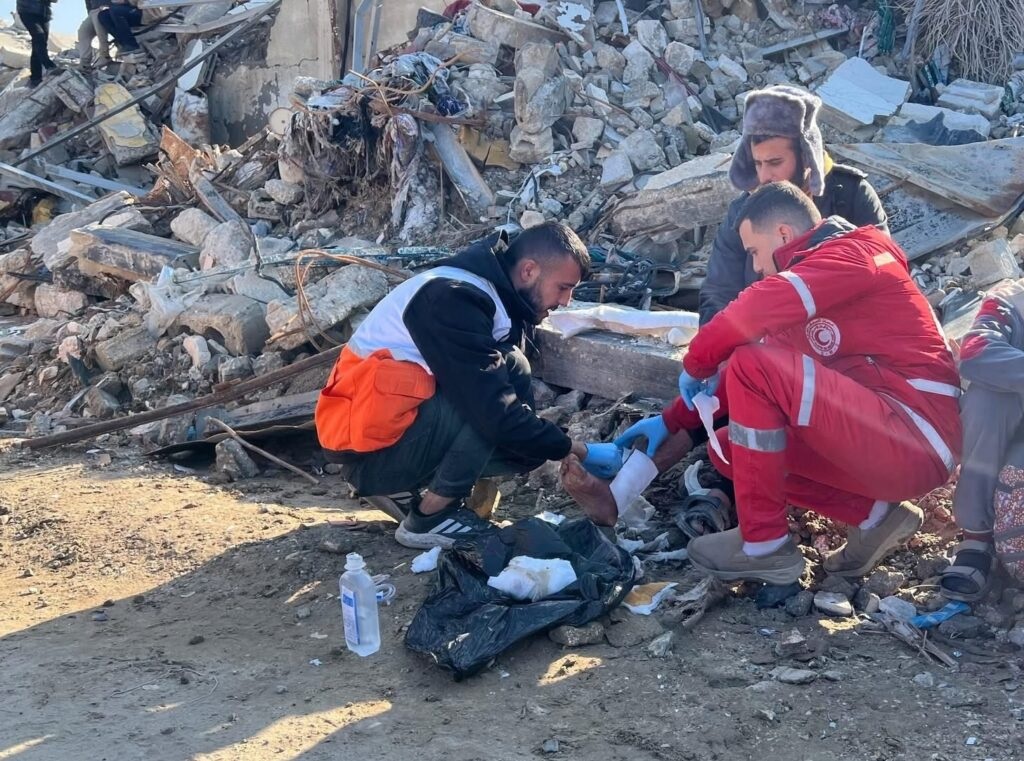
The International Committee of the Red Cross (ICRC) has underscored the critical challenges faced in delivering sufficient humanitarian aid to the Gaza Strip, which is currently grappling with severe food shortages amid ongoing conflict.
Despite recent efforts by Israel to increase the flow of aid, the ICRC cautions that these measures, while helpful, fall far short of what is needed to stabilize the deteriorating situation.
The efforts include including temporary humanitarian pauses in military operations.
In a statement responding to inquiries from The Times of Israel, the ICRC emphasized that although humanitarian pauses provide essential relief for both the population in Gaza and aid organizations operating on the ground, they are inherently limited in scope.
The agency asserts that what Gaza truly requires is a durable, sustained, and reliable agreement that ensures a continuous supply of much-needed food and other basic supplies.

The volume of aid necessary is so vast that even under the best conditions, it would take weeks to bring the crisis under control and prevent further deterioration.
During a recent ceasefire, some critical food items were successfully delivered, offering a temporary lifeline to the hungry population.
However, the ICRC warns that even these reserves are now running dangerously low.
Certain specialized foodstuffs with long shelf lives have helped prolong relief efforts.
On the other hand, these supplies are finite and cannot substitute for a stable, ongoing flow of aid essentials.
“The introduction of specialized, long-lasting food products was a saving grace to some degree, but unfortunately, these stocks are rapidly depleting,” the Red Cross noted.
The organization’s concern highlights the fragility of current aid deliveries.
It underscores how intermittent access to essential items provides only short-term respite rather than sustainable relief.
Compounding the crisis is the difficulty faced by Gazans in accessing food distribution points.
The Red Cross reports that many of the facilities are either located in dangerous areas or remain hard for residents to reach.
These facilities are reportedly established under the Gaza Humanitarian Foundation, a joint initiative supported by Israel and the United States
Some distribution centers are situated near current evacuation zones or areas of ongoing conflict, making travel to these sites both hazardous and confusing.
“The food distribution centers are not only difficult to get to but are often in or near evacuated or conflict-affected areas,” the ICRC stated.
“This situation severely limits access for people who desperately need aid.”
The close proximity of medical facilities such as the ICRC-operated field hospital to some of these distribution locations has brought into stark relief the risks involved.
The hospital has treated numerous gunshot victims who report that they were wounded near these food aid sites.
It illustrates the peril civilians face even while attempting to obtain basic necessities.
The warnings from the Red Cross come at a time when humanitarian needs in Gaza are escalating rapidly.
Years of blockade, recent escalations in violence, and infrastructure damage have all combined to produce a dire food security situation.
International agencies repeatedly stress that without reliable corridors for aid, the threats of famine, malnutrition, and related diseases will intensify.
Vulnerable groups such as children and the elderly are reportedly bearing the brunt of the crisis.
Efforts by Israel to allow periodic infusion of aid materials during ceasefires and temporary halts in combat have been a positive step.
However, according to the Red Cross, remain merely a stopgap solution.
The sheer scale of the humanitarian emergency demands a new modus operandi.
This is one that secures a continuous, sustainable flow of aid over weeks and potentially months to come.
In essence, the Red Cross’ position highlights a sobering reality: short-term halts in fighting, while beneficial, cannot by themselves alleviate the humanitarian catastrophe unfolding in Gaza.
To prevent further human suffering and stabilize the food supply situation, all parties must commit to a long-term, enforceable agreement.
One that facilitates uninterrupted delivery of aid resources.
As the conflict continues, the international community’s role in supporting such agreements becomes ever more crucial.
Coordinated efforts to improve access, protect humanitarian corridors, and expand aid deliveries will be essential.
They will be essential to mitigating hunger and preserving lives in one of the world’s most vulnerable regions.