



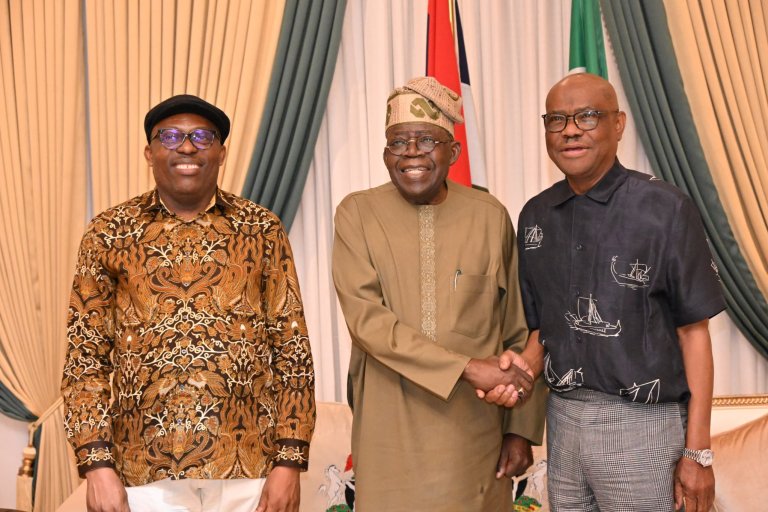
President Bola Tinubu has intervened once again to settle the protracted feud between Rivers State Governor Siminalayi Fubara and his predecessor and estranged godfather, Nyesom Wike.
The move comes after months of political tension that had pushed the state to the brink of impeachment, legislative paralysis, and instability.
Tinubu’s latest intervention follows a previous, short-lived peace effort in December 2023, which broke down, prompting a six-month emergency rule in Rivers State declared in March 2025.
Key directives from Tinubu
Impeachment on hold: The president ordered an immediate suspension of any impeachment efforts against Fubara, stressing that Wike must be respected as the state’s undisputed political leader.
Wike’s authority recognized: All internal party disputes in Rivers must ultimately defer to Wike. Tinubu drew a parallel with Lagos State, noting that party leadership must respect political elders regardless of personal disagreements.
By-elections: The president directed that candidates loyal to Wike should be recognized by APC for the upcoming House of Assembly by-elections in Ahoada East II and Khana II, scheduled for February 21, 2026.
Background of the feud
The conflict began soon after Fubara’s inauguration in May 2023, when he sought to assert independence from Wike’s influence.
Wike, who engineered Fubara’s rise as his successor, allegedly attempted to maintain control over Rivers State governance from Abuja.
Most state lawmakers reportedly align with Wike, leading to repeated impeachment attempts against Fubara.
Fubara’s allies argue the former governor, now APC minister and based in the FCT, should not dictate state affairs.
Previous peace attempts failed, culminating in the emergency rule of March 2025. The latest Tinubu-mediated resolution aims to restore stability while maintaining party hierarchy.
Fubara’s concessions
As part of the peace deal:
Fubara must formally recognize Wike as political leader with final authority over party matters in Rivers.
Wike’s camp must halt all impeachment actions against the governor.
Notably, the president sidelined discussions about Fubara’s potential second-term ambitions in 2027, describing such deliberations as premature.
This intervention underscores Tinubu’s ongoing role in managing political stability in key states, particularly those considered critical for the APC’s 2027 re-election strategy. Rivers State, being oil-rich and politically significant, remains a top priority in the president’s national governance agenda.

