


tech-robot-ai-regulation-protest-hits-poland
Robot AI Regulation Protest Hits Poland
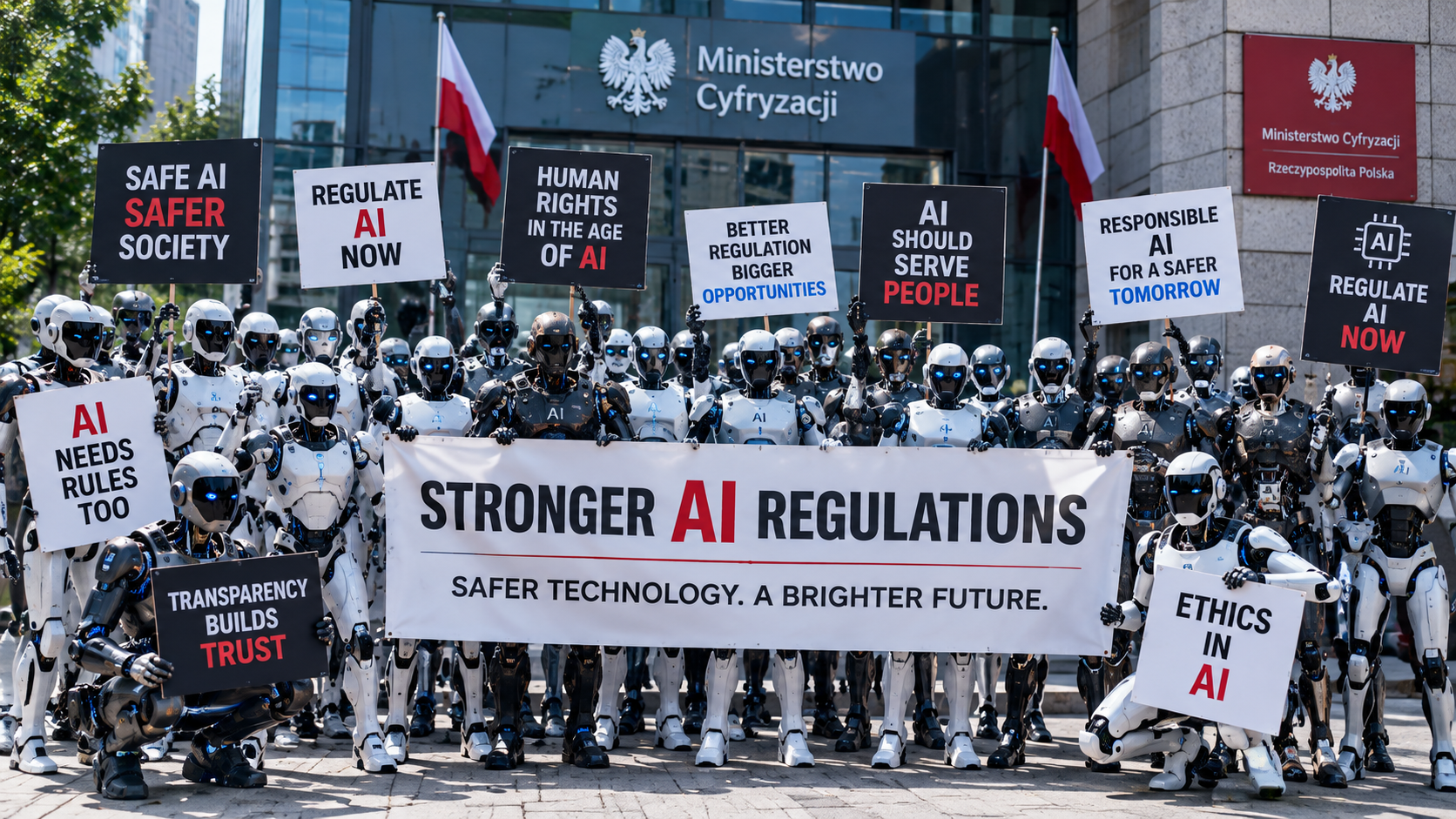
Around 30 bipedal and quadruped machines joined a major Robot AI Regulation Protest outside Poland’s digital affairs ministry to demand worker protection rules. A unique Robot AI Regulation Protest in Poland sees 30 machines demand urgent worker protection rules outside the digital affairs ministry.
Specifically, a Robot AI Regulation Protest shocked citizens in Warsaw on Monday. Around 30 machines marched outside the Polish digital affairs ministry to complain. Specifically, these machines waved flags and played slogans through loud audio speakers. The protest organizers wanted to show how automation threatens human cognitive jobs.
Machines March For Human Jobs
Furthermore, the lively event featured bipedal humanoids and four-legged robotic dogs. A public initiative called Democratism set up the entire street protest campaign. Consequently, they want leaders to shield human workers from fast tech growth. News portal Channels TV reports that the group seeks urgent labor market debates. Therefore, the organizers aimed to spark a loud talk about job safety.

Additionally, one artificial intelligence robot named Agibot A3 spoke to reporters there. The robot stated that this advanced tech is already a daily reality. Meanwhile, loud audio speakers played chants demanding strict rules and workplace defense. The marching machines drew large crowds of curious people on the street. Therefore, citizens watched the unique Robot AI Regulation Protest with great shock.
Planners Want Fast Policy Shifts
Subsequently, the protest planners issued stern warnings about the current labor market. Organizer Grzegorz Kulis noted the real dangers of replacing human staff members. For example, he worries about losing cognitive jobs to smart computer models. News outlet The Sun Nigeria notes his plea for swift political action today. Therefore, he urged local lawmakers to build laws that act as shields.
Meanwhile, Kulis brought the robots to the streets to prove a point. He wanted citizens to see their free movement in public city spaces. As a result, the stark visual impact showed the speed of tech growth. Observers noted how well the robotic dogs walked on the hard pavement. Specifically, global tech trends reflect the core message of this European event. Indeed, workers everywhere want strong laws to manage new artificial computer skills.
Government Acknowledges Tech Fears
Simultaneously, the Polish digital affairs minister visited the live protest site Monday. Krzysztof Gawkowski met with the busy event planners on the loud street. Indeed, the state minister agreed that uncontrolled smart models cause a problem. He noted that these humanoids will keep evolving at very fast speeds. As a result, top state officials know they must draft solid plans.
However, the wide push for rules extends far beyond just Eastern Europe. News outlets like Al Jazeera cover these vital events on social media. Specifically, global media notes how fast automation alters the modern labor market. African countries face different economic hurdles during this vast worldwide tech boom. For example, firms run Keystone Bank, FBRA Train 100 SMEs programs in Nigeria. Therefore, world leaders must balance business growth with vital human job security.
Global Impact And Future Rules
Ultimately, this bold Robot AI Regulation Protest sets a very unique example. Using machines to demand human rights adds a sharp visual irony today. However, the core message remains deeply serious for all modern global workers. TV network TVC News highlighted the sheer panic over future job losses. Therefore, tech experts want clear limits on how firms use smart tools.
Essentially, big tech firms continue to build smarter and faster robot models. Lawmakers face huge pressure to pass new worker protection laws very soon. Indeed, the recent Warsaw protest proves that public fear is growing fast. Ordinary citizens do not want to compete with tireless metal computer machines. As a result, humans must control the exact pace of this tech shift.
To conclude, the rise of smart machines forces governments to act fast. Ignoring this clear threat will hurt the global human labor force soon. Therefore, strong legal shields remain the only way to save human jobs. We must manage artificial tools before they manage our daily human lives.




