


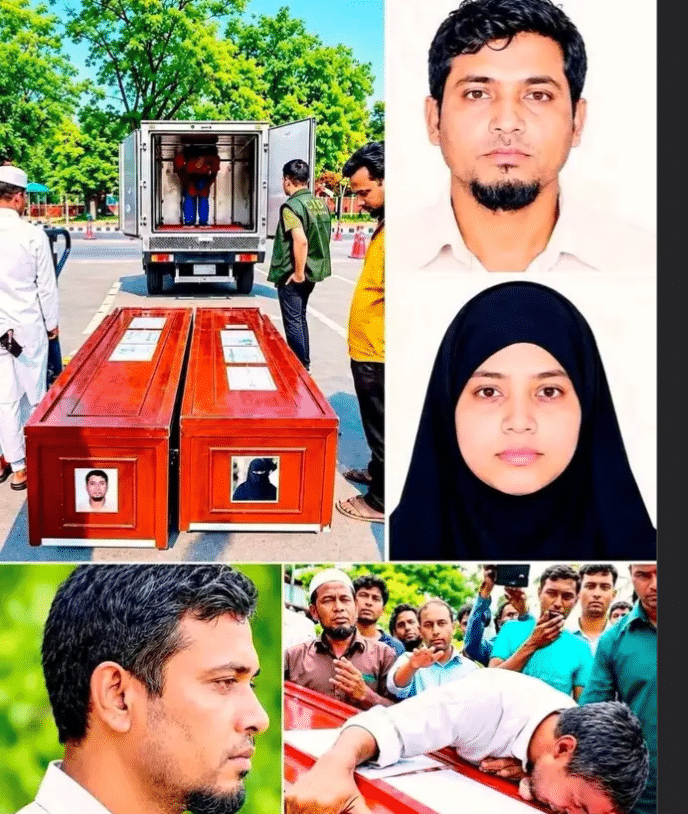
Saudi Arabia has executed two Bangladeshi nationals convicted of committing what authorities described as an “immoral act” inside a mosque in the holy city of Mecca, sparking questions about the circumstances surrounding their deaths and the lack of advance notification to Bangladesh’s diplomatic mission.
The executions took place on October 14, 2026, in the Mecca region, according to a statement from the Saudi Ministry of Interior carried by the state-run Saudi Press Agency.
The two individuals were identified as Nazrul Islam Abdul Basir and Siti Akhtar, both Bangladeshi nationals. Their deaths have attracted attention following reports about the alleged conduct that led to their conviction and the Bangladeshi government’s account that its consulate in Jeddah was not informed before the sentences were carried out.

According to Saudi authorities, security personnel arrested the pair following the incident. An investigation was subsequently conducted, charges were filed and the case was referred to a competent court.
The court found the charges proven and sentenced both individuals to death under ta’zir, a category of punishment under Islamic law that allows judicial discretion in determining penalties for certain offences.
The ministry said the court considered the seriousness of the offence and the violation of the sanctity of the time and place in which it occurred. The verdicts were subsequently upheld by the relevant judicial authority, after which a royal order was issued authorising the executions.
However, the official statement did not specify the exact nature of the alleged act, identify the mosque involved or explain when the arrests occurred.
Reports circulating online and in sections of the media have claimed that the incident involved the pair kissing inside the mosque. Some accounts have further described them as newlyweds who had travelled to Mecca for their honeymoon. These details, however, were not established in the Saudi Interior Ministry’s public statement.
The distinction is important because the precise conduct that led to the convictions remains unclear from the official information released so far.
The case has also raised diplomatic questions after Bangladesh’s Consulate General in Jeddah said it had not received prior notification of the executions.
An official of the diplomatic mission told Bangladesh’s The Daily Star that the consulate had not been informed by the Saudi ministry beforehand. The mission subsequently submitted a diplomatic note to Saudi Arabia’s Ministry of Foreign Affairs requesting formal acknowledgement of the matter.
The development has left unanswered questions about when Bangladeshi officials became aware of the case, whether the two nationals received consular assistance during their detention and what information was made available to their families.
Under Article 36 of the Vienna Convention on Consular Relations, detained foreign nationals have rights relating to communication with their consular representatives. The convention provides for notification of a consulate when a detained national requests it, alongside arrangements for consular communication and assistance.
It remains unclear whether the two Bangladeshis requested consular notification during their detention. Consequently, the available information does not establish whether Saudi authorities violated their consular obligations.
Saudi Arabia maintains a legal system in which Islamic law plays a central role in criminal proceedings. The country’s authorities have defended the enforcement of judicial sentences as part of their responsibility to uphold the law and protect the sanctity of religious sites.
Following the executions, the Interior Ministry reiterated its commitment to maintaining security and enforcing the country’s laws against individuals found guilty of offences involving the sanctity of mosques.
Nevertheless, the case highlights the importance of transparency when foreign nationals face capital punishment abroad, particularly when details of the alleged offence and the judicial proceedings remain unavailable to the public.
For Bangladesh, the immediate issue is obtaining an official account of what happened, including the circumstances of the convictions and the execution process.
For now, Saudi authorities have confirmed that the sentences were carried out after judicial approval and a royal order. However, the exact nature of the offence, the full circumstances of the case and the reasons Bangladesh’s consular mission was not notified beforehand remain important unanswered questions.




