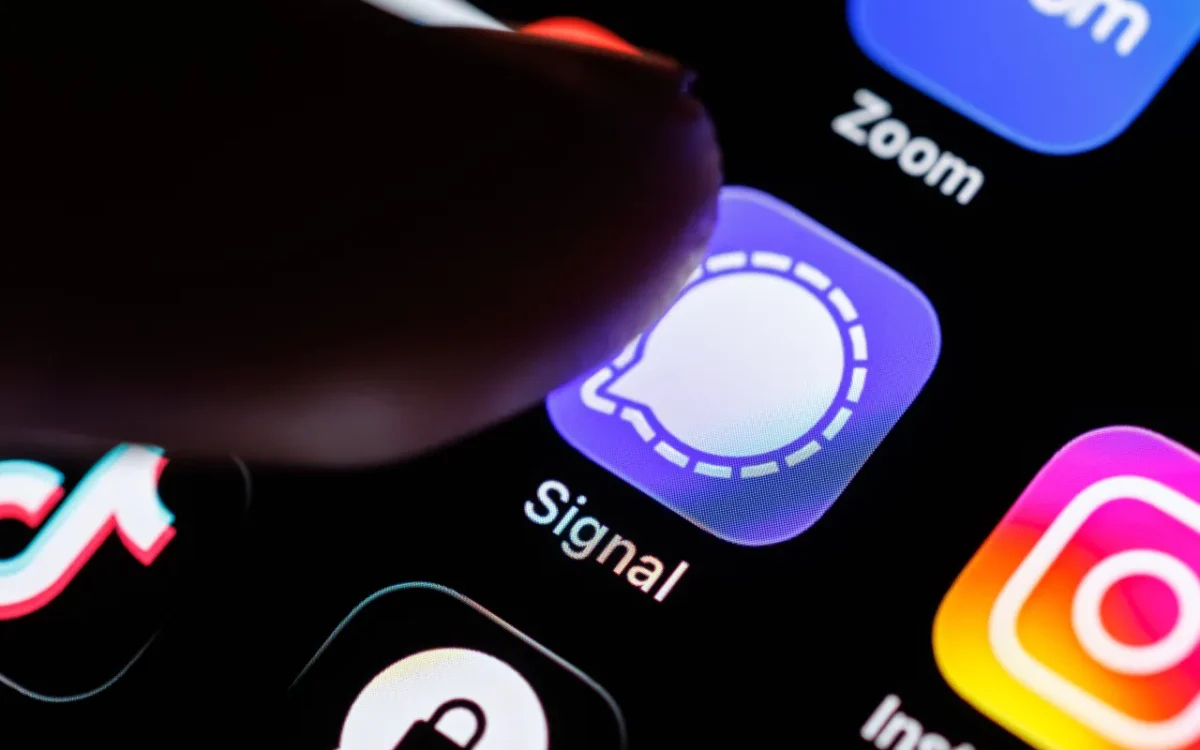
Signal is restricting screenshots on iOS 27 and some Android devices, warning that AI agents may access sensitive messages through screen-reading tools.
Signal is adding screenshot restrictions to reduce the risk that artificial intelligence agents built into mobile operating systems could capture private chats. The nonprofit messaging service says it will block screenshots in its iOS 27 app and enable Android protections when it detects an AI assistant trying to read the screen. Signal President Meredith Whittaker called operating-system AI an “existential threat” to the service’s privacy mission. The move highlights a gap between encrypted messaging and the other software that can access information displayed on a device.
Signal screenshot limits on mobile
Signal’s protections work differently across mobile platforms. On iOS 27, the app blocks screenshots by default, according to Signal’s announcement. On Android, the company says it enables its Screen Security setting when it detects an AI assistant attempting to access the screen. Signal notes that Android devices vary, so it cannot reliably apply the same detection approach everywhere.
Users who want to take screenshots can turn off the protection in Signal’s settings. The company warns that doing so may expose message content to AI systems with screen access. Signal previously introduced Windows screenshot blocking to address Microsoft Recall, a feature that captures and processes screen content. The new mobile restrictions extend that effort to some operating-system AI features.
How AI agents may access chat messages
Signal says some AI tools “scan” what appears on a device’s screen to respond to requests or perform tasks. If an agent captures a chat display, the message may be accessible to that agent beyond Signal’s own app environment. That creates a privacy risk even when the messaging service itself cannot read the conversation.
End-to-end encryption protects messages from being read by outsiders while they travel between participants. But it cannot, by itself, prevent software on a user’s device from viewing information after it appears on screen. Signal argues that operating-system providers should give developers clearer ways to prevent AI agents from accessing sensitive app data. It also wants better documentation about how those agents operate.
Signal says screenshot protection is incomplete
Signal emphasizes that blocking screenshots does not solve every route by which an AI system could access information. Its announcement says agents might retrieve content already present on a device through file-system access. The service also cites notifications and other system features as possible areas where private data could be exposed.
The company says it cannot currently implement equivalent protections on macOS. It argues that the operating system does not provide developers with suitable tools to reliably block screenshots without affecting other features. Signal recommends that users on macOS 27 add Signal to Siri’s Excluded Apps settings to reduce proactive access to message content. That recommendation is Signal’s stated workaround, not a guarantee against every form of access.
Calls for operating-system safeguards
Signal is asking Apple, Google and Microsoft to provide a straightforward way for developers to opt apps out of AI data access and processing. It says the option should cover screen reading, file access, notifications and other system functions without undermining an app’s core use. The company is also seeking clearer technical documentation so developers can understand what data AI agents can reach.
Reuters reported that Signal’s announcement followed concerns about agents using broad operating-system permissions. The news service described the issue as a wider tension between privacy-focused apps and technology companies building agents that can act across apps. The protections Signal introduced address only some of those possible access paths. Signal says it is engaging with operating-system companies, but further safeguards would require changes beyond its own app.
What the change means for users
The restrictions show that encrypted messaging depends partly on the device environment where conversations appear. Signal can protect the messages inside its service, but operating-system tools may have access to screen content or other data through permissions. Users who disable screenshot restrictions may find screenshots more convenient, but Signal warns that doing so could increase exposure to AI agents.
The changes may also affect ordinary tasks, such as saving a chat image or recording information from a conversation. Signal’s choice to let users switch off the feature balances convenience against the privacy risk it describes. However, the company says developers need better controls than app-level screenshot blocking alone. The practical effect will depend on the operating system, device and permissions granted to each assistant.
Ultimately, Signal’s screenshot controls are a limited response to a broader concern about AI agents operating within mobile systems. They do not prevent every method of accessing information on a device, and protections differ between iOS and Android. Signal is pressing platform providers for stronger, clearer safeguards. The next question is whether operating-system makers will give apps more control over how agents interact with private data.