


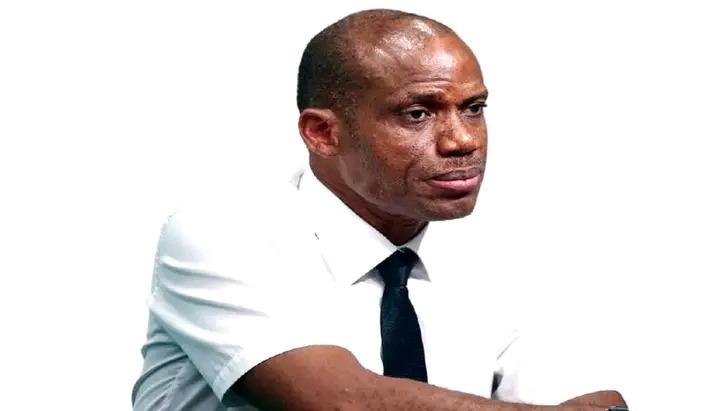
Former Super Eagles captain and head coach Sunday Oliseh has delivered a blunt assessment of Nigeria’s football crisis, arguing that the national team’s struggles are rooted in the quality of players available rather than problems that can be explained solely by administration or coaching.
Oliseh expressed concern about the current generation of Nigerian internationals, insisting that the country no longer possesses the depth of elite talent that once made the Super Eagles a formidable force in African and international football.
Speaking during an appearance on Play Zone with Charles Anazodo, the former Juventus midfielder said he was embarrassed that many people were unwilling to confront what he considers the central problem behind the team’s disappointing performances.

“The reason why we’re failing makes me embarrassed because people don’t want to talk about it,” Oliseh said, before adding that Nigeria did not have enough good players to compete at the highest level.
His comments have reignited the debate over the reasons behind the Super Eagles’ recent difficulties, particularly the quality of the squad, the development of Nigerian footballers and the country’s ability to compete consistently against the strongest teams.
Oliseh contrasted the current crop of players with previous generations of Nigerian footballers who established themselves at prominent European clubs and competed regularly in major continental competitions.
He recalled an era when Nigerian internationals featured prominently at clubs such as Ajax and Inter Milan, arguing that the country’s representatives at the highest level of European football were once more numerous.
The former midfielder believes the present squad lacks a comparable concentration of players operating at the elite end of the European game.
While acknowledging the importance of individual talent, his assessment raises questions about whether Nigeria currently has enough players competing consistently at the highest level to meet the expectations associated with the national team’s history.
Victor Osimhen remains one of Nigeria’s most prominent attacking players, having established himself as a prolific striker in European football. However, Oliseh questioned whether the current squad possesses enough players of comparable standing to sustain the Super Eagles’ ambitions.
The debate is particularly significant because Nigeria has traditionally relied on a combination of technically gifted players, physical strength and attacking quality to compete against leading African nations.
Oliseh’s remarks suggest that rebuilding the team requires more than changing coaches or criticising the Nigeria Football Federation. In his view, the underlying quality of the players must also be examined.
The former international, who represented Nigeria at the 1994 and 1998 FIFA World Cups, understands the expectations associated with wearing the national jersey. He was also a member of the team that won the Africa Cup of Nations in 1994 and the Olympic gold medal at the 1996 Atlanta Games.
His experience with successful Nigerian teams gives his assessment additional historical context, although his views remain an opinion rather than a definitive measurement of the current squad’s overall quality.
Nigeria’s recent difficulties have intensified scrutiny of the national team’s preparation, administration, tactical organisation and player performances. These issues have frequently featured in discussions about how the country can restore its competitiveness on the international stage.
However, Oliseh’s argument places particular emphasis on the players themselves, challenging the tendency to attribute disappointing results exclusively to coaching decisions or administrative failures.
The debate also raises a broader question about the development pathway for Nigerian footballers, including domestic league standards, youth development, scouting and the opportunities available for emerging talents to progress into top-level European football.
Producing more players capable of competing consistently at elite clubs could strengthen the national team’s options, but it would not automatically resolve every problem affecting the Super Eagles. Effective coaching, tactical discipline, team cohesion and competent administration would remain essential.
For Nigeria, the challenge is therefore to identify the weaknesses holding the team back and address them without allowing one explanation to overshadow the others.
Oliseh’s assessment has added another dimension to that conversation, placing the spotlight on the standard of players available to represent the country and the gap between public expectations and performances on the pitch.
Whether his criticism accurately captures the full extent of the Super Eagles’ problems remains open to debate. What is clear is that restoring Nigeria’s standing in international football will require a sustained effort to improve player development, strengthen team organisation and deliver consistent performances.




