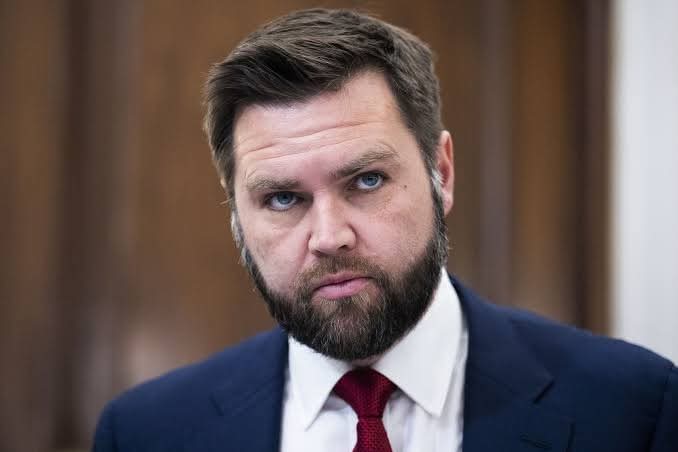
(DDM) – United States Vice President JD Vance has urged European allies to take President Donald Trump’s long-standing interest in Greenland seriously, warning that the Arctic region has become a major global security flashpoint.
Vance made the remarks while addressing growing concerns over increased Russian and Chinese activities in the Arctic, which he said pose strategic risks to Western security interests.
He noted that Greenland’s geographic position makes it one of the most strategically important territories in the world today.
According to Vance, Trump’s earlier statements about Greenland were not casual rhetoric but rooted in long-term American security calculations.
He stressed that dismissing Trump’s position would be a mistake at a time when global power competition is intensifying.

The Vice President explained that the Arctic is rapidly emerging as a frontline in geopolitical rivalry.
He said melting ice due to climate change has opened new shipping routes and access to untapped natural resources.
These developments, Vance warned, have attracted aggressive interest from rival powers.
Russia, he noted, has significantly expanded its military presence and infrastructure in the Arctic region.
China, although not an Arctic nation, has also declared itself a “near-Arctic state” and invested heavily in Arctic research and infrastructure.
Vance argued that these moves should alarm Europe and North America alike.
He emphasized that Greenland, an autonomous territory within the Kingdom of Denmark, plays a central role in Arctic defense architecture.
The island hosts critical US and NATO military installations, including early-warning missile defense systems.
Vance said any weakening of Western influence in Greenland could undermine collective security.
He urged European leaders to move beyond seeing Greenland as a peripheral issue.
According to him, the island is now a strategic hub that could shape the future balance of power.
Vance stated that Trump’s interest was driven by the need to ensure that Greenland remains firmly within the Western security orbit.
He added that the United States cannot afford complacency as adversaries expand their reach.
The Vice President also called for closer cooperation between the US and European allies on Arctic policy.
He said a unified approach is necessary to counter external threats and manage competition responsibly.
Vance noted that Europe has a direct stake in Arctic stability, given its proximity and economic interests.
He warned that failure to act decisively could leave the region vulnerable to strategic encroachment.
Analysts say Vance’s comments signal a renewed emphasis on Arctic security within US foreign policy thinking.
They note that Trump’s earlier proposal to purchase Greenland, though controversial, drew attention to the island’s importance.
At the time, many European leaders dismissed the idea as unrealistic or provocative.
However, changing global conditions have since reshaped perceptions of Arctic geopolitics.
Security experts argue that resource competition, military positioning, and climate change have elevated the region’s strategic value.
Vance’s remarks reflect growing bipartisan concern in Washington over these trends.
He reiterated that taking Greenland seriously does not mean undermining Danish sovereignty.
Instead, he said it requires deeper cooperation, investment, and security coordination with Denmark and Greenlandic authorities.
Vance emphasized respect for international law and existing alliances.
He said the goal is to strengthen, not destabilize, transatlantic relations.
European officials have responded cautiously, acknowledging Arctic challenges while emphasizing diplomacy.
Some analysts believe the comments are intended to prepare allies for tougher policy debates ahead.
The Arctic, once seen as remote and peaceful, is now central to global strategic calculations.
Vance concluded by urging Europe to recognize the urgency of the moment.
He warned that ignoring early signals could lead to long-term security consequences.
As great power competition intensifies, Greenland’s role is likely to remain at the center of international attention.
Observers say the warning underscores a broader shift toward realism in Western security planning.
The debate over Greenland highlights how climate change and geopolitics are reshaping global priorities.