



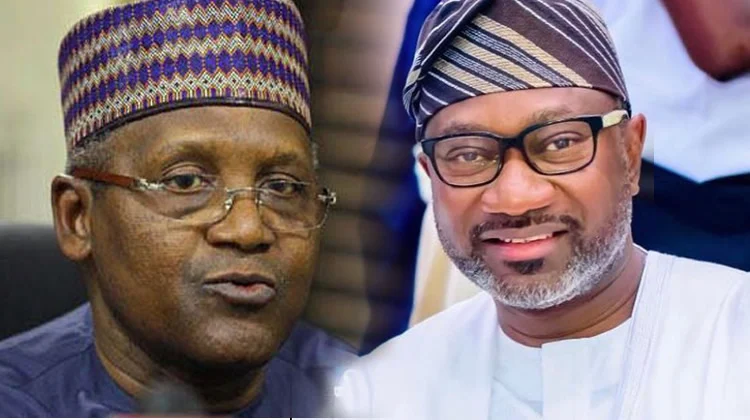
For decades, Nigeria has stood as one of the world’s largest oil-producing nations, pumping millions of barrels of crude oil from its rich Niger Delta reserves. Yet paradoxically, despite its enormous natural wealth, the country has struggled with persistent fuel shortages, soaring petrol prices, and a controversial subsidy regime that has drained trillions of naira from the national treasury. At the center of this long-running controversy is what many analysts describe as the “subsidy cabal,” a powerful network of oil marketers, depot owners, political elites, and business interests who allegedly benefited from a deeply flawed fuel subsidy system. The debate surrounding this system has frequently drawn attention to influential figures in Nigeria’s oil sector, including billionaire businessman Femi Otedola and Africa’s richest man, Aliko Dangote.
The story of the subsidy cabal is rooted in Nigeria’s long-standing policy of subsidizing petrol. For many years, the Nigerian government paid oil marketers billions of naira to import refined fuel and sell it domestically at a reduced price. The intention behind the subsidy was to protect ordinary citizens from high energy costs. However, over time the system became deeply vulnerable to abuse. According to investigations and testimonies presented in public hearings, some companies allegedly claimed subsidy payments for fuel that was never imported, using falsified shipping documents, ghost cargoes, and manipulated paperwork.
The scale of the alleged fraud shocked many Nigerians. Reports indicated that billions of dollars disappeared through the subsidy program while the country continued to experience fuel scarcity and rising government debt. In some cases, marketers reportedly collected subsidy payments for millions of litres of petrol that never entered Nigerian waters. The scandal exposed serious weaknesses in oversight mechanisms within Nigeria’s petroleum supply chain.
One of the most explosive moments in the controversy came during the investigations by Nigeria’s House of Representatives into subsidy payments in 2012. The probe uncovered widespread irregularities involving dozens of companies and billions of naira in questionable claims. During that period, businessman Femi Otedola, who was active in the downstream petroleum sector through his company Zenon Petroleum and Gas, became involved in a high-profile bribery scandal linked to the investigation. Otedola admitted that he gave $620,000 to a lawmaker, Farouk Lawan, in what he described as a sting operation coordinated with security agencies to expose corruption within the probe itself.
The scandal further reinforced public perception that Nigeria’s subsidy system had become a playground for powerful interests. Many Nigerians began to question how a country that produces crude oil in large quantities could spend enormous sums importing refined petrol while simultaneously losing billions through subsidy payments.
Years later, the debate resurfaced when Otedola made new claims about the magnitude of the subsidy fraud. According to him, more than two trillion naira was siphoned through questionable subsidy claims during the administration of former President Goodluck Jonathan. He stated that the system had been structured in a way that favored depot owners and oil marketers who controlled fuel storage infrastructure.
Otedola’s remarks reignited national debate about the role of powerful players in Nigeria’s downstream petroleum sector. Critics argued that the subsidy regime encouraged rent-seeking behavior rather than productive investment. Instead of building refineries or improving domestic fuel production, many marketers found it more profitable to import fuel and rely on government reimbursements.
The controversy surrounding the subsidy system also intersects with the rise of Dangote’s massive refinery project in Lagos. The Dangote Refinery, one of the largest single-train refineries in the world, was built to address Nigeria’s chronic dependence on imported refined fuel. With a projected capacity capable of meeting Nigeria’s entire petrol demand, the refinery is expected to transform the country’s energy sector and potentially end the decades-long cycle of fuel importation.
For Dangote, the refinery represents not only a business venture but also a strategic intervention in Nigeria’s energy independence. Supporters argue that domestic refining could eliminate the need for costly fuel imports and remove the conditions that allowed subsidy fraud to flourish in the first place. However, the emergence of such a large refinery has also sparked tensions with existing fuel marketers and depot owners who fear losing their dominance in the downstream supply chain.
The fuel subsidy controversy reached a dramatic turning point in 2012 when the Nigerian government attempted to remove the subsidy entirely. The decision triggered nationwide protests known as the Occupy Nigeria movement. Millions of Nigerians took to the streets to protest the sudden increase in petrol prices and the perceived failure of government to address corruption within the subsidy system. The demonstrations forced the government to partially restore the subsidy, illustrating the political sensitivity of fuel pricing in Nigeria.
Behind the protests was a deeper frustration: Nigerians were not only angry about higher fuel prices but also about the belief that public resources were being looted by a small group of powerful individuals. The idea of a “subsidy cabal” became a popular explanation for the persistent dysfunction in the petroleum sector.
Economists and policy experts have long argued that the subsidy system was financially unsustainable. At one point, the subsidy reportedly cost the Nigerian government billions of dollars annually, consuming a large share of the national budget that could otherwise have been used for infrastructure, healthcare, and education. Even former President Goodluck Jonathan acknowledged that the subsidy had become a major drain on government finances and was riddled with corruption.
In recent years, Nigeria has taken steps toward deregulating the downstream petroleum sector and removing fuel subsidies entirely. Advocates of deregulation believe that eliminating subsidies will reduce corruption, encourage private investment in refining, and allow market forces to determine fuel prices.
However, the legacy of the subsidy era continues to shape Nigeria’s economic and political debates. Many questions remain unanswered about how much money was lost, who benefited from the system, and whether those responsible have ever been held accountable.
For many Nigerians, the story of the subsidy cabal symbolizes a broader struggle over transparency, governance, and the management of the nation’s natural resources. The country’s oil wealth, which should have been a blessing, has often appeared instead as a source of controversy and missed opportunities.
As Nigeria moves into a new phase of energy reform with the rise of domestic refining and deregulation, the lessons of the subsidy era remain deeply relevant. The scandal exposed structural weaknesses in regulatory oversight, highlighted the enormous influence of powerful business interests, and revealed how easily public policies can be manipulated when transparency is lacking.
Ultimately, the mystery of Nigeria’s “missing oil wealth” is not only about subsidy payments or individual billionaires. It is about the broader challenge of ensuring that the country’s vast petroleum resources serve the interests of its people rather than enriching a privileged few. Whether the new era of deregulation and domestic refining will finally end the era of the subsidy cabal remains one of the most important questions facing Nigeria’s energy future.

