
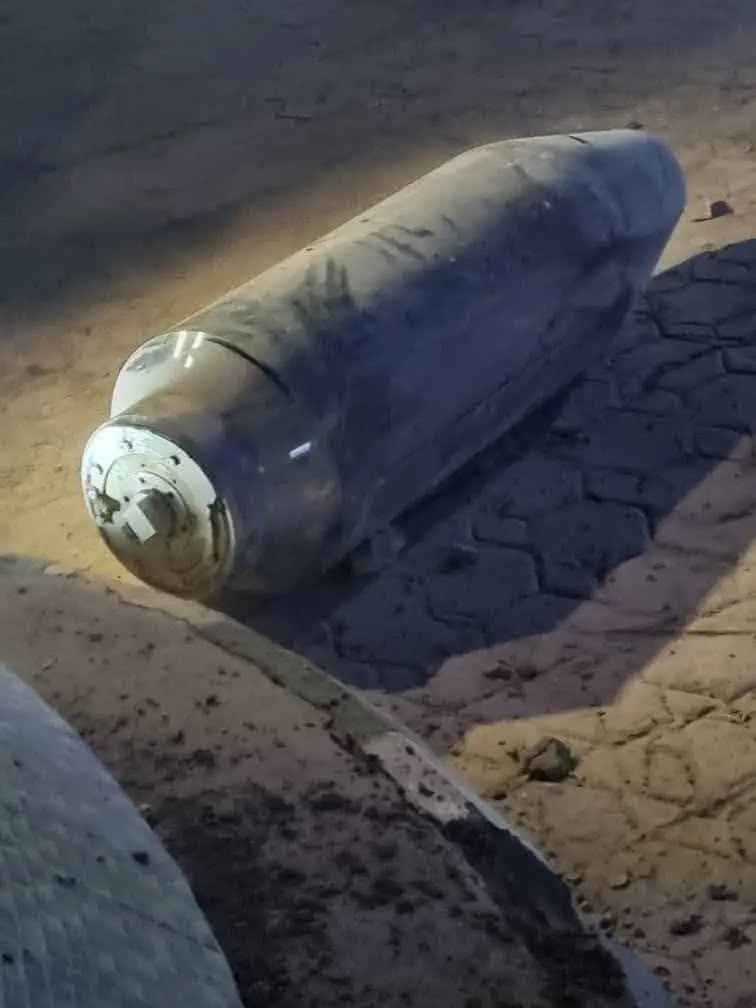
Fresh revelations have emerged from the aftermath of recent United States airstrikes on suspected ISIS-linked targets in Nigeria, as at least three Tomahawk cruise missiles reportedly failed to detonate and fell short of their intended targets, leaving behind unexploded warheads and scattered missile debris. The discovery, confirmed by local accounts and first highlighted by military-focused platform Militarnyi, has opened a new chapter of concern surrounding the operation—one that goes beyond counterterrorism success claims to include civilian safety, intelligence accuracy, and the long-term risks posed by unexploded advanced weaponry on Nigerian soil.
According to information obtained by DDM NEWS, the unexploded missiles were discovered by local residents in the early hours following the airstrikes, which were carried out as part of a U.S.-led military action against alleged ISIS elements operating in parts of northern Nigeria. While official details of the operation remain limited, the presence of intact or partially intact Tomahawk missile components on the ground has sparked alarm among security experts, humanitarian actors, and affected communities.
What Locals Found After the Strikes
Residents in areas close to the reported strike zones described waking up to scenes of twisted metal, scorched earth, and large cylindrical debris scattered across farmland and open spaces. In several locations, what appeared to be unexploded warheads were found embedded in the ground or lying exposed, prompting fear and confusion among villagers who initially did not understand the nature or danger of what they were seeing.
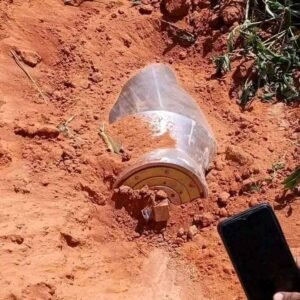
Photographs circulating online, reviewed by DDM NEWS, show missile fragments consistent with components of U.S. Tomahawk cruise missiles—long-range precision weapons designed to strike hardened targets with high accuracy. The images include what appear to be guidance sections, fuselage fragments, and intact explosive components that did not detonate on impact.

Local sources told reporters that some residents initially approached the debris out of curiosity, unaware of the lethal danger posed by unexploded ordnance. It was only after word spread that the objects could explode at any moment that communities began to cordon off the areas informally and alert local authorities.
A Rare but Dangerous Failure
Tomahawk missiles are among the most sophisticated weapons in the U.S. military arsenal, boasting advanced navigation systems, terrain-following capabilities, and a long record of operational reliability. However, military experts note that no weapons system is immune to failure. Mechanical faults, navigation errors, electronic interference, or environmental factors can all contribute to a missile missing its target or failing to detonate.
Still, the failure of at least three missiles in a single operation is considered significant, especially in a region populated by civilians and lacking extensive explosive ordnance disposal (EOD) infrastructure.
Security analysts consulted by DDM NEWS warn that unexploded Tomahawk warheads pose extreme danger. Unlike smaller munitions, these missiles carry powerful high-explosive payloads capable of causing massive destruction if accidentally triggered. Vibrations from farming equipment, fire exposure, or tampering by curious individuals could result in catastrophic explosions.
Civilian Safety Concerns Mount
The discovery has intensified concerns about civilian safety in the affected areas. Many of the communities near the reported impact sites are rural, agricultural settlements where residents rely on daily access to farmland for survival. The presence of unexploded missiles effectively turns these areas into potential death traps.
Humanitarian workers fear a repeat of past tragedies seen in conflict zones around the world, where unexploded ordnance has killed or maimed civilians—often children—long after military operations have ended.
“This is not just a military issue; it is a humanitarian emergency,” a regional security analyst told DDM NEWS. “If these warheads are not secured and safely removed, they could kill people months or even years from now.”

Questions About Targeting and Intelligence
Beyond safety concerns, the missile failures have reignited questions about the intelligence underpinning the U.S. airstrikes. Critics argue that if missiles are falling short of targets and landing in civilian-accessible areas, it suggests either targeting miscalculations or operational errors.
This development comes amid growing debate over the effectiveness of foreign military intervention in Nigeria’s complex security landscape. Several analysts have already questioned whether the targeted areas actually housed ISIS or ISWAP elements, particularly in regions where banditry—rather than ideologically driven terrorism—has historically been the dominant threat.
DDM NEWS investigations reveal that some of the locations where debris was found have no publicly documented history of ISIS activity, further complicating official narratives surrounding the strikes.
Official Silence and Limited Information
As of the time of filing this report, neither the United States military nor the Nigerian government has publicly acknowledged the failed missiles or issued guidance to affected communities. There has been no official confirmation of recovery operations, safety advisories, or joint efforts to secure the unexploded ordnance.
This silence has fueled speculation and anxiety, with residents unsure whether it is safe to return to their farms or homes near the debris sites. Local authorities, often under-resourced and ill-equipped to handle advanced military explosives, face immense pressure to respond without clear direction.
Strategic and Diplomatic Implications
The incident also carries diplomatic and strategic implications. Unexploded U.S. missiles on Nigerian soil raise sensitive questions about sovereignty, accountability, and responsibility for post-strike cleanup. International humanitarian law places obligations on parties conducting military operations to minimize harm to civilians and address the dangers posed by unexploded weapons.
Failure to do so could strain cooperation between Nigeria and its international partners, particularly if civilian casualties occur as a result of abandoned ordnance.
A Lingering Danger
For now, the twisted metal lying in fields and open land stands as a stark reminder that modern warfare leaves behind consequences that extend far beyond the initial blast. While airstrikes may be over in minutes, their risks can persist for years if not properly managed.