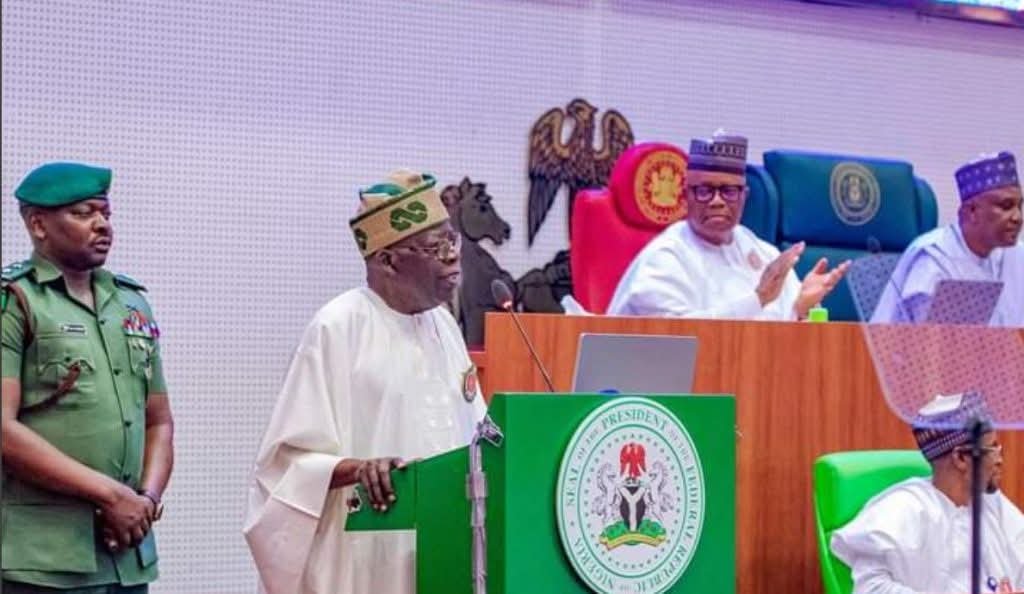
President Bola Ahmed Tinubu is set to formally present Nigeria’s proposed ₦54.46 trillion 2026 Appropriation Bill to a joint session of the National Assembly, marking a crucial moment in the country’s economic and political calendar.
DDM gathered that the budget presentation is scheduled for Friday, December 19, 2025, at the National Assembly complex in Abuja, where the President is expected to outline his administration’s revenue and expenditure priorities for the coming fiscal year.
The 2026 budget proposal comes at a time of heightened economic pressure, with inflation, debt servicing, and public expectations shaping intense debate over government spending and fiscal discipline.
According to senior government officials familiar with the framework, the proposed budget places strong emphasis on capital expenditure, social investment programmes, and policies designed to stimulate economic growth and job creation.
The Tinubu administration has indicated that infrastructure development, including roads, rail, power, and housing, will take a significant share of the capital allocation in a bid to unlock productivity and attract private sector investment.

Social sector spending is also expected to feature prominently, with allocations targeting education, healthcare, social protection schemes, and poverty reduction initiatives amid rising living costs across the country.
Officials say the budget is structured to strengthen fiscal discipline by improving revenue mobilisation, reducing waste, and enforcing stricter accountability measures across ministries, departments, and agencies.
The proposed ₦54.46 trillion size of the budget has already generated controversy in policy circles, with critics questioning sustainability given Nigeria’s growing debt burden and reliance on borrowing to fund deficits.
Supporters of the administration argue that bold spending is necessary to revive the economy, expand infrastructure, and cushion vulnerable populations during ongoing economic reforms.
Lawmakers from both chambers of the National Assembly are expected to subject the budget proposal to rigorous scrutiny once it is laid before them, examining assumptions around oil production, crude prices, non-oil revenue, and borrowing plans.
The presentation will formally kick off the annual budget defence process, during which ministers and heads of government agencies will appear before legislative committees to justify their allocations.
Analysts note that disagreements between the executive and legislature over spending priorities, constituency projects, and deficit levels are almost inevitable, setting the stage for intense negotiations in the coming weeks.
Some lawmakers have already signalled concerns about the balance between recurrent expenditure and capital investment, warning against a budget structure that leaves little room for long-term development.
Others are expected to push for increased allocations to security, agriculture, and youth employment programmes in response to persistent insecurity and unemployment challenges.
The National Assembly retains the power to amend the budget proposal, a process that often reshapes funding priorities before final passage and presidential assent.
Economic observers say the 2026 budget will serve as a critical test of President Tinubu’s reform agenda, particularly his promises of fiscal responsibility, transparency, and inclusive growth.
They also note that investor confidence and public trust will depend largely on how effectively the approved budget is implemented and monitored.
As the President prepares to address lawmakers on Friday, Nigerians will be watching closely for signals on how the government plans to balance ambitious spending with economic realities.
The outcome of the budget deliberations is expected to influence economic performance, policy direction, and political dynamics throughout 2026, making the presentation a defining moment for the Tinubu administration’s economic strategy.