


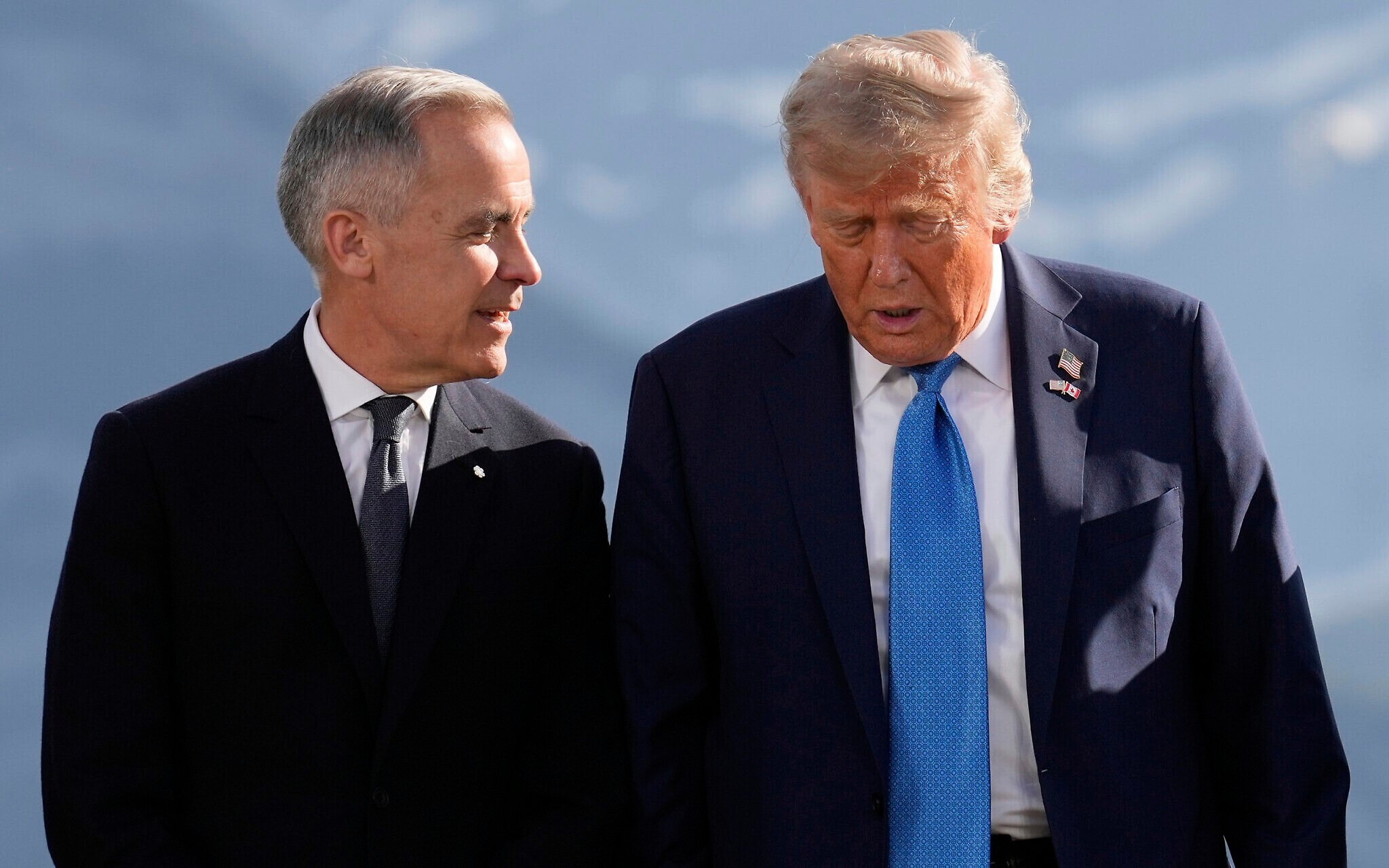
President Donald Trump on Thursday, publicly stated that Canada’s recent decision to recognize the State of Palestine poses a significant obstacle to negotiating a new trade agreement between the two countries.
This development comes just days before a critical August 1 deadline set by the Trump administration for finalizing trade deals to avoid steep tariffs on imports.
Canada’s announcement, made by Prime Minister Mark Carney, signals the country’s intent to officially endorse Palestinian statehood at the United Nations.
This is contingent upon the Palestinian Authority meeting certain criteria such as holding elections and excluding Hamas from governance.
Trump voiced his concerns early on a Thursday in late July 2025 via his Truth Social platform, stating, “Canada has just announced that it is backing statehood for Palestine.

That will make it very hard for us to make a Trade Deal with them.
Oh’ Canada!!!”.
This blunt warning reflects heightened tensions in Canada-U.S. relations, where economic negotiations were already strained.
Canada is the United States’ second-largest trading partner, and the failure to reach a deal threatens a 35 percent tariff on Canadian exports to the U.S. starting August 2.
Trump’s administration had declared a tariff deadline of August 1 across multiple nations, with the potential of tariffs as high as 50 percent—but Canada faces a 35 percent levy.
Canada’s move to recognize Palestine comes amid similar announcements from other close U.S. allies, such as France and the United Kingdom.
French President Emmanuel Macron also declared intentions to recognize Palestinian statehood.
British Prime Minister Keir Starmer indicated his country would follow suit if Israel did not meet conditions related to a ceasefire and humanitarian efforts in Gaza by September.
These international shifts place the Trump administration increasingly isolated as it maintains firm support for Israel amid an ongoing and severe conflict in Gaza.
The Canadian announcement emphasizes recognition “subject to a set of commitments” from the Palestinian Authority.
These include governance reforms and elections next year that would exclude Hamas, aiming to balance diplomatic caution with international human rights concerns.
This approach aligns with Canada’s traditional support for a two-state solution to the Israeli-Palestinian conflict, seeking peace through coexistence between Israel and Palestine.
Recognition also aims to increase diplomatic pressure on Israel to halt illegal settlement expansion and planned annexations in Palestinian territories.
Canada and other nations view this as violations of international law.
Historically, the Canada-U.S. relationship has faced increasing strains under the Trump administration.
Trump has reportedly often employed aggressive trade rhetoric and economic threats toward Canada.
Earlier this year, Trump threatened tariffs on Canadian goods and mockingly referred to Canada as the United States’ “51st state”.
That signalled a willingness to disrupt longstanding alliances for political leverage.
Trump even questioned the validity of the 1908 border treaty between the two countries and hinted at renegotiations of key agreements like water-sharing, which rattled Canadian officials.
Prime Minister Justin Trudeau publicly expressed concern that Trump’s threats were not mere bluster but part of a serious strategy to economically undermine Canada.
The friction over Palestine recognition has added a new dimension to the bilateral trade impasse.
Canadian officials report stalled negotiations with U.S. counterparts, who have recycled longstanding grievances without proposing a path forward for the trade talks.
Canada had to rescind planned digital services taxes after White House pressure to revive discussions.
Yet, with Trump’s stated August 1 deadline and the new diplomatic divergence on Palestine, the prospects for a trade deal appear increasingly bleak.
Contextually, Trump’s opposition to Canadian support for Palestinian statehood ties into his broader policy stances and alliances.
His administration has shown unwavering backing for Israel, opposing international moves that might empower Palestinian statehood claims without stringent conditions.
Trump’s warnings reflect a belief that Canada’s foreign policy decisions directly affect bilateral economic cooperation, using trade negotiations as leverage over allied nations to align them with U.S. positions.
In conclusion, the latest tensions represent a significant diplomatic and economic challenge.
Canada’s decision to recognize Palestine reflects its commitment to international law, human rights, and a two-state solution approach.
This is while it simultaneously strains relations with the United States under Trump’s administration.
The looming trade deadline and potential tariffs underscore the high-stakes nature of this dispute.
There are supposed economic repercussions that could extend beyond bilateral ties and affect North American trade dynamics.
This situation illustrates how foreign policy decisions, especially concerning sensitive geopolitical conflicts like Israel-Palestine, can have profound and immediate impacts on international trade and diplomacy between allied countries.
With Trump’s administration signaling increasingly hardline stances, Canada and its allies face difficult choices in balancing principles with pragmatic economic interests.

