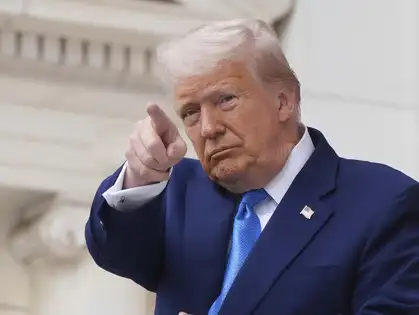
US President Donald Trump is reportedly weighing potential military strikes against Iran, even as his administration sends conflicting signals by combining diplomatic engagement with escalating threats of force.
The uncertainty comes as a third round of US-Iran negotiations concluded in Geneva on Thursday, with mediator Oman describing the discussions as making “significant progress.”
Despite the diplomatic optimism, fears of possible conflict continue to grow in Washington.
During his recent State of the Union address to Congress, Trump warned of Iran’s “sinister nuclear ambitions,” accusing Tehran of pursuing missile capabilities that could eventually threaten the United States and its overseas military bases.

He said diplomacy remained his preferred option but stressed he was prepared to authorise limited military action if talks fail.
US Secretary of State Marco Rubio appeared to lower expectations for a quick breakthrough, noting that negotiations would eventually need to address issues beyond Iran’s nuclear programme, particularly Tehran’s refusal to discuss its ballistic missile development.
Meanwhile, divisions have emerged within the United States. Opposition Democrats have questioned the administration’s objectives and insisted that Congress must be consulted before any military action is taken against Iran.
Confusion has also surrounded Washington’s assessment of Iran’s nuclear activities. Rubio stated that Iran is not currently enriching uranium but is attempting to reach that capability.
However, US envoy Steve Witkoff offered a different assessment, claiming Iran has enriched uranium to about 60 percent purity and could be close to producing weapons-grade material.
A 2025 report by the Congressional Research Service noted that Iran’s medium-range missile arsenal has a range of about 1,850 miles (3,000 kilometres), significantly short of reaching US territory.
The mixed messaging has intensified debate in Washington over the administration’s strategy, as lawmakers and analysts warn that unclear objectives could heighten tensions and increase the risk of a broader conflict in the Middle East.