



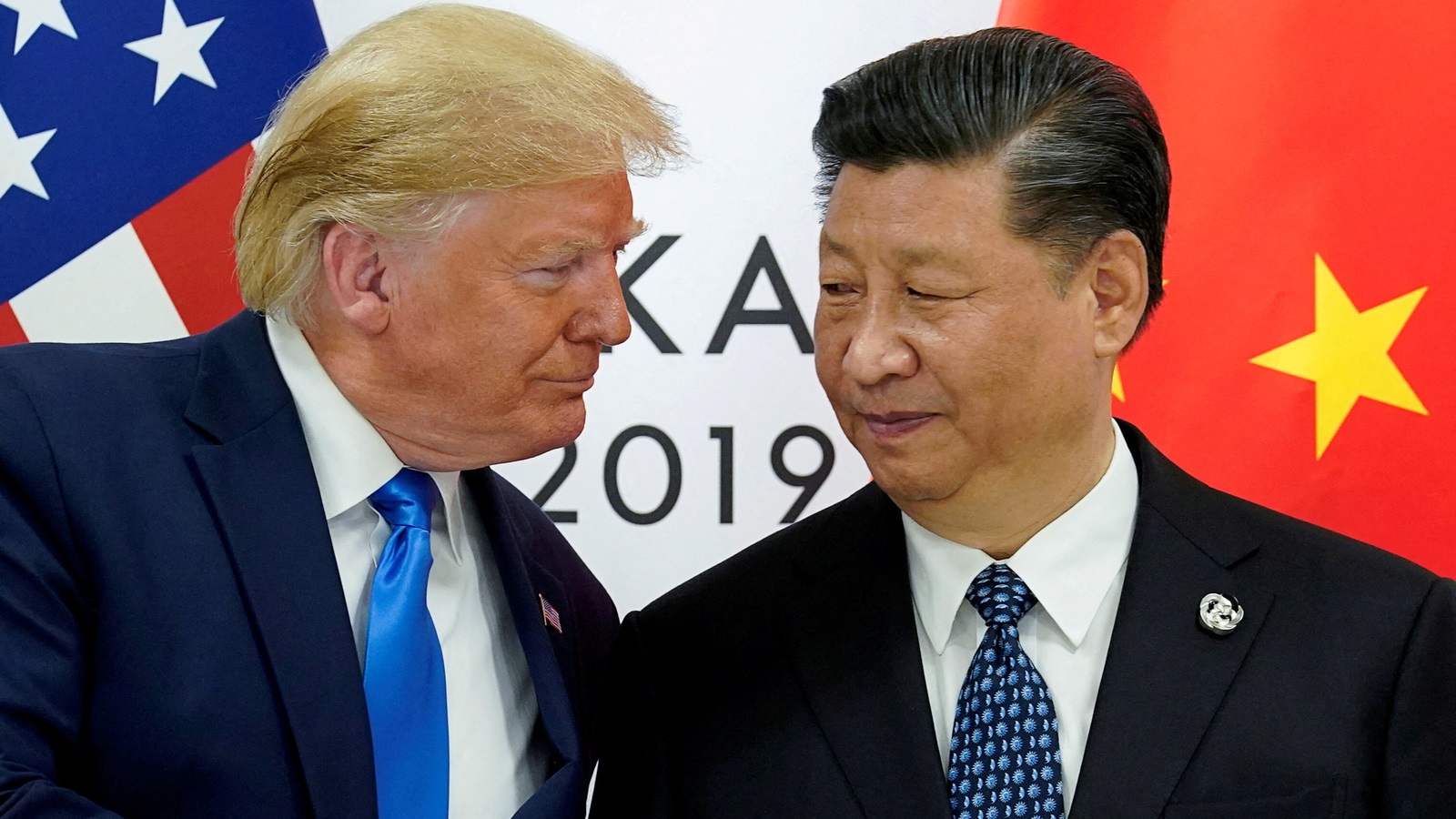
U.S. President Donald Trump and Chinese President Xi Jinping have reached a major breakthrough, agreeing to a one-year trade truce to ease tensions that have rattled global markets for months.
Both leaders met for the first time since 2019 during the Asia-Pacific Economic Cooperation (APEC) summit in South Korea on Thursday.
The meeting, which lasted one hour and forty minutes, focused on reversing months of economic hostilities between the two largest economies.
According to reports from the Associated Press, the leaders agreed on several measures aimed at cooling the trade war that began in February after Mr. Trump imposed a 10% tariff on Chinese imports, citing fentanyl production and the opioid crisis.
Under the new deal, the United States will cut its fentanyl tariff on Chinese goods from 20% to 10%, while China has pledged to purchase large quantities of soybeans and other U.S. agricultural products.

Beijing also agreed to ease restrictions on rare earth exports and facilitate American companies’ access to those materials. In return, Washington will suspend the expansion of export controls targeting Chinese firms on the U.S. Entity List and drop plans for a 100% tariff on Chinese products.
“It was an amazing meeting that produced critical decisions,” Mr. Trump said after the talks.
He revealed that discussions also covered the sale of U.S. computer chips to China, including talks with tech giant Nvidia about potential purchases — though China will not receive the company’s next-generation Blackwell AI chips.
“They’ll buy a lot of chips,” Mr. Trump said. “We make great chips.”
Earlier this year, the U.S. had raised tariffs on Chinese goods to 145%, prompting a 125% retaliatory tariff from Beijing. The new truce marks a significant step back from those record-high rates.
China’s Ministry of Commerce welcomed the deal, describing it as “a constructive path toward mutual economic stability.”
Analysts say the agreement could bring short-term relief to global markets, but warn that both nations must address deeper issues in intellectual property, technology, and manufacturing dominance to ensure lasting peace.

