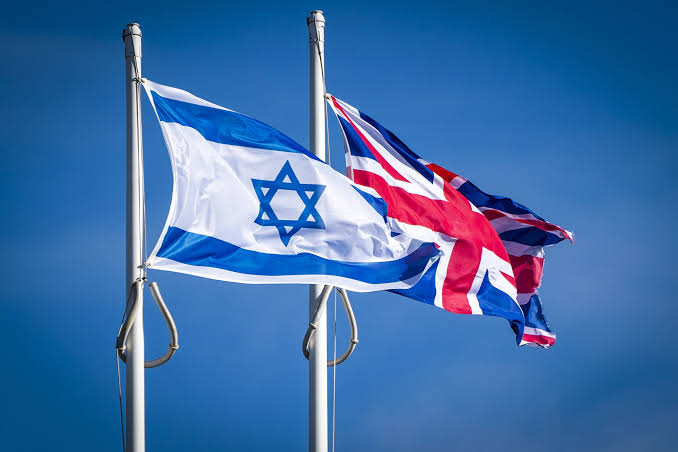
The British government has barred Israeli officials from attending one of the world’s largest arms exhibitions in London, citing Israel’s continued escalation of its military campaign in Gaza.
In a statement released on Thursday, August 28, a UK government spokesperson said:
“The Israeli Government’s decision to further escalate its military operation in Gaza is wrong.
As a result, we can confirm that no Israeli delegation will be invited to attend DSEI UK 2025.”
The biennial Defense and Security Equipment International (DSEI) fair is a flagship event that brings together governments, militaries, and arms manufacturers from across the globe.

Israel has traditionally commanded a large presence at the four-day expo, often showcasing its cutting-edge defense technology and striking lucrative deals.
But this year, the political climate has shifted sharply.
The decision comes as Prime Minister Keir Starmer intensifies diplomatic pressure on Israeli Prime Minister Benjamin Netanyahu to halt the Gaza campaign and agree to a ceasefire with Hamas.
Israel’s Ministry of Defense condemned the move, describing it as discriminatory.
“These restrictions amount to a deliberate and regrettable act of discrimination against Israel’s representatives,” a spokesperson said, accusing London of “playing into the hands of extremists” and politicizing what they insist should be a professional defense industry gathering.
Israel has since confirmed its withdrawal from the exhibition.
While government officials have been barred, private Israeli arms manufacturers will still be permitted to participate.
The UK’s Ministry of Defence clarified that commercial exhibitors were unaffected by the ban.
The decision coincides with a broader diplomatic effort. Starmer, alongside leaders from France and Canada, is preparing to push for the recognition of a Palestinian state at the upcoming United Nations General Assembly in New York, which opens on September 9 – the same day as DSEI in London.
However, the UK’s recognition of Palestinian statehood has been made conditional: Israel must ease the humanitarian crisis in Gaza, agree to an immediate ceasefire, and commit to a two-state solution.
Israel, instead, has intensified its military campaign. Since Starmer’s warning in July, Israeli forces have expanded operations and are preparing for a full occupation of Gaza City, the enclave’s largest population center.
A UK government spokesperson defended the decision to block Israel’s presence at the London fair:
“There must be a diplomatic solution to end this war now, with an immediate ceasefire, the return of the hostages, and a surge in humanitarian aid to the people of Gaza.”
The move mirrors recent actions by France, which in June shut down booths for Israeli defense giants Elbit Systems and Rafael at the Paris Airshow after they refused to withdraw displays of offensive weapons.
Despite mounting European criticism, Israel’s arms industry continues to thrive. Figures released in June showed Israeli defense exports hitting nearly $14.8 billion in 2024, marking the fourth consecutive year of record growth.
That figure more than doubles the value of Israel’s arms sales just five years ago, underscoring its rising dominance in the global defense market.
Analysts warn that while symbolic bans at exhibitions may increase diplomatic pressure, European nations remain deeply tied to Israeli defense technology.
Earlier this month, Elbit Systems announced a $1.6 billion contract with an unnamed European country, demonstrating that business ties remain strong even as political tensions escalate.
The UK’s decision marks a rare rupture in defense industry cooperation and adds another layer to the complex international efforts to halt the war in Gaza.
With both the arms fair and the UN summit set to begin on the same day, September 9, London finds itself at the center of both defense diplomacy and political confrontation.