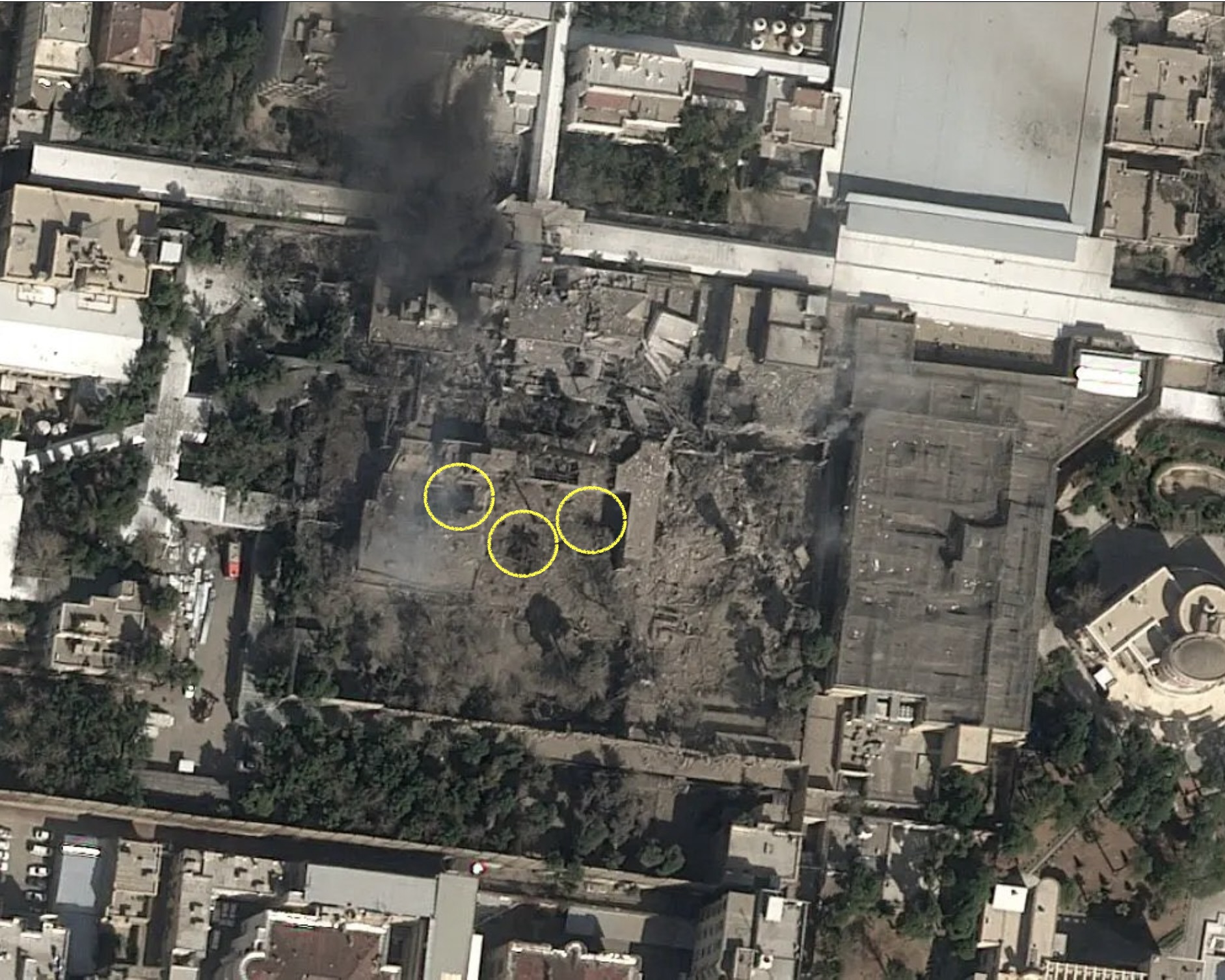
(DDM) – Satellite images have raised alarming questions about the intensity of recent US-Israeli strikes on Iran, showing severe damage to the compound of Supreme Leader Ayatollah Ali Khamenei in Tehran.
According to preliminary analysis, the imagery appears to show multiple breaches in the structures, with some observers suggesting that specialized bunker-busting munitions may have been used.
The photographs, circulating widely on social media, depict collapsed buildings, smoke, and debris scattered across the leadership complex. Analysts caution that while the damage is extensive, it is difficult to confirm the precise type of weapon used or whether underground bunkers were directly penetrated.
The attacks come amid escalating tensions following the assassination of Khamenei in a joint operation by US and Israeli forces. Khamenei’s death has sent shockwaves through Iran and the wider Middle East, prompting retaliatory missile and drone strikes targeting US military installations, Gulf travel hubs, and strategic energy infrastructure.

Iran’s supreme leader had ruled the country with near-absolute authority for decades, overseeing the military, judiciary, and key political institutions. His removal has left a leadership vacuum that the clerical Assembly of Experts must now address, selecting a successor in a process that has only occurred once before, after the death of Ayatollah Ruhollah Khomeini in 1989.
Tehran’s compound, often considered one of the most secure facilities in the country, is built with underground fortifications designed to withstand conventional attacks. Satellite analysts note that the current damage visible above ground may not fully capture what occurred below, making speculation about bunker penetration difficult to verify.
The United States, through statements from President Donald Trump, indicated that the strikes aimed to dismantle Iran’s missile infrastructure and limit its military capabilities. Israeli officials have hinted that the timing of the attacks was strategic, exploiting a window when senior Iranian leaders were reportedly gathered in daylight hours.
The strikes have also ignited intense debate internationally. Critics warn that targeting a top political and religious leader sets a dangerous precedent and risks further destabilizing an already volatile region. Supporters argue that dismantling Iran’s military leadership and infrastructure is a necessary step to prevent future threats to US and allied interests.
Satellite imagery experts emphasize the limitations of analyzing aerial photos alone. While surface damage is evident, confirming underground destruction requires ground verification, which remains impossible due to the ongoing conflict. Analysts stress that many claims circulating online, including reports of “three clean punch-holes,” cannot yet be independently verified.
The attack on Tehran’s leadership compound highlights both the sophistication and the risks of modern military strikes, combining conventional explosives, precision targeting, and psychological impact. With Iran retaliating aggressively and the region on high alert, the world is witnessing a dangerous escalation that could reshape Middle Eastern geopolitics for years to come.
As investigations continue and satellite imagery is further analyzed, the international community remains focused on the consequences of these strikes — from the human cost to the potential power shifts within Iran and the broader geopolitical landscape.