


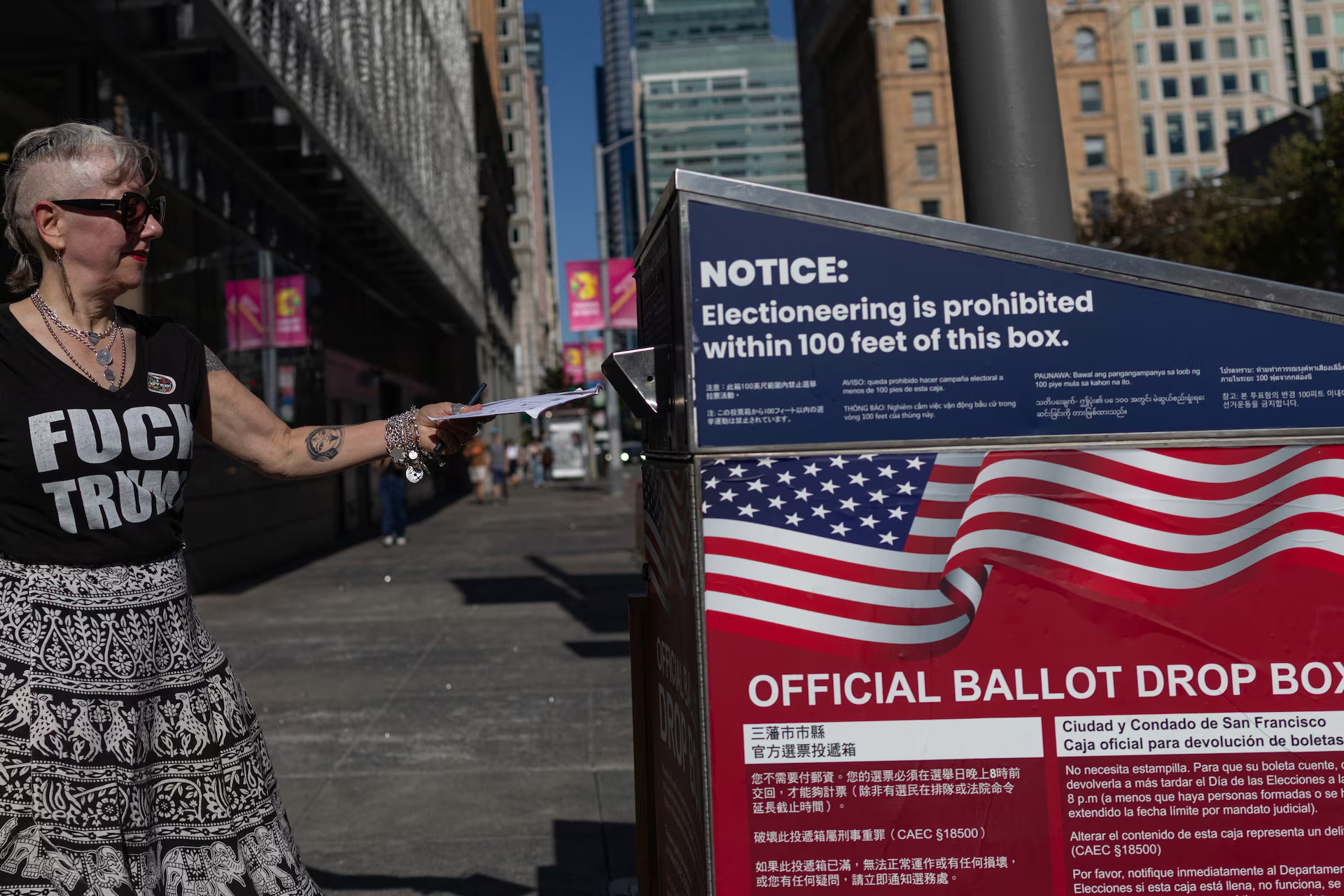
The United States Supreme Court has rejected an emergency request by President Donald Trump’s administration to stop California from counting mail-in ballots cast by more than 20,000 registered voters suspected by federal officials of being non-US citizens.
The court issued the decision on Monday, November 2, just hours after the Justice Department filed its application, allowing California to proceed with counting the disputed ballots ahead of Tuesday’s US midterm elections.
The one-sentence order did not provide reasons for the decision, and no justice publicly dissented.
The ruling marks another legal setback for the Trump administration as Republicans seek to retain control of Congress in the midterm elections.

The dispute centres on a list compiled by the Department of Homeland Security and sent to California and Los Angeles County officials. Federal authorities alleged that the individuals identified on the list were likely non-citizens registered to vote.
The Justice Department argued that California should separate the disputed ballots from other votes and withhold them until the voters’ citizenship status is established.
It warned that once the ballots were mixed with other lawful votes, they could not be retrieved.
California challenges federal allegations
California officials opposed the request, arguing that the state has strong safeguards against non-citizen voting and that the federal government’s identification process was unreliable.
The state also warned that blocking the ballots could disenfranchise eligible voters, including naturalised US citizens wrongly identified as non-citizens.
California Governor Gavin Newsom welcomed the Supreme Court’s decision, describing it as a victory for the integrity of the country’s electoral process.
He said voters could proceed with confidence that the state would conduct a free and fair election.
The administration had previously suffered setbacks in lower courts. US District Judge David Carter rejected its request on October 28, while the 9th US Circuit Court of Appeals also declined to block the ballots on Friday.
In his ruling, Carter questioned the reliability of the federal government’s data, noting that people previously identified as non-citizens on voter registers in other states had turned out to be naturalised US citizens.
He also criticised the timing of the lawsuit, arguing that the federal government had never before sought to compel a state to abandon its election procedures on the eve of an election.
Dispute raises questions over federal election oversight
The lawsuit also raised constitutional questions about the division of responsibility for conducting elections in the United States.
The US Constitution gives states primary responsibility for administering elections, although the federal government has authority to enforce certain federal voting laws.
The Justice Department filed the lawsuit on October 15, accusing California of obstructing enforcement of a 1996 federal law that makes it a criminal offence for non-citizens to vote in federal elections.
It argued that the state’s actions violated the Constitution’s Supremacy Clause, which generally gives federal law precedence over conflicting state laws.
California, however, maintained that its existing procedures were sufficient to prevent ineligible voting and that the federal government’s allegations were not supported by reliable evidence.
The Supreme Court’s decision allows the disputed mail-in ballots to be counted while the broader legal dispute over the federal government’s allegations remains unresolved.




