



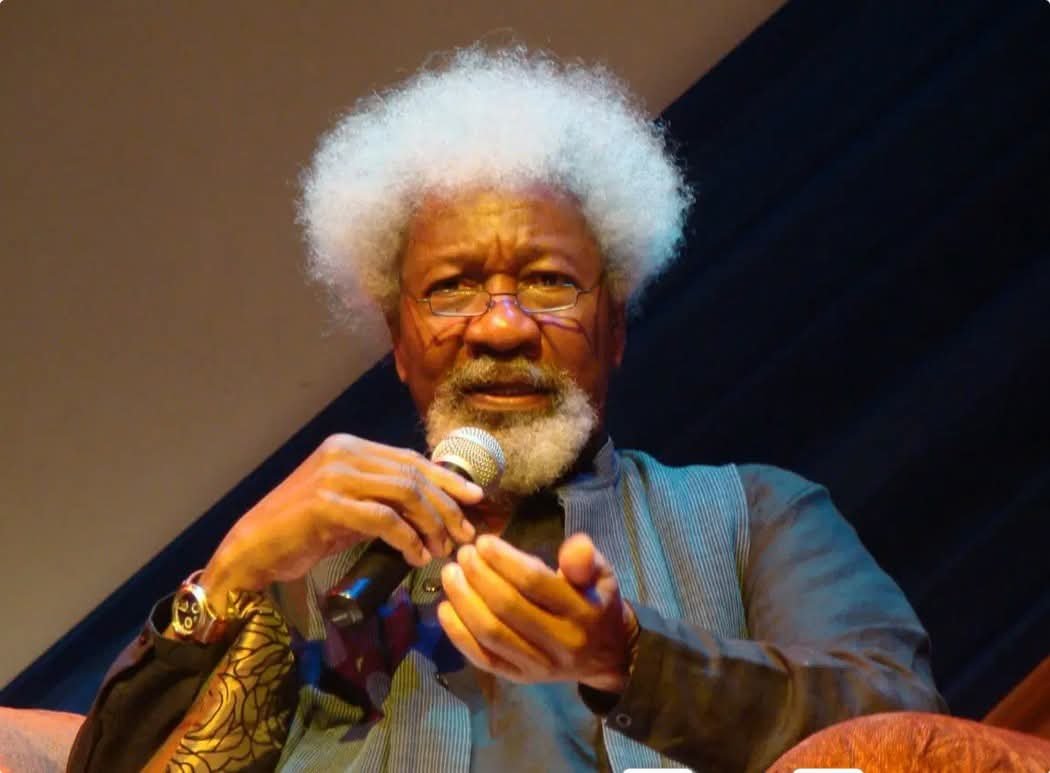
The United States Consulate in Lagos has clarified that visas are a privilege, not a right, amid reports that the U.S. government revoked the visa of Nobel laureate Professor Wole Soyinka.
Responding to a media inquiry on Thursday, the Consulate explained that visa records are confidential under U.S. law and therefore cannot be discussed publicly.
Julia McKay, the Public Diplomacy Officer at the U.S. Consulate General in Lagos, said, “Under U.S. law, visa records are generally confidential. We will not discuss the details of this individual visa case.”
However, McKay stressed that the U.S. government reserves the authority to revoke or deny visas at any time.
“Visas are a privilege, not a right. Every country, including the United States, determines who may enter its borders. Visas may be revoked at any time, at the discretion of the U.S. government, whenever circumstances warrant,” she added.

Her statement came days after Professor Wole Soyinka revealed that his B1/B2 visa had been revoked by the U.S. Embassy in a letter dated October 23, 2025.
During a press briefing held at Freedom Park, Lagos, the 91-year-old Nobel laureate said the revocation came without warning and that he was unaware of any misconduct that could have triggered it.
“I have no visa; I am banned, obviously, from the United States. And if you want to see me, you know where to find me,” Soyinka told journalists.
He explained that he had travelled to the United States for decades without issues and expressed shock over the sudden action.
Reflecting on his experiences, the renowned playwright mentioned two past incidents in the U.S.— one involving undeclared green chilies at an airport, and another, an old misunderstanding with a police officer in Atlanta.
“These are the only two crimes I can consider myself guilty of in all the decades I’ve been going to the United States,” Soyinka said, insisting that the motive behind the visa revocation remains unclear.
Many Nigerians have since reacted to the development, with several social media users expressing disbelief over the treatment of the globally respected writer.
While the U.S. Consulate has not confirmed or denied the revocation, its statement reinforces the country’s strict stance on immigration and border entry rights.
The U.S. Embassy routinely reminds foreign travellers that visas can be revoked or suspended if a visa holder’s circumstances change or if new information emerges about their eligibility.
Professor Soyinka, one of Africa’s most celebrated literary figures, won the Nobel Prize for Literature in 1986. He has remained an outspoken critic of bad governance and a strong advocate for human rights and democracy.



 and then