


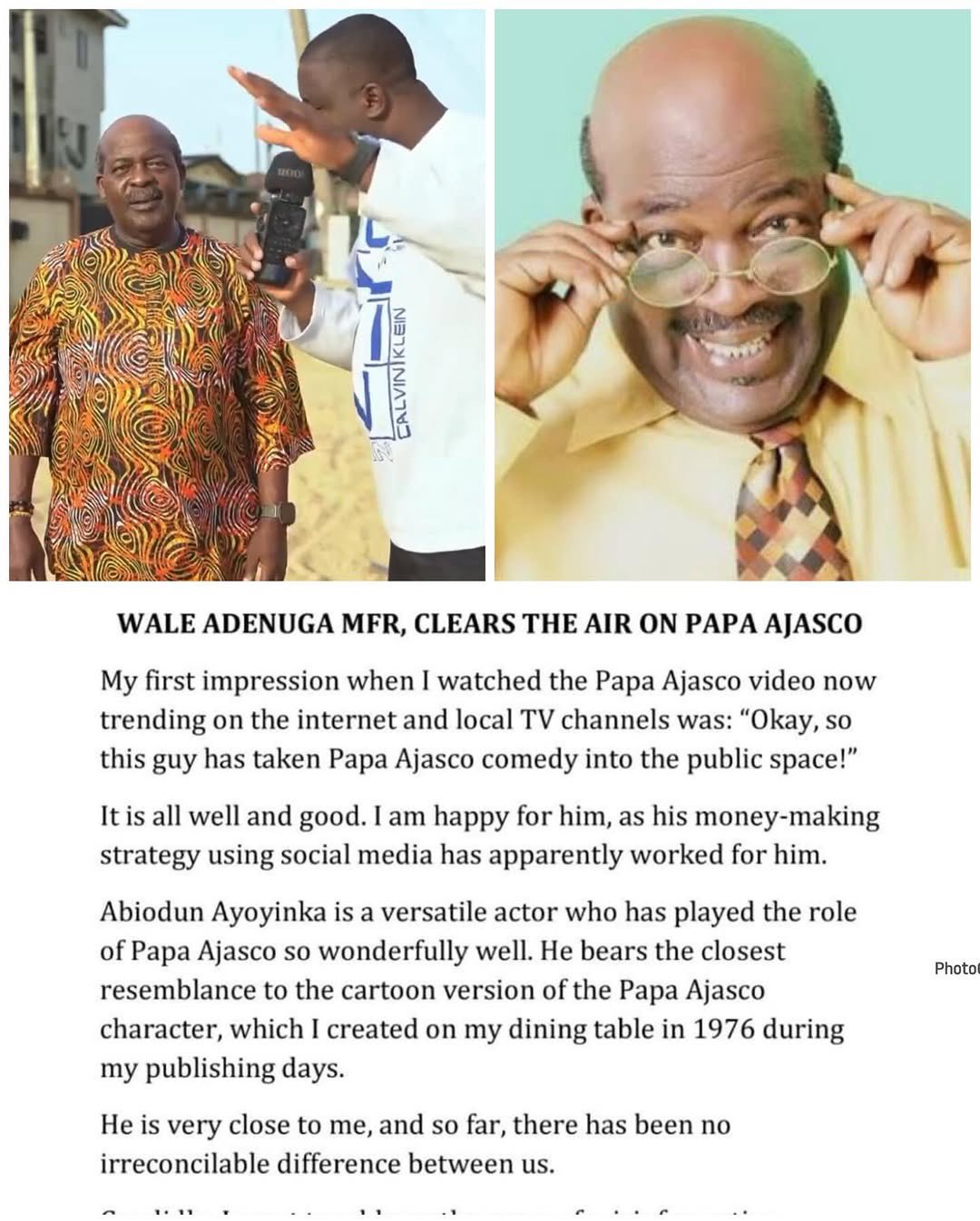
Veteran Nigerian producer Wale Adenuga has addressed growing public reactions surrounding the earnings of actors on the long-running television series Papa Ajasco, following comments made by lead actor Abiodun Ayoyinka.
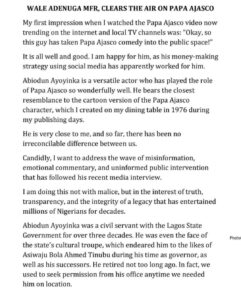
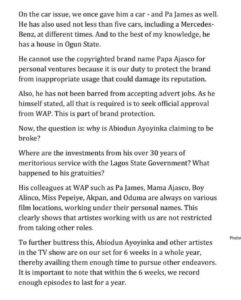
Ayoyinka, who is widely recognized for his role as the iconic character Papa Ajasco, recently revealed in an interview that he earns between ₦45,000 and ₦60,000 per episode on the show. He also disclosed that production typically covers about 12 episodes per year, a revelation that sparked widespread debate online about compensation in the Nigerian entertainment industry.
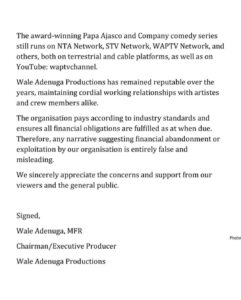
In response, Adenuga released a press statement clarifying the production’s stance on actor payments. According to him, the show adheres to what he described as “industry standards” when it comes to remuneration.
The producer emphasized that Papa Ajasco operates within a structured budget and pays its cast based on agreed terms that reflect the financial realities of television production in Nigeria. He suggested that while the figures shared by Ayoyinka may appear modest to the public, they are consistent with what is commonly practiced within the sector.
The discussion has since triggered mixed reactions among fans and industry observers. While some expressed concern that a veteran actor associated with such a culturally significant show earns what they consider a relatively low amount, others pointed out that television production budgets in Nigeria are often limited, especially for long-running series.
Ayoyinka’s disclosure has also reignited broader conversations about welfare, compensation, and sustainability for actors, particularly those who have contributed significantly to the growth of Nollywood over the years.
Papa Ajasco, created by Wale Adenuga, has been a staple of Nigerian television for decades, known for its comedic storytelling and memorable characters. The show has played a key role in shaping family entertainment in the country and remains one of the most recognizable productions in Nigerian pop culture.
Despite the controversy, Adenuga’s statement appears aimed at reassuring the public that the production operates transparently within its means, while also highlighting the ongoing challenges of funding and sustaining television content in the Nigerian media landscape.
The situation continues to spark discussion about how veteran actors are valued and compensated, as well as the need for improved structures to support long-term careers in the industry.

